 How-to
How to Master Simple Steps for Halal Grocery Shopping
Last Updated: November 17, 2026
Quick Summary
Simple halal grocery shopping starts with a written checklist built before you leave home, grouping trusted products by store section so you walk the aisles once. On the shelf, look for a recognized certification logo and verify the certifier's name and certificate number rather than trusting front-of-pack marketing copy. Scan barcodes with verification apps and check the certifier's own database, since crowd-sourced app data can lag behind reformulations.
- Keep a master list noting each trusted product's brand, certifying body, and where you bought it.
- A logo with no organization name is a red flag; treat the product as unverified.
- Flag E441 gelatin, E542 bone phosphate, and E920 L-cysteine as additives worth checking on your first pass.
- Ask your butcher who certifies the meat, whether it is current, and to see the certificate.
- Skip the deli counter unless staff can name the certifier, and avoid pre-marinated meats.
Table of Contents
- Start with a Halal Grocery Shopping Checklist
- How to Identify Halal-Certified Products on the Shelf
- Halal Ingredients to Avoid When Reading Labels
- Your Halal Meat Label Guide for Butchery and Packaged Cuts
- Navigate Mainstream Supermarkets Without Guesswork
- Verify Supply Chains and Avoid Cross-Contamination
- Use Digital Tools and Budget Strategies for Smarter Halal Shopping
- Shop Verified Halal Groceries with HalalKart
- Frequently Asked Questions
Start with a Halal Grocery Shopping Checklist
Simple steps for halal grocery shopping start before you leave the house. A written checklist turns a stressful aisle-by-aisle decision into a quick scan and grab. Verification should happen before a product reaches your cart, not after.
Most shoppers waste time re-reading the same labels every week. A master list fixes that.
Build Your Master List Before You Leave
Keep one running list of products you have already checked and trust. Note the brand, the certifying body, and where you bought it.
- Staples you buy every week
- Meat and poultry cuts you need
- Dairy, cheese, and yogurt
Add a second column for items still under review. This is your "check the label again" list.
Organize by Store Section to Save Time
Group your list the way the store is laid out: produce first, then meat, then dry goods, then frozen. You will walk the aisles once instead of three times.
A common mistake is shopping hungry with no order. You end up buying the same unverified snack three weeks running.
How to Identify Halal-Certified Products on the Shelf
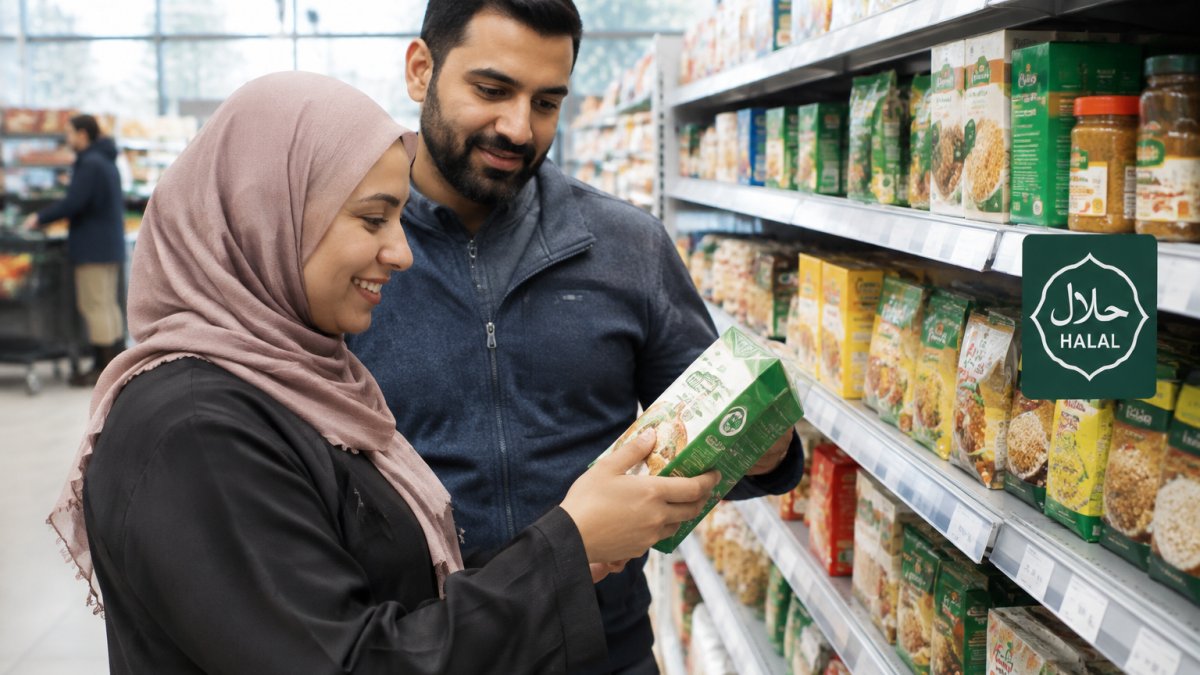
Look for a recognized certification logo, not the word "halal" printed in marketing copy. A logo from a known monitoring body tells you an outside party reviewed the product.
Read the Certification Logo, Not the Marketing Copy
Front-of-pack claims are cheap. Certification marks are not. Check these details:
- The certifying body's name and logo
- A certificate or registration number, where printed
- Whether the mark covers the whole facility or one product line
A logo alone is not proof. Certifiers vary in scope: some certify only the slaughter of meat, others certify the entire production facility including every additive and processing aid. The certificate number is your entry point for verification. Most certifiers publish a searchable database or a contact line where you can confirm that a specific certificate number is current and covers the product in your hand.
Verify the Certifier, Not Just the Logo
Not every halal logo comes from an equally rigorous body. When you encounter an unfamiliar certifier, run through these checks:
- Is the certifier named on the package? A logo with no organization name is a red flag.
- Does the certifier have a public standard? Reputable bodies publish their certification criteria, including slaughter method and additive review.
- Is the certificate scoped to the product or the facility? Facility-wide certification is stronger than a single-product certificate.
If the certifier cannot be identified from the package, treat the product as unverified regardless of how prominent the logo appears.
Use Barcode Scanners and Verification Apps
Manual label reading is slow and error-prone. Digital tools close the gap by linking a product's barcode to a database of ingredients, certifiers, and community reports.
- Barcode scanning apps let you scan a product's UPC or EAN and pull up ingredient lists, additive flags, and certifier information in seconds. Some apps maintain halal-specific databases that flag E-numbers and gelatin sources.
- Certifier databases are the most authoritative source. Most major halal certification bodies publish an online directory where you can search by certificate number, brand, or product category. Save the directory link for your most-used certifiers to your phone home screen.
- Marketplace verification pages show the certifier and certificate scope for each listed product before you add it to your cart.
A practical workflow: scan the barcode, check the certifier against its published directory, then confirm the certificate scope covers the product.
For a deeper walkthrough on spotting fake labels, see our guide on how to identify authentic halal labels on your groceries.
Watch out: some apps rely on crowd-sourced data that can lag behind reformulations, a product that scanned clean six months ago may have changed its gelatin source. Always confirm against the certifier's own database for products you buy regularly.
Halal Ingredients to Avoid When Reading Labels
Scan the ingredients list for hidden animal derivatives. Many processed foods contain ingredients you would never expect from the front of the box. The challenge is that most labels do not say "pork" or "animal fat" outright, they use technical names, E-numbers, and vague catch-alls that require a second layer of decoding.
Watch for these:
- Gelatin from pork or unspecified sources
- Emulsifiers such as mono- and diglycerides of animal origin
- L-cysteine in some baked goods
Decode E-Numbers and Additive Codes
E-numbers are standardized codes for food additives used across packaging. The ones worth flagging on your first pass: Because some additives can be animal-derived, checking their source is just as useful when buying halal sweets as it is when scanning grocery labels.
- E120 (carmine/cochineal): a red color derived from insects. Many scholars permit it; others avoid it. Treat it as a personal fiqh question, not a blanket rule.
- E441 (gelatin): almost always animal-derived unless the package states a fish or plant source. If the source is not named, assume pork or unspecified beef.
- E542 (bone phosphate): derived from animal bones, typically porcine. Common in some supplements and processed foods.
- E904 (shellac): a resin from the lac insect, used as a glazing agent on candies and fruit. Same fiqh variation as E120.
A useful habit: when you see an E-number you do not recognize, search the number plus "source" before you buy.
Read Gelatin and Rennet Source Codes
Gelatin is the single most common hidden animal derivative in packaged foods, it appears in marshmallows, gummy candies, yogurts, capsules, and some low-fat products. The label rarely names the source. Look for these qualifiers:
- "Beef gelatin" or "halal beef gelatin", acceptable if the certifier is named elsewhere on the pack.
- "Fish gelatin", generally acceptable across schools of thought.
- "Pork gelatin", avoid.
- "Gelatin" with no source, treat as unverified.
Rennet is an enzyme used to set cheese. Traditional rennet comes from the stomach lining of calves, which may not be halal-slaughtered. Acceptable alternatives include microbial rennet, vegetable rennet, and fermentation-produced chymosin. On a cheese label, look for "microbial rennet," "vegetable rennet," or "fermentation-produced chymosin." Plain "rennet" or "enzymes" without a source is a check-further signal.
Assess Vague Terms Like 'Natural Flavors'
"Natural flavors" is a legal catch-all that can include animal-derived compounds, castoreum from beavers, civet from cats, or ambergris from whales are rare but permitted under the term.
When a label is vague, treat it as unverified. That is not a ruling against the product, just a signal to check further or pick an alternative.
Watch out: a product can carry a halal logo on the front and still list an unverified additive in the ingredients, certification marks sometimes cover only the slaughter of meat ingredients, not every additive in a multi-component product.
Your Halal Meat Label Guide for Butchery and Packaged Cuts
A trustworthy halal meat label names the slaughter method and the certifying body. Anything less is a claim, not proof.
Ask your butcher three questions:
- Who certifies this meat?
- Is the certification current?
- Can I see the certificate or a copy?
A reputable butcher answers all three without hesitation.
What a Trustworthy Slaughter Method Claim Looks Like
The label should state that the animal was slaughtered by a Muslim, with a swift cut, and with the name of God invoked. It should also name the monitoring organization behind the claim.
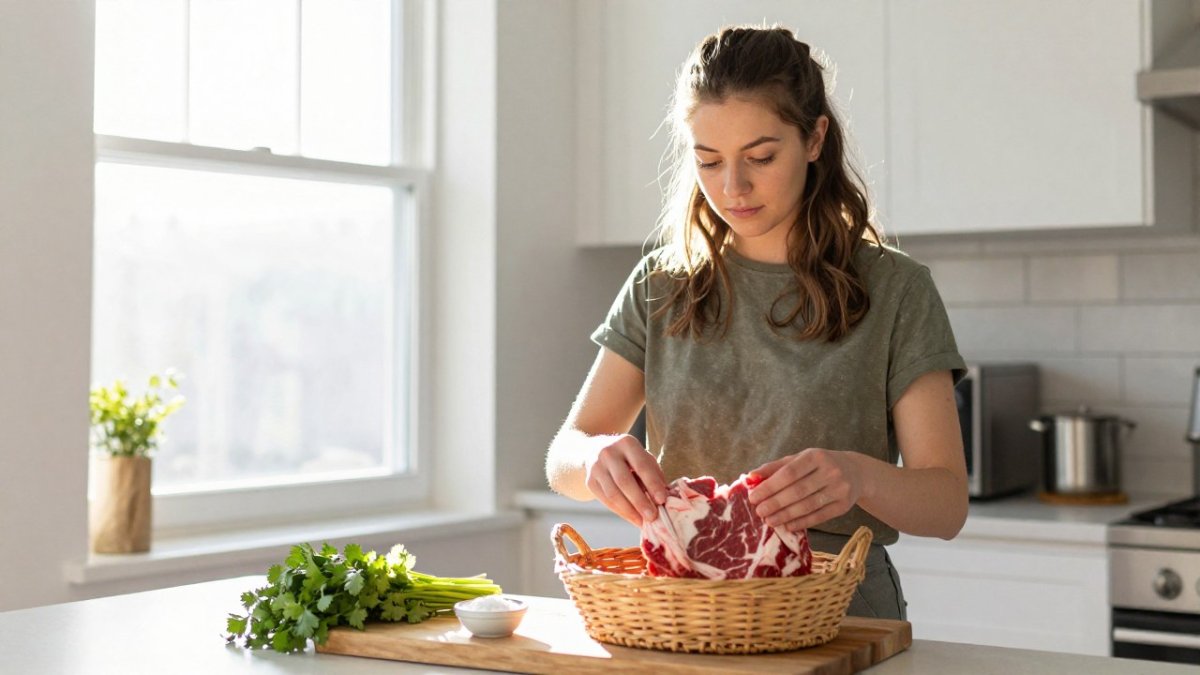
If the package says only "halal" with no certifier, treat it as unverified. Once you have chosen your cuts, read our advice on storing fresh halal meat the right way so nothing spoils before you cook.
Navigate Mainstream Supermarkets Without Guesswork
Regular supermarkets stock more halal-friendly items than most shoppers realize. The trick is knowing where to look and what to skip.
Start with these sections:
- Produce, legumes, and grains: usually the safest bet
- Frozen vegetables and fruit: check for added sauces
- Dairy: plain milk and yogurt are simpler than flavored options
- International aisles: often carry certified imports
Skip the deli counter unless staff can name the certifier. Pre-marinated meats are a common trap.
Verify Supply Chains and Avoid Cross-Contamination
Cross-contamination is the quiet risk in halal shopping. Shared slicers, fryers, and grills can undo a certified product.
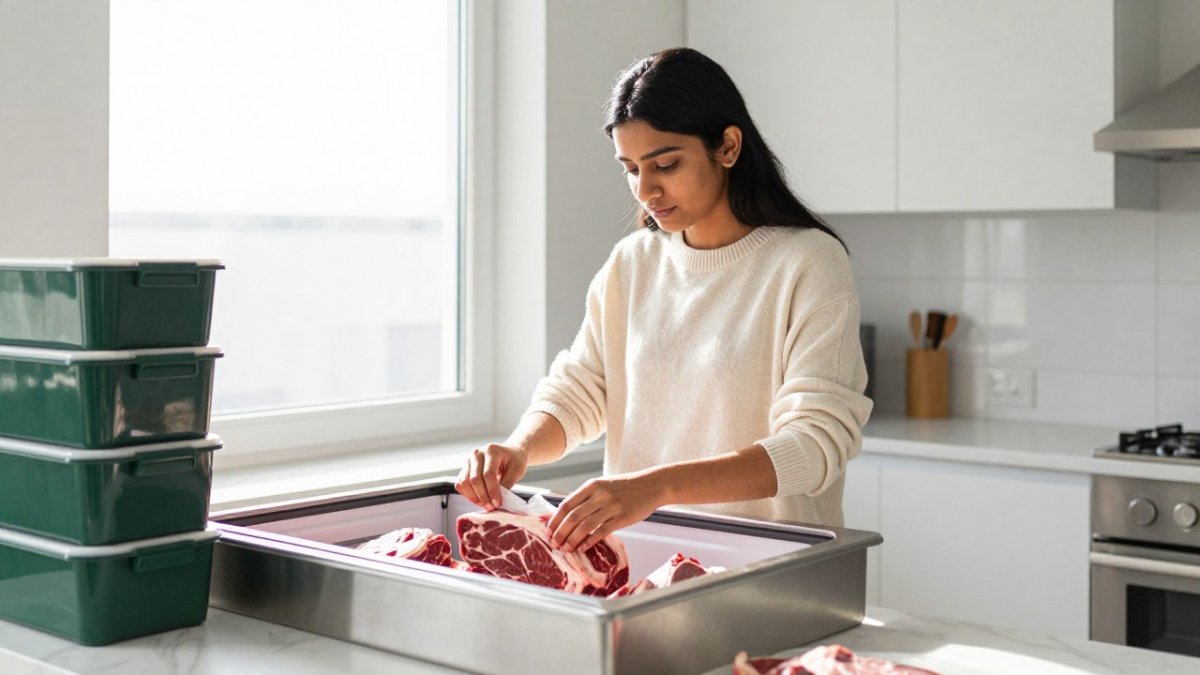
At home, keep raw halal meat separate from other foods. Use dedicated cutting boards, wash hands and surfaces after handling raw meat, and store meat on the bottom shelf of the fridge.
For a full method to confirm supplier credentials, follow our step-by-step guide to verifying halal meat online. Once the meat is home, our guide on preventing meat cross contamination at home covers fridge storage and safe cooking temperatures.
| Risk Point | What to Check | Why It Matters |
|---|---|---|
| Deli slicers | Shared with pork products | Cross-contamination |
| Fryers | Shared oil | Absorbed animal fats |
| Marinades | Alcohol or animal stock | Hidden ingredients |
| Fridge storage | Raw meat placement | Drip contamination |
| Cutting boards | Separate boards | Surface transfer |
Use Digital Tools and Budget Strategies for Smarter Halal Shopping
Apps and online marketplaces cut the guesswork. Barcode scanning apps can flag ingredients, and dedicated halal platforms verify products before listing them.
Budget tips that work:
- Buy legumes, grains, and spices in bulk
- Compare unit prices, not package prices
- Plan meals around what is on sale that week
- Freeze meat in portion sizes to reduce waste
For a practical walkthrough on ordering online with confidence, read our guide to convenient halal shopping for modern Muslims.
Shop Verified Halal Groceries with HalalKart
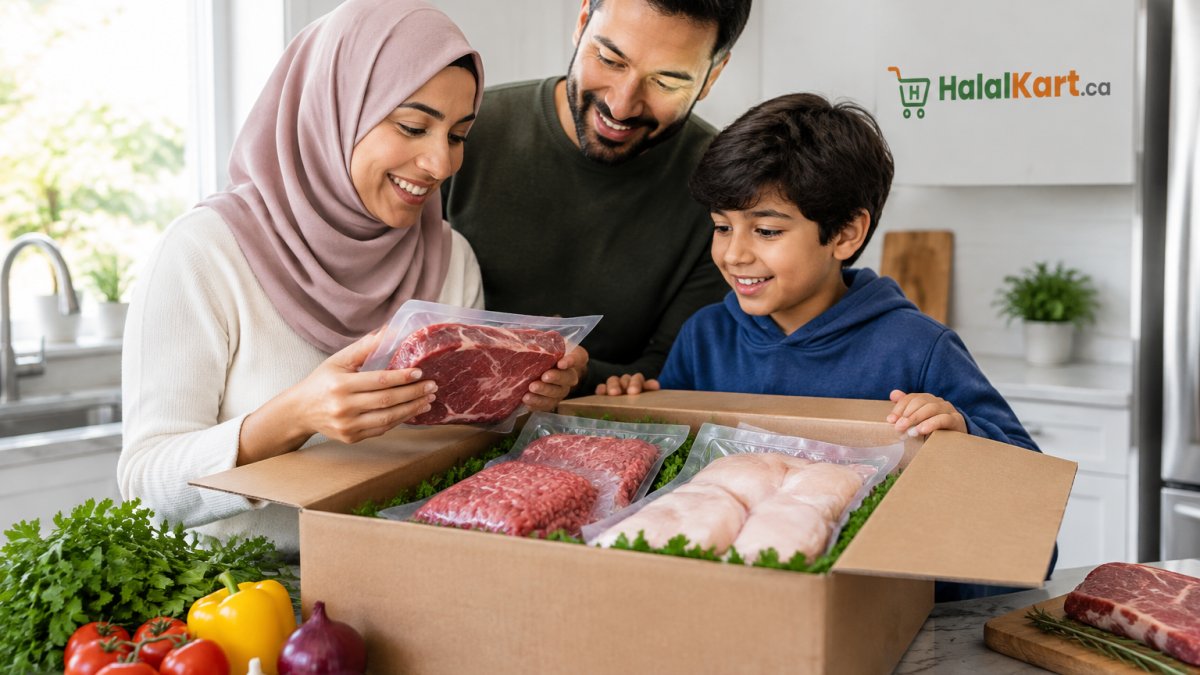
Every step above takes time. Reading labels, checking certificates, tracing supply chains: it adds up week after week. That is the problem HalalKart exists to solve.
As a dedicated online marketplace, we run a rigorous 4-step verification process on every product.
The challenge is simple: most shoppers carry the whole verification burden alone. We think that burden belongs to the platform, not the family.
Frequently Asked Questions
How can I tell if a product is genuinely halal?
Look for a recognized halal certification logo on the package, then check the ingredients list for hidden animal derivatives like gelatin, emulsifiers, and mono- and diglycerides. A logo alone is not enough if the product carries a questionable ingredient. Cross-reference the certifying body with recognized organizations such as HMA, ISNA, or IFANCA. When in doubt, contact the manufacturer directly or choose a product from a platform that verifies suppliers, like HalalKart's 4-step process.
What should I check on a halal meat label?
Check three things: the certifying body's logo, the slaughter method claim (look for hand-slaughtered or zabiha wording), and the cut and packaging date. A trustworthy halal meat label guide tells you to verify that the certifier is recognized and that the claim is specific, not a vague 'halal-style' phrase. Also confirm the meat was processed on a dedicated line to avoid cross-contamination with non-halal products.
Are all products sold at a halal grocery store automatically halal?
No. A store may carry halal meat but stock packaged goods with unclear ingredients. Always read the ingredients list on items like sauces, snacks, and baked goods, since gelatin, emulsifiers, and flavorings can be animal-derived. A halal grocery shopping checklist should include label verification for every packaged item, not just meat. Stores with rigorous vendor screening, like those on HalalKart, reduce this risk but checking labels yourself remains good practice.
Can I shop for halal groceries online safely?
Yes, if the platform verifies its suppliers. Look for details on the certification process, which organizations the platform partners with, and how it handles fresh meat shipping. HalalKart uses a 4-step verification process with background checks, documentation reviews, and periodic audits, and partners with HMA, ISNA, and IFANCA. Confirm delivery coverage for your area and check the packaging and cold-chain process for meat before ordering.