 How-to
Are You Storing Fresh Halal Meat the Right Way?
Last Updated: November 15, 2026
Quick Summary
The best ways to store fresh halal meat are to keep it at 4°C or colder and use it within two to four days, or freeze it at -18°C or colder in airtight packaging. Good halal meat storage also means sealing raw meat on the bottom shelf, away from ready-to-eat and non-halal foods, and always thawing it in the fridge.
- Raw meat lasts two to four days in a fridge held at 4°C or colder, depending on type and cut.
- Store raw meat on the bottom shelf in a sealed container or on a rimmed tray to stop drips.
- Freeze meat at -18°C or colder, portion it into meal-sized amounts, and press out all air.
- Thaw meat in the fridge, never on the counter, and refreeze only meat that thawed there.
- A closed fridge keeps food cold for about 4 hours, and a full freezer for roughly 48 hours.
Table of Contents
- Why Halal Meat Storage Demands More Than a Fridge Shelf
- How Long Does Raw Meat Last in the Fridge?
- Prevent Cross-Contamination When Storing Meat
- How to Freeze Fresh Meat Without Losing Quality
- How to Thaw Meat Safely (and When You Can Refreeze)
- Power Outages and Temperature Excursions: What to Do
- Spoilage Signs and When to Discard Halal Meat
- Ordering Fresh Halal Meat for Delivery with Confidence
- Frequently Asked Questions
Why Halal Meat Storage Demands More Than a Fridge Shelf
The best ways to store fresh halal meat start with one hard truth: halal integrity does not end at the butcher's counter. It continues in your fridge, your freezer, and your kitchen.
Why the extra care? Halal handling rules already demand cleanliness and separation from the start. Poor home storage undoes that work.
Below, we walk through fridge timelines, freezing, thawing, and delivery handling. Each step is simple. Together, they protect every cut you bring home.
How Long Does Raw Meat Last in the Fridge?
Raw meat lasts two to four days in a fridge held at 4°C or colder, depending on the type and cut. Ground meat and poultry sit at the short end. Whole cuts and lamb keep longer. Cold air slows bacterial growth, but it never stops it.
According to Health Canada's food safety guidance on refrigeration, your fridge should stay at 4°C or below, and you should check it with an appliance thermometer rather than trusting the dial.
Storage Timelines by Meat Type and Cut
Use this table as your quick reference. Keep your fridge at 4°C or colder.
| Meat type | Fridge life (4°C or below) | Freezer life (-18°C) |
|---|---|---|
| Fresh chicken, whole | 2-3 days | 12 months |
| Chicken pieces | 1-2 days | 9 months |
| Ground beef or lamb | 1-2 days | 3-4 months |
| Beef steaks and roasts | 3-4 days | 4-12 months |
| Lamb chops and roasts | 3-4 days | 6-9 months |
| Fish, fresh | 1-2 days | 3-6 months |
Fridge life (4°C or below)
A common mistake is trusting the printed date over the clock. Once meat is home, the countdown starts from purchase day, not the pack date.
Prevent Cross-Contamination When Storing Meat
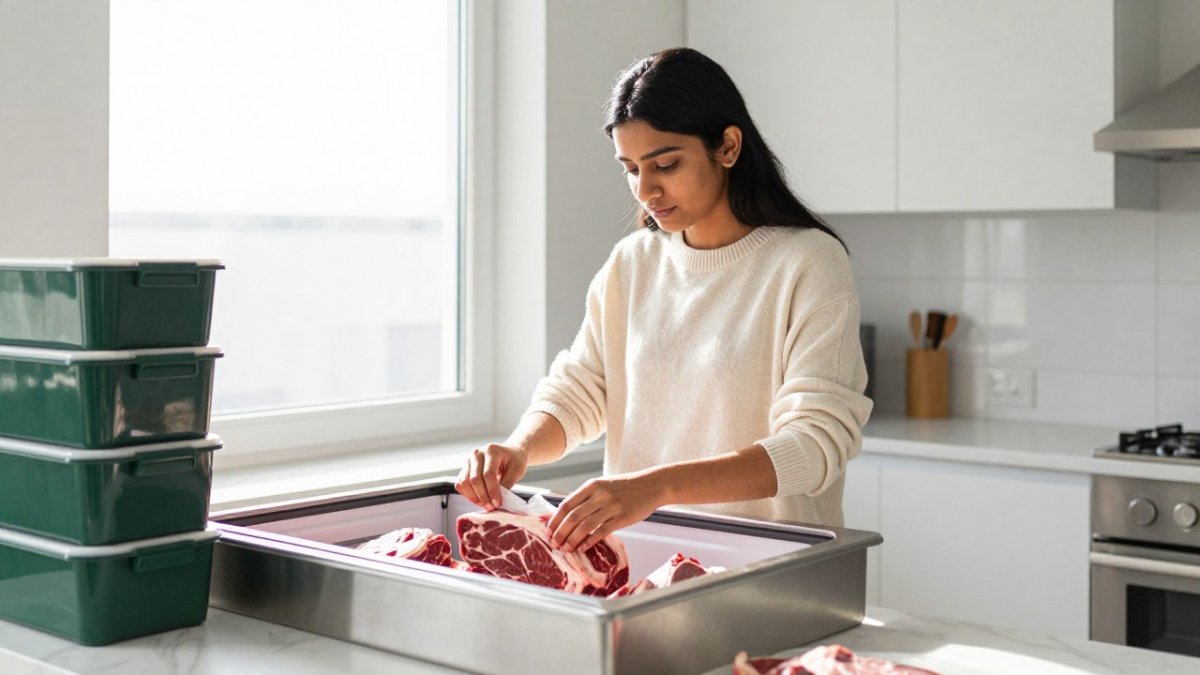
Cross-contamination happens when raw juices touch food you will eat without cooking. The fix is placement and sealing, not extra scrubbing. Store raw meat on the bottom shelf, in a sealed container or on a rimmed tray. That way, drips cannot fall onto ready-to-eat foods below.
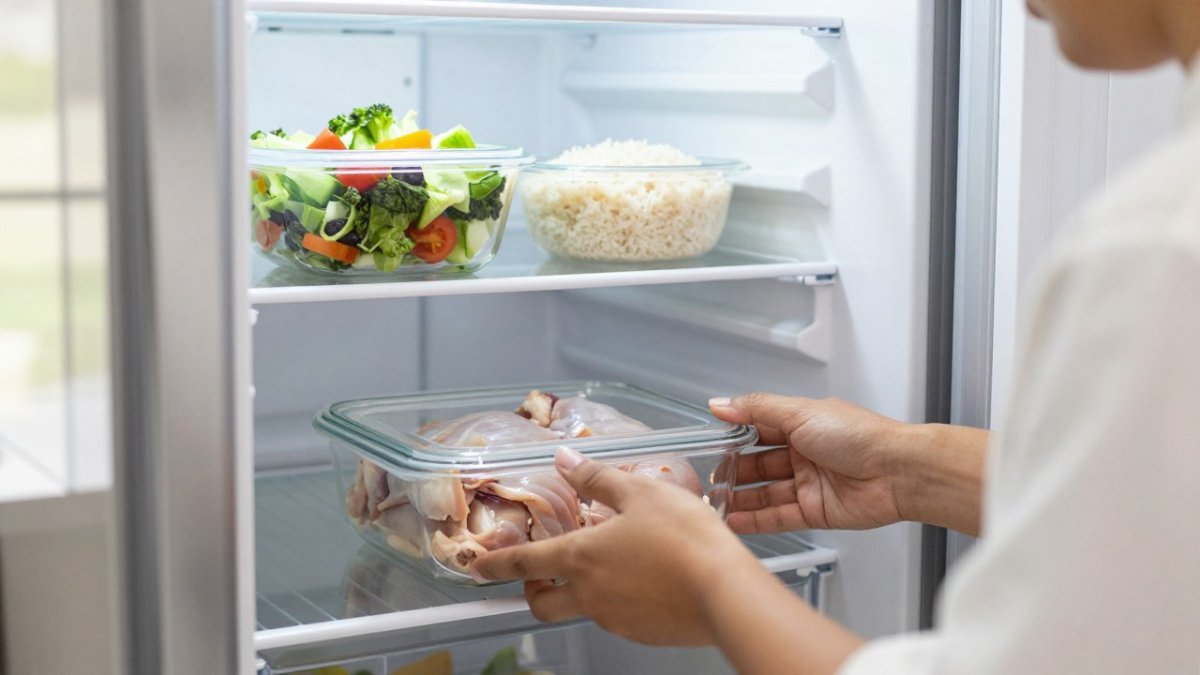
Follow these habits:
- Keep raw meat in a sealed container or a resealable bag on the bottom shelf.
- Store cooked and ready-to-eat foods on upper shelves, always covered.
- Use one cutting board for raw meat and another for produce.
- Wash hands, knives, and counters with hot soapy water after touching raw meat.
- Never rinse raw poultry in the sink; splashing spreads bacteria.
For a full walkthrough, see our guide on preventing meat cross contamination at home.
How to Freeze Fresh Meat Without Losing Quality
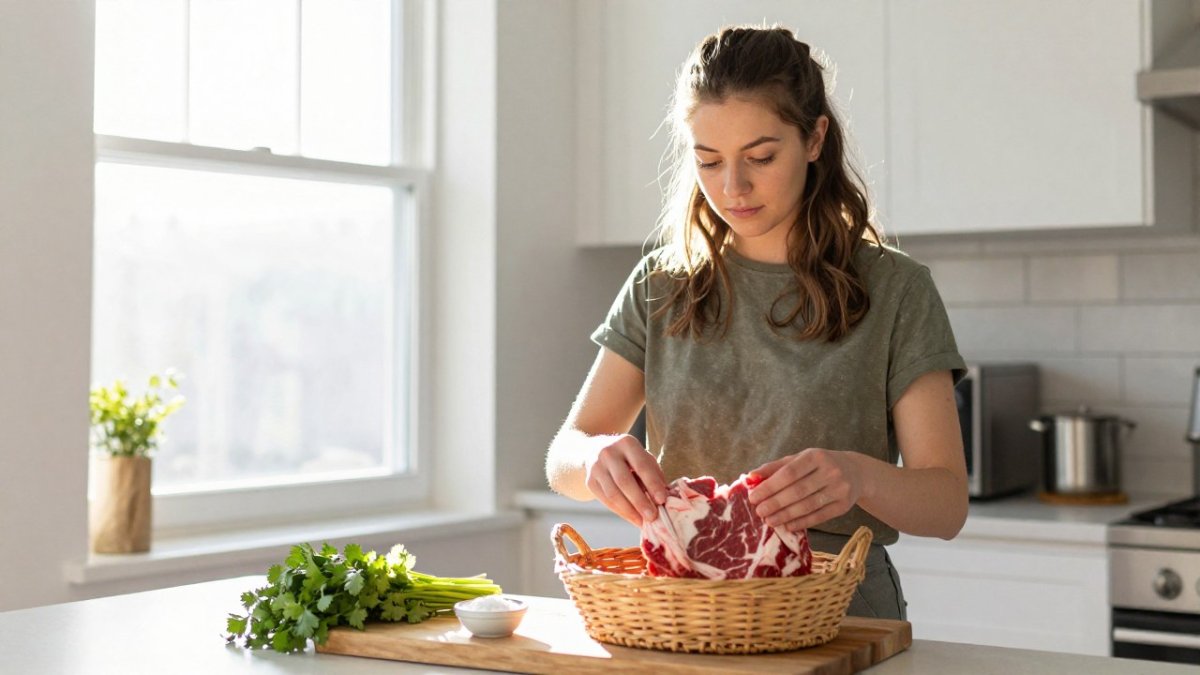
Freezing fresh meat well comes down to speed and air. Freeze meat quickly at -18°C or colder, and press out as much air as you can. Air and slow freezing cause freezer burn, which dries the surface and dulls flavor.
Here is how we would do it:
- Portion meat into meal-sized amounts so you thaw only what you need.
- Remove the original tray and plastic wrap, which let air in over time.
- Wrap tightly in plastic wrap, then place in a freezer-safe bag or airtight container.
- Press out air, seal, and label with the date and cut.
- Freeze flat on a shelf so cold air reaches all sides.
Packaging Methods Compared
| Method | Air protection | Best for | Watch out |
|---|---|---|---|
| Original tray and wrap | Low | Short fridge storage only | Thin film tears and lets air in |
| Plastic wrap plus freezer bag | High | Most cuts | Must press out all air |
| Vacuum-sealed bag | Highest | Long freezer stays | Needs a vacuum sealer |
| Airtight rigid container | Medium | Ground meat and stew cuts | Takes up shelf space |
Label every package with the date. A freezer full of unmarked bags becomes guesswork within weeks.
How to Thaw Meat Safely (and When You Can Refreeze)
Thaw meat in the fridge, never on the counter (Safely defrosting foods). Thawing in the fridge keeps meat at 4°C or below for the entire thaw. Plan ahead: the time depends on the cut and the weight, not just the meat type.
Thawing Times by Cut and Weight
Use these fridge-thaw estimates at 4°C or below. Times assume the meat is in a sealed container on the bottom shelf.
| Cut | Approximate fridge thaw time |
|---|---|
| Ground meat, 500 g | 8-12 hours (overnight) |
| Chicken breast or thigh pieces, 1 kg | 12-24 hours |
| Whole chicken, 1.5-2 kg | 24-36 hours |
| Beef or lamb steak, 2.5 cm thick | 12-24 hours |
| Beef or lamb roast, 2-3 kg | 24-48 hours |
| Lamb chops, 1 kg | 12-24 hours |
The safe options, ranked by how much control they give you:
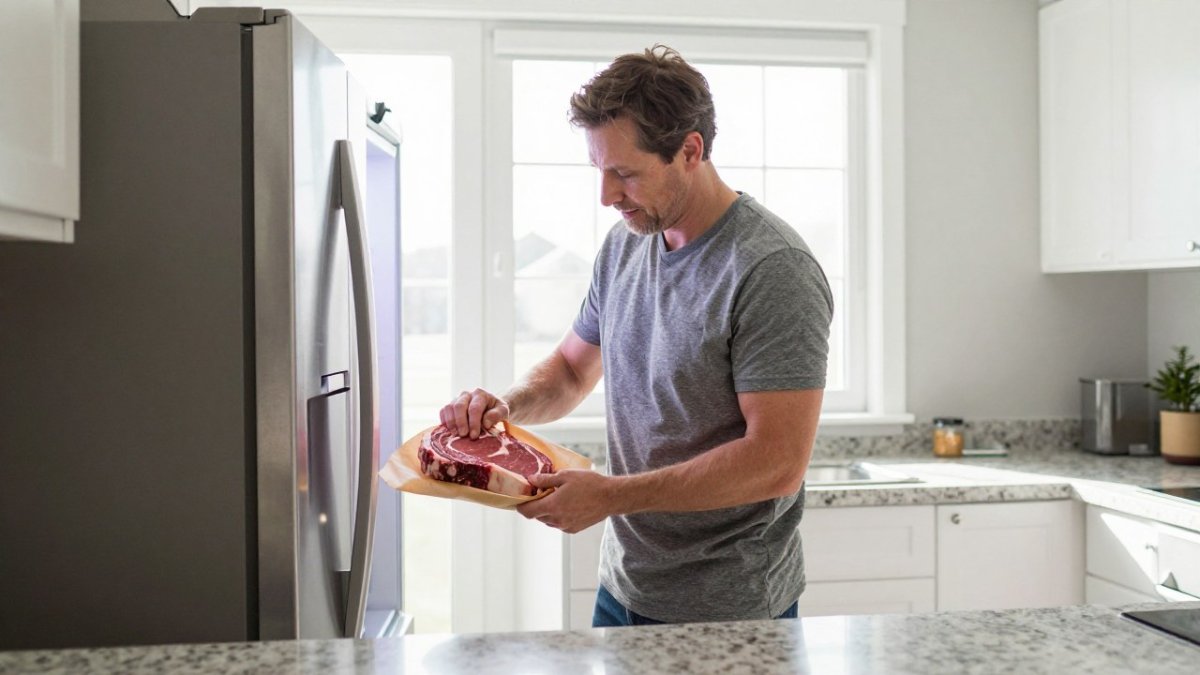
- Fridge thaw: place meat on the bottom shelf in a sealed container or on a rimmed tray. Slow but safest, and the only method that preserves refreezing options.
- Cold water thaw: seal meat in a leak-proof bag and submerge in cold water, changing the water every 30 minutes. Faster than the fridge, but the meat must be cooked before refreezing.
- Microwave thaw: only if you cook the meat immediately. Microwave thawing can push edges above 4°C while the center is still frozen, so treat it as a cooking step, not a storage step.
Watch out: never thaw halal meat in the same container or on the same shelf space as non-halal meat, even sealed. A leak or a torn bag during thaw is the most common way cross-contamination happens at home, and it undermines the separation halal handling requires.
Can You Refreeze Thawed Meat?
Yes, if the meat thawed in the fridge and stayed at 4°C or below the whole time.
A practical rule most home cooks follow: refreeze once, not repeatedly. Every freeze-thaw cycle breaks down muscle fibers and releases moisture, so quality drops even when safety is intact.
Label refrozen packages with both the original freeze date and the refreeze date. That way you can still apply the freezer-life limits in the table above without guessing.
Power Outages and Temperature Excursions: What to Do
A power outage tests your storage setup, and the decisions you make in the first few hours determine what you can keep. Keep the fridge and freezer doors closed as much as possible.
If you know a storm is coming, group items together, fill empty space with containers of ice or frozen water bottles, and set your fridge and freezer to their coldest settings ahead of time. Do not open the doors to check unless you have to.
After Power Returns: A Decision Tree
Check temperatures before you check appearances. Use an appliance thermometer, not the dial.
- Fridge stayed at 4°C or below: the food is likely fine. Refrigerate as normal and use it within the original fridge-life window.
- Fridge rose above 4°C for less than 2 hours: cook the meat immediately or move it to a working freezer. Do not refreeze raw meat that sat above 4°C.
- Fridge rose above 4°C for more than 2 hours: discard the meat. This is the same two-hour rule that applies to any perishable food left out.
- Freezer stayed at -18°C or below, or items still hold ice crystals: the meat can be refrozen or cooked. Quality may drop, but safety is intact.
- Freezer rose above -18°C but items are still cold (around 4°C) and hold ice crystals: cook the meat before refreezing, or refreeze only if you accept a quality loss.
- Freezer items are soft, warm, or leaking: discard them.
Watch out: never taste meat to judge if it is safe after an outage. Smell and taste can miss harmful bacteria, and the halal integrity of the meat is not a safety guarantee once the cold chain breaks. Use temperature and time as your guide, and when in doubt, throw it out.
Halal Integrity During an Outage
If you share a fridge or freezer with non-halal foods, an outage raises a separation problem as well as a safety one. Raw juices from non-halal meat can leak onto halal packages when items shift or thaw.
A practical habit for shared households: store halal meat in a dedicated sealed bin on the bottom shelf, labeled clearly. During an outage, that bin keeps halal packages together and away from non-halal items, which makes both the safety check and the halal check faster when the power comes back.
Spoilage Signs and When to Discard Halal Meat
Discard halal meat when it shows clear spoilage signs or has sat too long, even if it looks fine. Trust your senses and the calendar together.
Look for:
- Slimy or sticky texture on the surface
- A sour or off smell
- Gray, green, or dull discoloration
- Freezer burn that has dried the meat through
A little surface browning on beef is normal. A slimy feel is not. If the meat has passed its fridge window or sat in the danger zone, throw it out.
Keeping meat fresh starts before it reaches your fridge. For temperature and storage-depth tips, read how to keep halal meat fresh.
Ordering Fresh Halal Meat for Delivery with Confidence
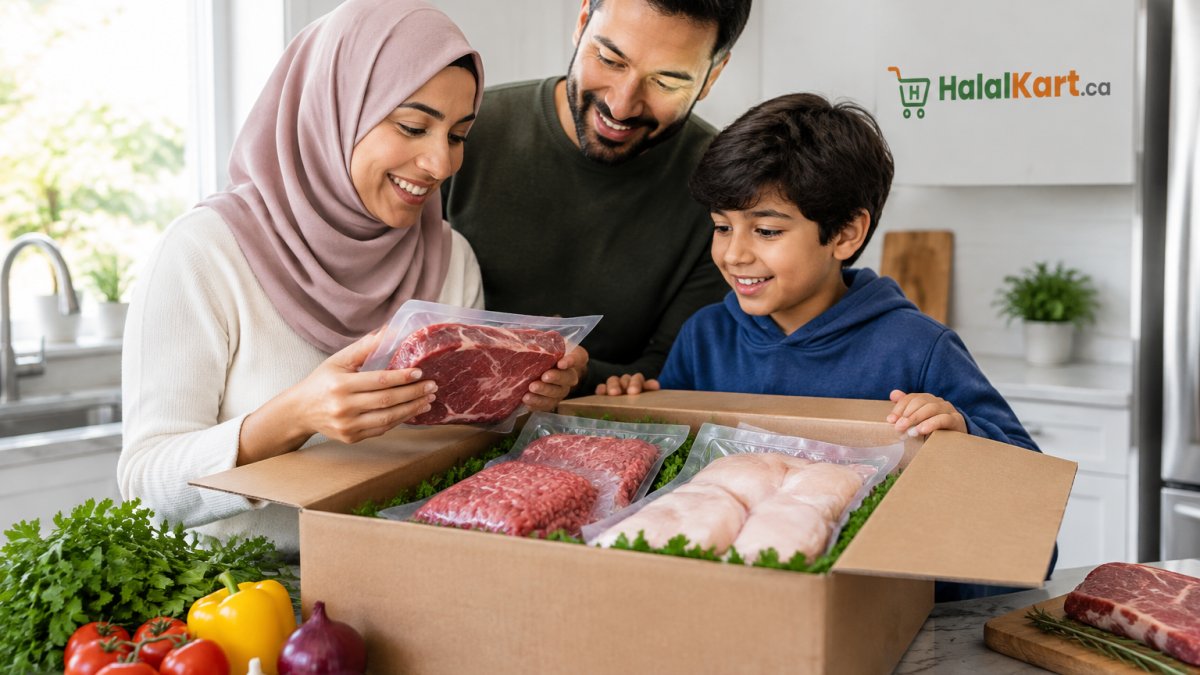
Ordering fresh halal meat online works well when the meat arrives cold-packed and you refrigerate it promptly. The key is verified certification and packaging you can trust.
HalalKart uses a 4-step verification process for the products it sells, and partners with HMA, ISNA, and IFANCA.
When your order lands:
- Open the box right away and check that meat is still cold.
- Refrigerate or freeze within two hours.
- Keep the packaging until you confirm the order is correct.
If you are comparing options, our guide to the best halal meat delivery services breaks down coverage and packaging. You can also read the benefits of buying halal meat online or learn how to order halal groceries for home delivery with confidence.
Many people store meat by habit rather than by temperature. HalalKart offers a verified halal marketplace for ordering groceries and fresh meat for home delivery. Get started with HalalKart and shop halal with peace of mind.
Frequently Asked Questions
How long can fresh halal meat stay in the fridge?
Most fresh halal meat keeps for 1 to 2 days in the fridge at or below 4°C. Ground meat and poultry are the most perishable and should be used within 1 to 2 days, while whole cuts of beef or lamb can last 3 to 5 days. Fish is the shortest at 1 to 2 days. Always check the pack date and label your meat with the date you refrigerated it so you can track halal meat storage timelines accurately.
What is the safest way to store fresh halal meat after delivery?
Unpack your delivery immediately and refrigerate any meat that is still cold to the touch. Keep meat in its sealed packaging or transfer it to an airtight container, and place it on the bottom shelf of the fridge to prevent drips onto other foods. If you will not cook it within 1 to 2 days, portion it and freeze it right away. Set your fridge to 4°C or lower and use an appliance thermometer to confirm.
How should I package halal meat before freezing it?
Remove the original tray and plastic wrap, which are not designed for long-term freezing. Wrap each portion tightly in plastic wrap, then place it in a freezer-safe bag or airtight container, pressing out as much air as possible. Label each package with the meat type and the date. This double-layer method prevents freezer burn and keeps the meat at its best for up to 3 months for ground meat and 6 to 12 months for whole cuts.
Does halal meat need different storage from other fresh meat?
The food safety rules are the same: keep it cold, sealed, and away from ready-to-eat foods. What differs is traceability. Because halal integrity depends on verified sourcing, keep the original packaging or label with the certification mark until you cook the meat. If you repackage for the freezer, note the supplier and certification on your label so you can confirm the meat's halal status later.