 How-to
How Can You Ensure Halal Meat Stays Fresh?
Last Updated: November 2, 2026
Quick Summary
To ensure halal meat stays fresh, keep it cold from store to home using an insulated bag with ice packs for trips over 20 minutes, then refrigerate it at 4°C or below on the bottom shelf in airtight packaging. Use ground meat and poultry within one to two days and beef or lamb cuts within three to five days, freezing anything you cannot cook in time.
- Bring an insulated bag or cooler with ice packs for any trip longer than 20 minutes.
- Set your refrigerator to 4°C or below and confirm the reading with an appliance thermometer.
- Store raw meat on the bottom shelf, away from cooked foods, fruit, and anything eaten uncooked.
- Discard raw meat that has been above 4°C for more than 2 hours.
- Thaw meat in the refrigerator, never on the counter, and cook it within one to two days.
Table of Contents
- Step 1: Transport Halal Meat Safely from Store to Home
- Step 2: How to Store Halal Meat in the Refrigerator
- How Long Does Halal Meat Last in the Fridge?
- Signs of Fresh Halal Meat: A Practical Inspection Checklist
- Freezing Halal Meat for Longer Storage
- Halal Meat Certification in Canada: What to Verify
- Shop Halal: Your Next Step for Fresh, Verified Meat
- Frequently Asked Questions
Step 1: Transport Halal Meat Safely from Store to Home
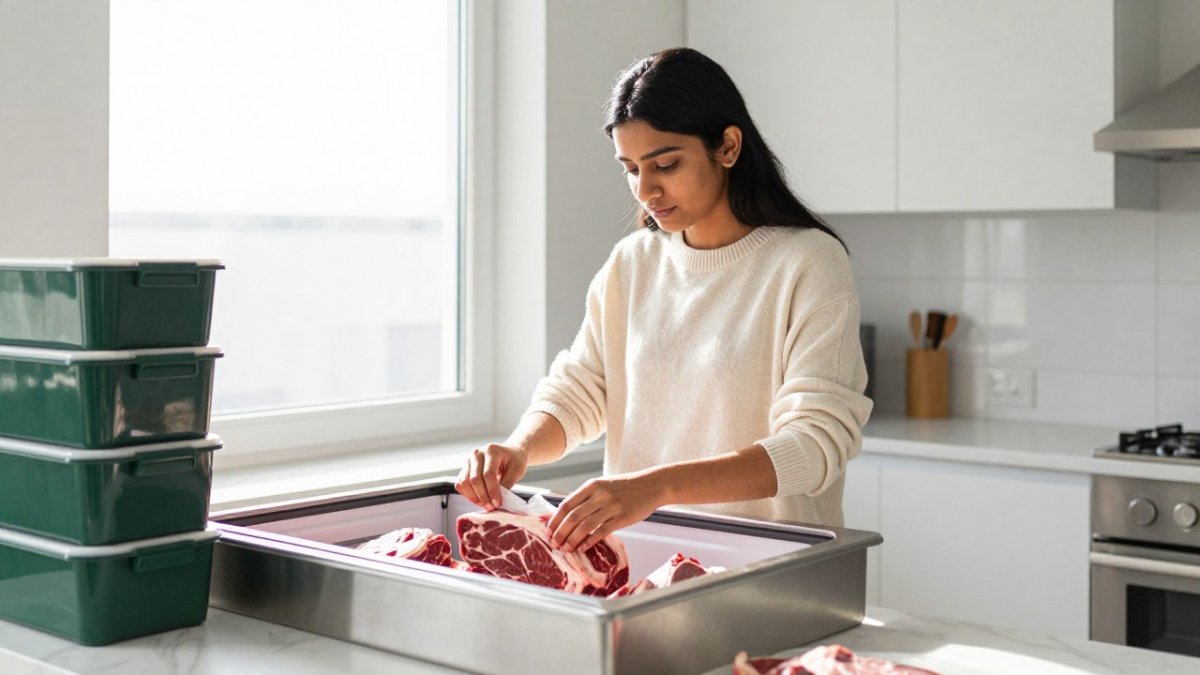
The most overlooked stage of halal meat freshness happens before the meat ever reaches your fridge. A warm car ride can undo careful handling at the counter. Treat the trip home as the first link in the cold chain, not an afterthought.
Here is how to protect the meat on the way:
- Bring an insulated bag or cooler with ice packs for any trip longer than 20 minutes.
- Ask the butcher to pack raw meat separately from ready-to-eat items.
- Place the meat in the coolest part of the vehicle, away from sunlight.
- Head straight home. Skip errands that add time to the journey.
Watch out: leaving meat in a warm trunk for an hour can push surface temperatures into the danger zone and speed up bacterial growth. If the trip home is long, a cooler is not optional.
Step 2: How to Store Halal Meat in the Refrigerator
Refrigerator storage is where most people lose freshness without realizing it. The goal is simple: keep raw meat cold, wrapped, and away from everything else, and verify the cold is actually holding.
Temperature Zones and Placement
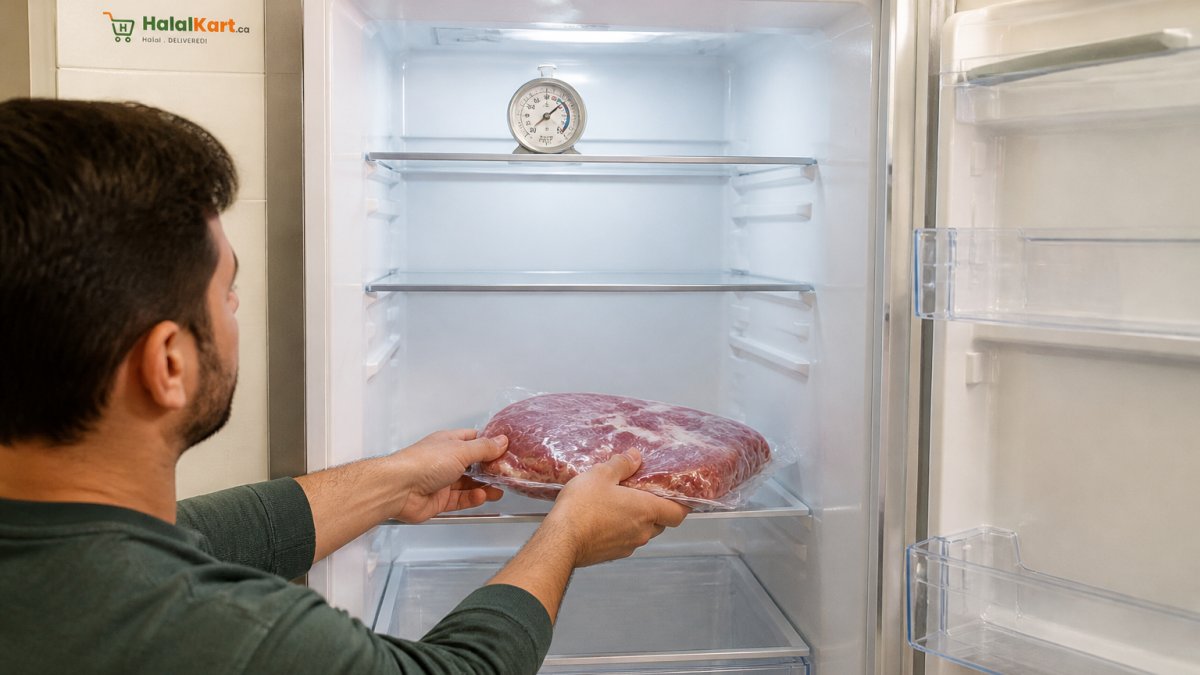
Set your refrigerator to 4°C or below (Safe food storage). Health Canada's food-safety guidance treats 4°C as the upper limit for cold storage, with the danger zone running from 4°C to 60°C (General Food Safety Tips). Use an appliance thermometer on a middle shelf to confirm the actual reading, since dials are often inaccurate by a degree or two.
The coldest part of the refrigerator is usually the bottom shelf, just above the crisper drawers. That is exactly where raw meat belongs. Placing it low means any drips fall onto a shelf, not onto fresh produce below.
Packaging and Cross-Contamination Prevention
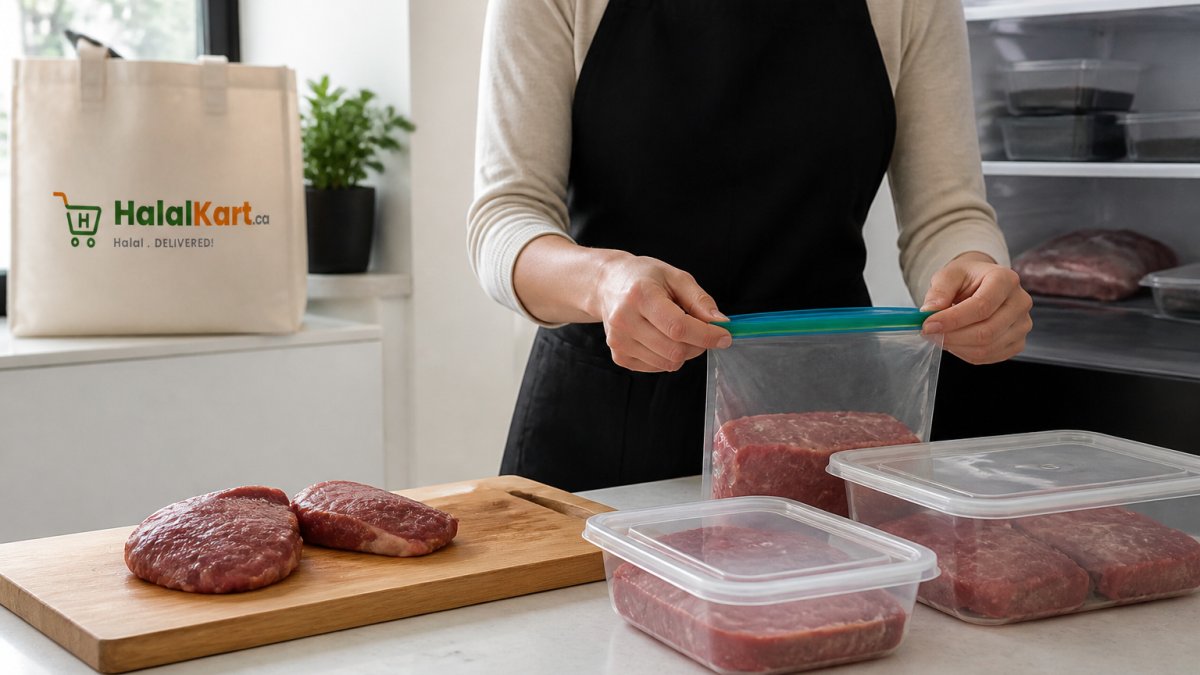
Keep meat in airtight packaging or a sealed container. Plastic wrap alone can leak. Set the package on a plate or tray to catch drips.
Separation matters as much as temperature. Store raw meat away from cooked foods, fruit, and anything you eat uncooked. For a deeper walkthrough, see our guide on preventing meat cross contamination at home.
Label each package with the date you stored it. You will thank yourself later when you are deciding what to cook first.
Monitoring Temperatures and Handling Power Outages
A refrigerator that runs warm for a few hours can undo a week of careful storage. Check the thermometer once a day, ideally in the morning before the door has been opened repeatedly.
- Short outage (under 4 hours): Keep the door closed. A full refrigerator holds temperature longer than an empty one. Add ice packs to the meat shelf if the outage is expected to last.
- Longer outage: Move meat to a cooler with ice packs and a thermometer. Discard any raw meat that has been above 4°C for more than 2 hours.
- After a outage: Confirm the refrigerator is back below 4°C before returning meat to the shelf. If the meat feels warm or the package has leaked, treat it as spoiled.
Storage Timelines by Cut and Packaging
Use these windows as a guide, and always trust your senses over the calendar. The ranges below reflect common food-safety guidance for refrigerator storage at 4°C or below.
| Product | Refrigerator (4°C or below) | Freezer (-18°C or below) |
|---|---|---|
| Ground meat (beef, lamb) | 1-2 days | 2-3 months |
| Poultry (whole or cut) | 1-2 days | 6-9 months |
| Beef steaks and roasts | 3-5 days | 4-12 months |
| Lamb chops and roasts | 3-5 days | 4-9 months |
| Vacuum-sealed whole cuts | Follow the pack date; typically 5-7 days unopened | 1-3 years if seal is intact |
Vacuum sealing extends refrigerator life because it limits oxygen exposure, but it does not replace temperature control. Check the pack date first.
If you cannot cook meat within its window, freeze it before the clock runs out. Our section on freezing below covers packaging and thawing.
How Long Does Halal Meat Last in the Fridge?
The answer depends on the animal and the cut. Use these timelines as a guide, and always trust your senses over the calendar.
- Chicken and poultry: one to two days
- Ground meat: one to two days
- Beef steaks and roasts: three to five days
- Lamb cuts: three to five days
Store meat in the coldest part of the fridge and use it within these windows. If you cannot cook it in time, freeze it before the clock runs out.
Signs of Fresh Halal Meat: A Practical Inspection Checklist
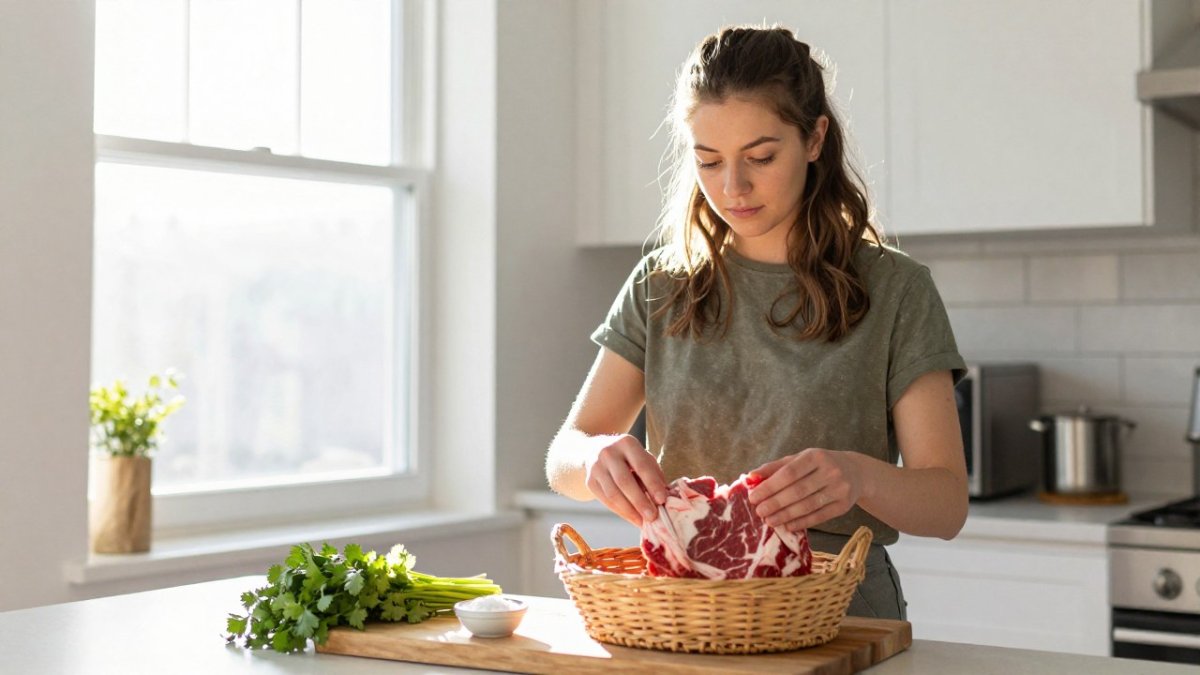
Freshness shows up in how meat looks, smells, and feels. Run through this checklist before you cook or freeze anything.
- Color is even and typical for the animal, not gray or brown at the edges
- Smell is neutral, with no sour or ammonia-like notes
- Surface feels firm and slightly damp, not slimy or sticky
- Package is intact, with no leaks or bulging
- No pooling liquid inside the wrap
- Stored date is within the safe window
A common mistake is rinsing slimy meat and hoping for the best. Spoilage you can smell or feel means it is past saving. Toss it.
Freezing Halal Meat for Longer Storage
Freezing pauses spoilage but does not stop it forever. Pack meat tightly in airtight packaging, press out air, and label with the date. Most cuts keep well for several months at -18°C or colder.
Thaw meat in the refrigerator, never on the counter (Safely defrosting foods). Plan ahead so it has time to defrost safely.
Safe Thawing and Refreezing Guidelines
- Thaw in the fridge on the bottom shelf, in a container to catch drips.
- Cook thawed meat within one to two days.
- Refreezing is safe only if the meat was thawed in the fridge and never left warm.
- Never refreeze meat that sat out at room temperature.
Halal Meat Certification in Canada: What to Verify
Halal certification confirms that meat was prepared according to Islamic requirements, covering slaughter procedures, animal welfare, and blood drainage. Certification bodies inspect facilities and issue documentation you can check.
Look for a recognized certifier's mark on the package. Ask the seller which organization certified the meat. For a deeper walkthrough, read our step-by-step guide on how to verify halal meat certification. Reputable sellers keep certificates on file and share them on request. You can also follow our guide on how to verify halal meat online before you buy.
HalalKart works with recognized halal monitoring organizations and reviews vendor documentation as part of its verification process.
Shop Halal: Your Next Step for Fresh, Verified Meat
Freshness and halal integrity depend on the same things: a cold chain that holds, packaging that protects, and a source you can trust. Get any of those wrong and the meat suffers, no matter how carefully you store it at home.
That is where HalalKart comes in. HalalKart is a halal-only online marketplace with a rigorous 4-step verification process, vendor background checks, and partnerships with recognized halal monitoring organizations.
Get started with HalalKart and shop fresh, verified halal meat delivered to your door.
Frequently Asked Questions
How long is halal food good in the fridge?
Cooked halal meat and leftovers stay fresh for 3 to 4 days in the refrigerator when stored in airtight containers at or below 4°C. Raw halal meat should be cooked or frozen within 1 to 2 days for ground meat and poultry, or 3 to 5 days for whole cuts like beef or lamb. Always label packages with the date you stored them to track shelf life accurately.
Does halal certification guarantee that meat is fresh?
No, halal certification confirms that the animal was slaughtered according to Islamic requirements and that the facility meets halal standards, but it does not certify freshness. Freshness depends on post-slaughter handling, cold chain maintenance, and storage conditions. To ensure both halal integrity and freshness, look for a certification mark from a recognized body and inspect the meat for signs like firm texture, neutral smell, and no excessive liquid.
What is the safest way to thaw frozen halal meat?
Thaw frozen halal meat in the refrigerator overnight, placing it on the bottom shelf in a container to catch drips. This keeps the meat below 4°C throughout thawing. For quicker thawing, use the microwave's defrost setting and cook immediately. Never thaw meat at room temperature, as bacteria multiply rapidly above 4°C. Once thawed, cook the meat within 1 to 2 days and never refreeze unless it was thawed in the refrigerator.
How can I tell if halal meat is fresh?
Fresh halal meat has a firm, slightly moist texture and a clean, mild smell. The color should be consistent: beef is deep red, chicken is pinkish-white, and lamb is reddish-pink. Avoid meat that feels slimy, has a sour or ammonia-like odor, or shows dark or greenish patches. Also check that the packaging is intact and that the meat is cold to the touch when you buy it.