 How-to
How to Store Halal Meat Properly at Home
Last Updated: November 21, 2026
Quick Summary
Store halal meat at 4°C or lower in the fridge, where minced meat, poultry, fish and cooked meat last 1 to 2 days and beef and lamb cuts last 3 to 5 days. For longer storage, freeze halal meat at −18°C or lower, where it keeps for 2 to 6 months depending on the cut. Always keep raw meat sealed on the bottom shelf and thaw it in the fridge, never on the counter.
- Pack a cooler bag with ice packs before you leave and head straight home with no detours.
- Label and date every package with the cut and the date you froze it.
- Vacuum sealing removes the most air but does not extend safe storage beyond the freezer windows.
- A full freezer holds temperature for about 48 hours during a power outage, a half-full one about 24 hours.
- Thaw meat in the fridge, planning about a day for small cuts and 24 hours or more for a large roast.
Table of Contents
- Getting Halal Meat Home Safely
- How Long Does Halal Meat Last in the Fridge?
- How Long Does Halal Meat Last in the Freezer?
- Halal Meat Cross-Contamination Prevention
- How to Thaw Halal Meat Safely
- What to Do When the Power Goes Out
- Shop Verified Halal Meat with Confidence
- Frequently Asked Questions
Getting Halal Meat Home Safely
The trip from the shop to your kitchen is where more halal meat goes bad than most people realize. Keeping it cold on the way home is the first real test of how to store halal meat properly, and it starts before you ever open your fridge.
Here is the rule we follow: meat should spend as little time as possible above 4°C. A sealed cooler bag with ice packs handles most trips. For longer drives, double up on ice packs and keep the bag out of direct sun.
Keep It Cold on the Drive Home
- Pack a cooler bag with ice packs before you leave
- Keep raw meat separate from ready-to-eat items
- Place the bag in the trunk or on the floor, not on a hot seat
- Head straight home, no detours
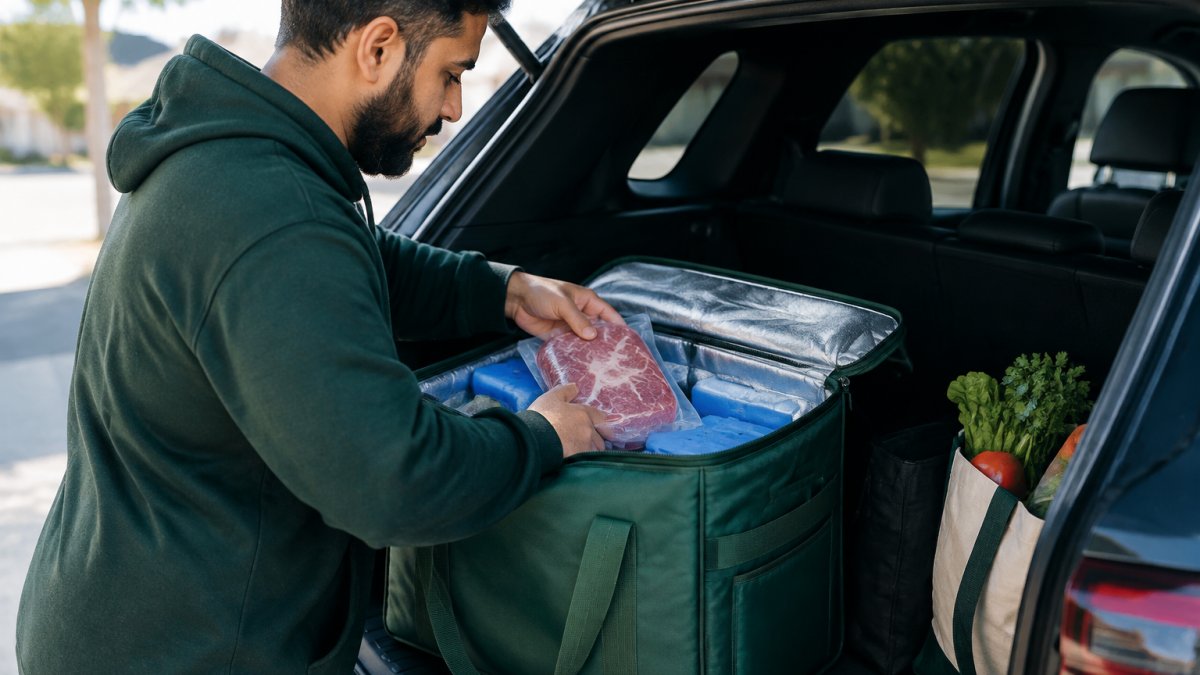
Watch out: leaving meat in a warm car while you run errands is the most common way people undo good cold-chain handling before the meat ever reaches the fridge.
If you want a deeper walkthrough on this step, our guide on storing fresh halal meat the right way covers it in detail.
How Long Does Halal Meat Last in the Fridge?
Halal meat lasts about 1 to 2 days in the fridge for minced meat, 3 to 5 days for fresh cuts, and 1 to 2 days for cooked meat. The fridge should sit at 4°C or lower, checked with a thermometer rather than trusted by feel.
Fridge storage times depend on the meat type and how it was handled before it reached you. Store raw meat on the bottom shelf, in a sealed tray or airtight container, so juices cannot drip onto other food.
Fridge Storage Times by Meat Type
| Meat Type | Fridge Life (4°C or lower) |
|---|---|
| Minced meat | 1-2 days |
| Chicken and poultry | 1-2 days |
| Beef and lamb cuts | 3-5 days |
| Fish and seafood | 1-2 days |
| Cooked meat | 1-2 days |
Fridge Life (4°C or lower)
Label and date every package so you never have to guess. For a closer look at fridge temperatures and storage methods, read our guide on how to keep halal meat fresh.
How Long Does Halal Meat Last in the Freezer?
Halal meat lasts 2 to 6 months in the freezer at −18°C or lower, but the exact window depends on the cut, the fat content, and how well it is wrapped. Freezing stops bacterial growth but does not improve quality, so the clock on texture and flavor starts the moment the meat goes in. A common pattern among butchers and home cooks is to treat these windows as quality limits, not safety limits: meat frozen longer is still safe if it stayed at −18°C, but it will dry out, oxidize, and lose flavor.
Use these cut-level windows as a practical guide:
| Meat Type | Freezer Life at −18°C or Lower | Notes |
|---|---|---|
| Minced meat | 2-3 months | Highest surface area, fastest quality loss |
| Chicken and poultry (whole) | 6-9 months | Whole birds keep longer than pieces |
| Chicken and poultry (pieces) | 4-6 months | Bone-in pieces dry out faster |
| Beef cuts (steaks, roasts) | 4-6 months | Fat cap protects lean cuts |
| Lamb cuts | 4-6 months | Strong flavor can intensify over time |
| Offal (liver, kidney) | 2-3 months | High moisture, rapid quality decline |
| Fish and seafood | 2-3 months | Oily fish shortest |
| Cooked meat | 2-3 months | Cool completely before freezing |
Label every package with the cut and the date you froze it. A freezer inventory taped to the door or kept on your phone prevents the common pattern of finding unlabeled meat months later and guessing.
Wrapping Methods and Freezer Burn
Freezer burn is dehydration, not spoilage. It happens when air reaches the meat surface and draws out moisture, leaving gray-brown patches that are safe to eat but dry and tough. The fix is to exclude air, not to extend storage indefinitely.
- Cling film alone: adequate for short storage, but air pockets form easily.
- Butcher paper or freezer paper: good for whole cuts, less effective on irregular shapes.
- Vacuum sealing: removes the most air and protects quality best, but it does not extend safe storage beyond the windows above. A vacuum-sealed mince frozen for eight months is still safe but will taste flat.
- Rigid airtight containers: best for mince, stew meat, and offal, which conform poorly to bags.
Watch out: wrapping meat while it is still warm traps steam, which forms ice crystals inside the package and accelerates freezer burn. Cool meat in the fridge first, then wrap and freeze.
Halal-Specific Freezer Separation
If your freezer holds both halal and non-halal items, keep raw halal meat on a dedicated shelf or in a labeled container, and never reuse a bag or container that held non-halal meat without washing it. The religious handling consideration is separate from the food-safety rule: cross-contamination risk applies to any raw meat, but keeping halal meat distinct also respects dietary boundaries. Use separate tongs, trays, and storage containers for halal meat, and store them where they cannot be confused with general-use items.
Halal Meat Cross-Contamination Prevention
Cross-contamination happens when raw meat juices touch ready-to-eat food, and it is the biggest food-safety risk in a home kitchen. Keep raw meat separate at every stage: shopping, transport, fridge storage, and preparation.
Use separate cutting boards and knives for raw meat. Wash hands, counters, and utensils with hot soapy water after handling raw meat. Never reuse a plate that held raw meat without washing it first.
Shelf Placement and Wrapping
Place raw meat on the coldest shelf, usually the bottom shelf, in a sealed tray or leak-proof wrapping. This stops drips from reaching food below. Keep raw meat away from the vegetable drawer and anything eaten raw.
- Wrap meat in butcher paper or food-safe packaging
- Use airtight containers for marinated meat
- Keep raw and cooked meat on separate shelves
- Check for leaks before storing
Our step-by-step guide on preventing meat cross contamination at home walks through fridge storage and safe cooking temperatures.
How to Thaw Halal Meat Safely
Thaw halal meat in the fridge, never on the counter. Plan ahead: small cuts take about a day, while a large roast can take 24 hours or more. Keep the meat on a plate or tray on the bottom shelf so drips stay contained.
For faster thawing, use the microwave on a defrost setting and cook the meat immediately afterward. Never refreeze meat that was thawed at room temperature.
- Fridge thaw: safest, plan 24 hours ahead
- Cold water thaw: keep meat sealed, change water every 30 minutes
- Microwave thaw: cook right away
What to Do When the Power Goes Out
A power outage puts your cold chain at risk, and the decisions you make in the first few hours determine whether your halal meat stays safe. Keep the fridge and freezer doors closed as much as possible. A full freezer holds its temperature longer than a half-empty one, so fill empty space with frozen water bottles or ice packs before an outage if you can.
Use these time and temperature thresholds as your guide:
- Refrigerator: food stays safe for up to 4 hours if the door stays closed. After 4 hours without power, check the internal temperature with a thermometer. If it is above 4°C, discard raw meat, poultry, fish, and cooked meat.
- Freezer: a full freezer holds temperature for about 48 hours; a half-full freezer for about 24 hours. If the freezer still contains ice crystals and the meat feels firm and cold, it can be refrozen or cooked. If the meat has thawed and reached above 4°C for more than 2 hours, discard it.
- Partial thaw: meat that thawed but stayed at 4°C or lower can be refrozen, though quality will suffer. Cook it first if you want to preserve texture.
Watch out: never taste meat to judge whether it is safe. Pathogenic bacteria do not always produce off smells or flavors, and the only reliable test is temperature.
Halal-Specific Assessment After an Outage
If you keep halal meat separate from non-halal items, use the outage as a prompt to check that separation held. Inspect packaging for leaks or cross-contact, and discard any halal meat that was stored below non-halal raw meat without a barrier. If you are unsure whether a package stayed cold enough, err on the side of discarding it: the cost of replacing meat is lower than the cost of foodborne illness.
After a disruption, use our delivery-day freshness checklist to judge whether meat is still safe before you cook or refreeze it. For longer outages, a probe thermometer kept in the fridge door is the single most useful tool you can have on hand.
Shop Verified Halal Meat with Confidence
Storing halal meat properly starts with buying from a source you can trust. HalalKart is a dedicated online marketplace where every product passes a rigorous 4-step verification process, including background checks and documentation reviews for all vendors. We partner with recognized halal monitoring organizations, so you get peace of mind with every order.
Our platform brings halal-conscious products together in one place, delivered to your door. If you are ready to Shop Halal with confidence, learn why verified halal meat delivery matters before your first order. And if you supply halal meat yourself, you can Become a Vendor to reach customers who care about proper handling from source to storage.
Good storage protects the meat you bought, but it cannot fix a weak supply chain. HalalKart connects you with verified vendors, checks certification and documentation, and monitors standards through ongoing audits and community feedback. Get started with HalalKart and store every cut with confidence, knowing it arrived verified.
Frequently Asked Questions
How long can halal meat stay in the fridge?
Fresh halal meat keeps for about 1 to 2 days for minced meat and poultry, 3 to 5 days for beef and lamb cuts, and 1 to 2 days for fresh fish, stored at 4°C or lower. Keep it on the bottom shelf in a sealed tray so juices cannot drip onto other food. Label the package with the date you bought it and use it within those windows, or freeze it if you will not cook it in time.
Can I store halal meat next to non-halal food in the same fridge?
You can, but only with strict separation. Keep raw halal meat in its own sealed, leak-proof container on the bottom shelf, away from ready-to-eat foods and anything non-halal. Use separate cutting boards and utensils, and wash hands and surfaces after handling. If cross-contact with non-halal meat is a concern for your household, dedicate a shelf or a container to halal items so drips and spills never mix.
How do I thaw frozen halal meat safely?
The safest method is to move the meat to the fridge the night before and let it thaw at 4°C or lower, keeping it in a sealed tray on the bottom shelf. For a faster thaw, place the sealed package in cold water and change the water every 30 minutes, or use the defrost setting on your microwave and cook immediately after. Never thaw meat on the counter at room temperature, because bacteria multiply quickly in the danger zone.
Can I refreeze halal meat after thawing it?
Refreezing is only safe if the meat was thawed in the fridge and has not been left out. Meat thawed in cold water or the microwave should be cooked before it is frozen again. Refreezing does affect quality, since moisture loss makes the meat drier, so portion it before freezing the first time. Always label and date each package so you can track how long it has been stored.