 How-to
Is Halal Certified Meat Delivery Near Me Worth It?
Last Updated: November 12, 2026
Quick Summary
Halal certified meat delivery near me is worth it when the service names its certifying body and shows a current certificate covering the exact species and cut you order. Verify the certificate's scope, expiry date, and supplying facility before your first order, then compare delivered cost per kilogram rather than headline price.
- A halal label is a claim, not a certificate; ask for the certificate document itself.
- Confirm the certificate names the species, product type, and facility address you are buying.
- Note the certificate number and expiry date so you can re-check renewal later.
- Compare services by dividing the total order cost by the kilograms in the basket.
- Pickup can remove the delivery fee entirely if a nearby supplier offers it.
Table of Contents
- Why Halal Meat Delivery Near Me Is Changing How Families Shop
- Convenience Without Compromising Halal Integrity
- How to Verify Halal Meat Certification Before You Order
- What a Trustworthy Halal Meat Delivery Service Looks Like
- Fresh Halal Meat Delivery: Cuts, Cold-Chain, and What Arrives at Your Door
- Storing and Portioning Your Halal Meat Order
- Shop Halal With a Marketplace You Can Verify
- Frequently Asked Questions
Why Halal Meat Delivery Near Me Is Changing How Families Shop
Searching for halal certified meat delivery near me used to mean calling three butchers and hoping one answered. Today it means comparing certification, cold-chain packaging, and delivery terms before you add a single item to a cart.
The convenience is obvious. The trust question is not.
Below, we break down how to verify a certificate before you order, what a trustworthy service looks like, and how to compare delivery costs fairly.
Convenience Without Compromising Halal Integrity
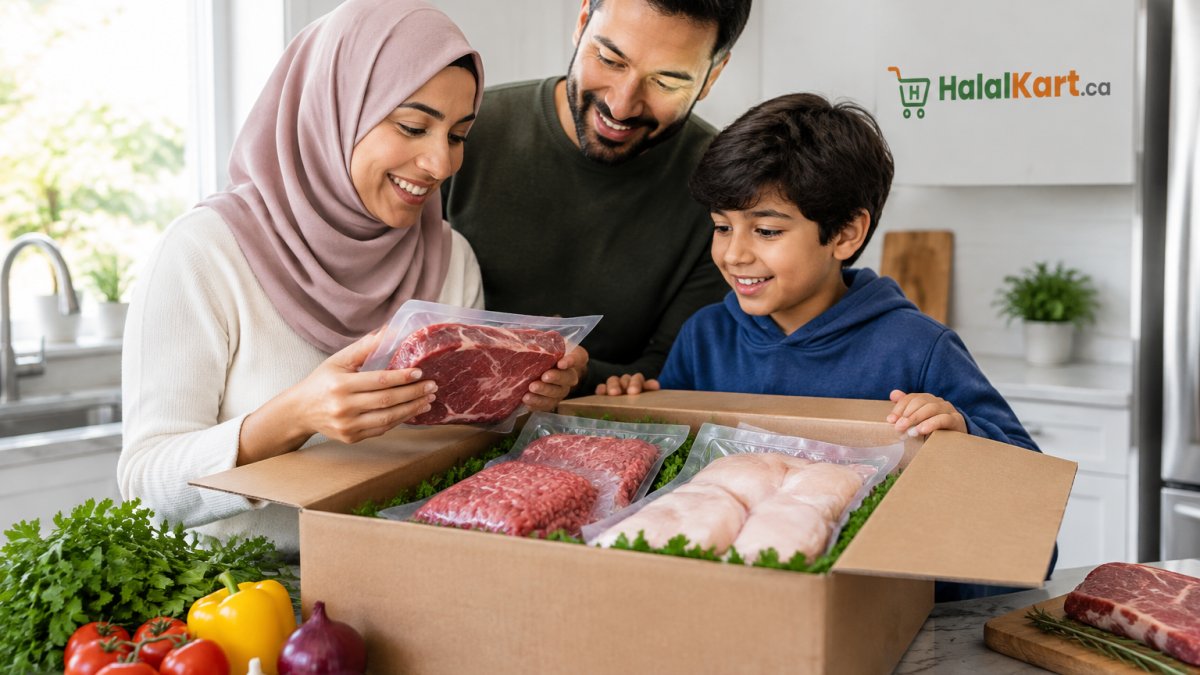
The real change is not that meat can be delivered. It is that verification now travels with the product. A properly run halal meat delivery service publishes who certifies its suppliers, what slaughter standard applies, and how it handles a complaint.
Many families find the hardest part is not finding meat. It is finding proof. A label that says "halal" is a claim, not a certificate.
How to Verify Halal Meat Certification Before You Order
Verification is a repeatable process, not a gut check. Most shoppers who get burned by a halal delivery order skipped one of the steps below, usually the scope check. Do this once per supplier, save the answers in a note on your phone, and you can order with confidence for months.
- Identify the certifying body by name. Look for a named organization on the package, product page, or supplier's certificate page, not a generic "halal" badge or a crescent-and-star graphic. A certifier is an independent organization that inspects the facility and issues written confirmation. If no organization is named, treat the product as an unverified halal claim rather than a certified product.
- Read the certificate's scope, not just its logo. A valid certificate names the species (beef, chicken, lamb, goat), the product types (fresh cuts, ground, processed, deli), and the specific facility or plant address. A certificate covering chicken at one plant does not cover beef at another. Confirm the exact species and product type you are buying appear on the document.
- Check the expiry date and the certificate number. Certificates lapse, and a lapsed certificate means the plant is no longer being monitored regardless of what the label says. Note the certificate number and expiry so you can re-check later; a supplier that rotates certificates should be able to give you the current one on request.
- Confirm the supply-chain link. Ask which slaughterhouse or processor supplied your specific cut, and whether that facility appears on the certifier's certified-plant list. This is the step most shoppers skip, and it is where vague answers show up. If the supplier can name the facility, you can cross-check it against the certifier's published list.
- Ask what happens after certification. Ask how often the supplier's vendors are re-audited and whether the marketplace reviews updated certificates before they expire. A supplier that cannot describe its re-verification process deserves closer questioning.
What a Valid Certificate Contains, and What a Halal Claim Does Not
A certificate is a document, and it has recognizable parts: the certifying body's name and contact details, the certified facility's name and address, the scope (species and product types), the standard or method the facility is certified against, an issue date, an expiry date, and a certificate or registration number.
Watch out: a logo on a website is not the same as a certificate on file. Ask for the certificate document itself, or a link to the certifier's listing for that facility, before you treat a product as certified.
Questions to Ask a Supplier Before Your First Order
A supplier that has done the work answers these without hesitation:
- Which certifying body certifies each supplier, and can you share the current certificate?
- Which facility processed the specific cut I am ordering?
- Does the certificate cover the species and product type I am buying?
If the answers are vague, or the supplier deflects to "all our meat is halal," treat the certification as unverified and keep looking. For a fuller walkthrough of checking certificates and supplier credentials online, see our guide on how to verify halal meat online.
What a Trustworthy Halal Meat Delivery Service Looks Like
Trust shows up in specifics, not slogans.
Watch out: the most common failure is a service that displays a certification logo but cannot tell you which facility supplied your specific cut.
If you want to see how services stack up on certification, coverage, and packaging side by side, our comparison of the best halal meat delivery services lays out the criteria that actually matter.
Fresh Halal Meat Delivery: Cuts, Cold-Chain, and What Arrives at Your Door
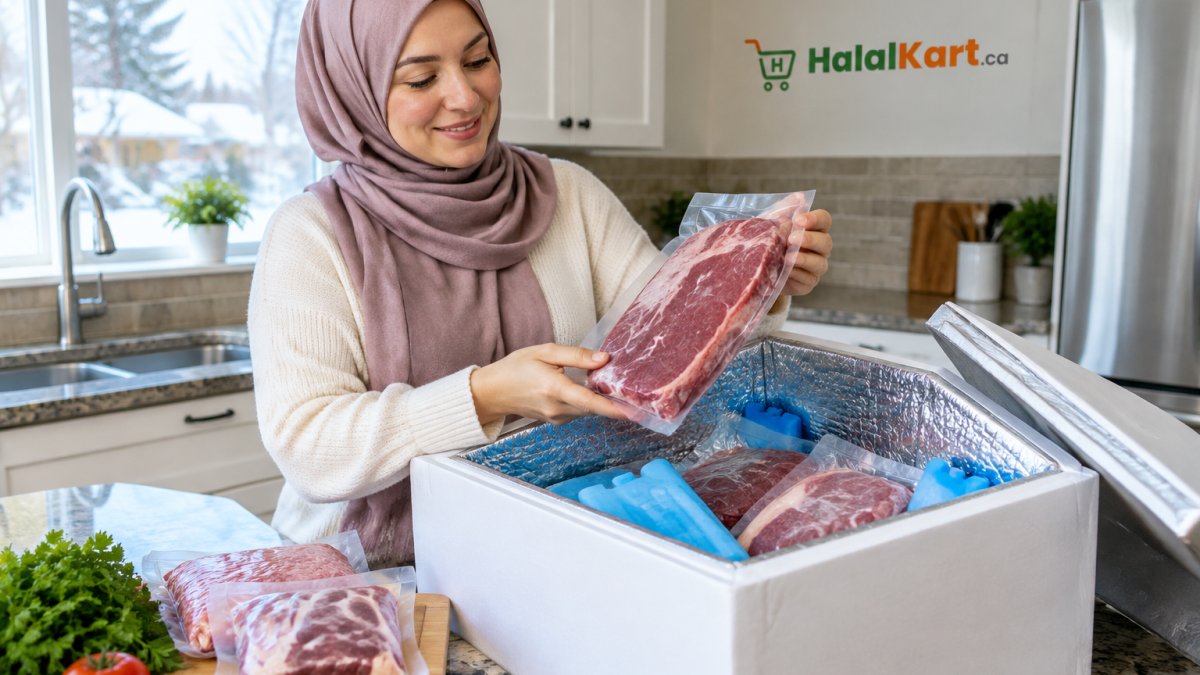
Fresh halal meat delivery works best when the cold chain holds from the plant to your kitchen.
Storing and Portioning Your Halal Meat Order
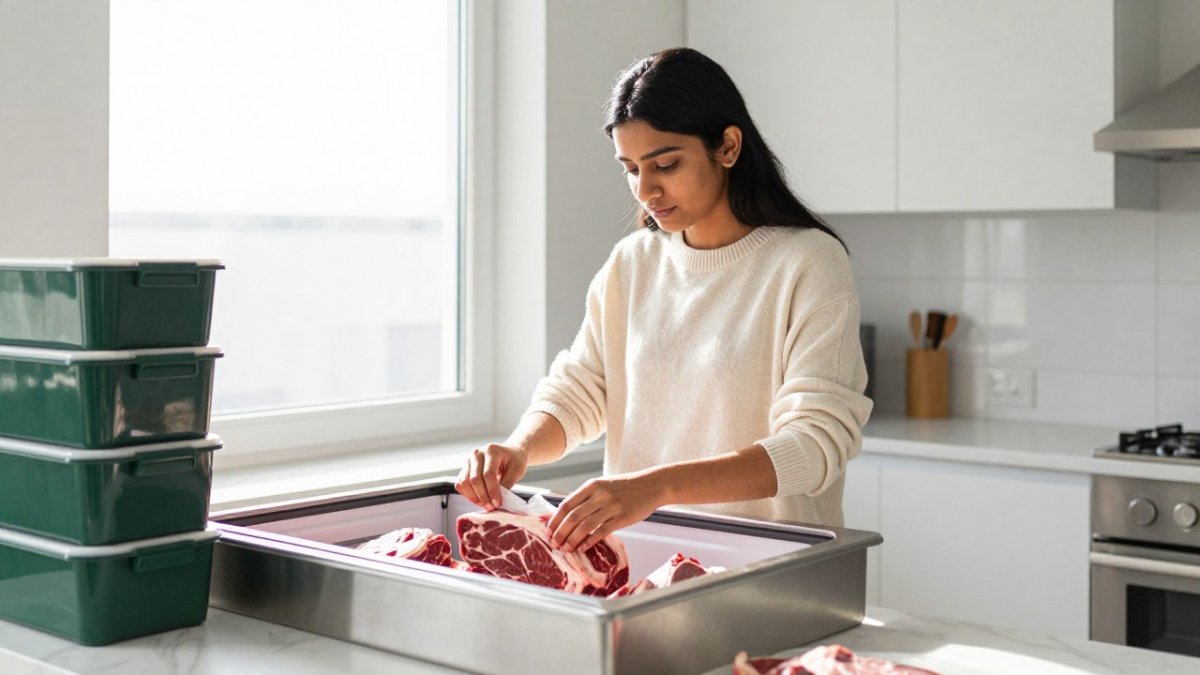
A delivered order needs a plan before it needs a fridge. Portion meat into meal-sized packs the day it arrives, label each with the date, and freeze what you will not cook within a few days.
Keep your fridge cold enough and your freezer colder still, and rotate older packs to the front. If you want the specific temperature targets and storage methods that protect both flavor and safety, our guide on keeping halal meat fresh covers them in detail.
Watch out: refreezing meat that has already thawed and sat in the fridge is the mistake that ruins texture and raises safety risk. Decide the portion size before it goes in the freezer, not after.
Shop Halal With a Marketplace You Can Verify
The throughline of this whole guide is simple: convenience is only worth having when verification comes with it.
That is the model we run at HalalKart. You can explore halal vendors and see the suppliers behind the products before you order.
The challenge is not finding halal meat online. It is finding a service that proves its claims before the box arrives.
Frequently Asked Questions
How can I find halal-certified meat delivery near me?
Start by checking whether the service publishes which certifying body verifies its meat, then confirm that body is recognized and that the certification covers the specific cuts and products you want. Look for a stated delivery area that includes your postal code, clear cold-chain packaging details, and a published process for handling complaints. A halal meat delivery service that answers these questions openly is easier to trust than one that only uses the word halal as a label.
How can I verify that meat is halal-certified?
Ask for the certifying body's name and check its logo on the packaging or product page. Certification should cover the slaughter method, the facility, and the specific product line, not just the store. Reputable sellers keep documentation on file and can share it on request. If a seller cannot name the certifier or explain how often audits happen, treat the claim as unverified until you have more information.
Does halal meat delivery arrive fresh and safely packaged?
Fresh halal meat delivery should arrive in insulated packaging with enough coolant to keep the meat cold from dispatch to your door. Check the delivery window, ask how orders are packed during warmer months, and refrigerate or freeze the meat as soon as it arrives. If a package feels warm or shows damaged seals, contact the seller before cooking or storing it, and keep photos of the packaging as evidence.
Can I choose specific cuts when ordering halal meat online?
Most online halal butchers let you pick cuts such as steaks, mince, whole chickens, lamb shoulders, or goat pieces, and some offer cut-to-order requests. Check whether weights are listed per kilogram and whether you can request bone-in or boneless preparation. If you need a specific size for a family meal or freezer plan, confirm the details before checkout so you receive what you expect.