 How-to
Is Your Delivered Meat Still Fresh? How to Check
Last Updated: November 8, 2026
Quick Summary
To ensure meat freshness during delivery, probe the thickest part of each cut with a digital thermometer: chilled meat should read 0°C to 4°C and frozen meat -18°C or colder. Then inspect packaging for leaks or loose seals and check color, odor, and firmness. Chill meat within two hours, or one hour on a hot day.
- Chilled meat above 5°C is a warning; treat it as unsafe if it stayed there long.
- Never accept leaking or punctured packs, since a seal failure is a food safety issue.
- Meat should sit out no more than two hours after delivery, cut to one hour on a hot day.
- Bacteria multiply fastest between 4°C and 60°C, so chill your delivery promptly.
- Photograph the thermometer reading with the probe still in the meat before contacting the seller.
Table of Contents
- Why Fresh Meat Quality During Delivery Comes Down to Minutes
- How to Check Meat Freshness at the Door
- Safe Meat Delivery Temperature: What to Measure and How
- How Long Can Meat Sit Out After Delivery?
- What to Do When a Delivery Arrives Warm, Late, or Damaged
- Halal Meat Certification Verification Alongside Freshness Checks
- Storing and Freezing Your Delivery the Right Way
- Order Your Next Halal Meat Delivery With Confidence
- Frequently Asked Questions
Why Fresh Meat Quality During Delivery Comes Down to Minutes
Ensuring fresh meat quality during delivery is a race against time from the moment your order leaves the cold room.
Cold chain breaks are invisible: a box can look fine while the meat inside has drifted into the danger zone. Judging freshness by color alone is a mistake.
- Temperature matters more than appearance. A cut can look red and fresh while sitting at an unsafe temperature.
- The first ten minutes count. Getting meat into the fridge or freezer fast protects both safety and flavor.
- Packaging tells a story. Leaks, loose seals, and excess moisture are warning signs.
Below, we show you what to inspect, how to measure it, and what to do when something is wrong, plus how halal certification verification fits alongside your freshness checks.
How to Check Meat Freshness at the Door
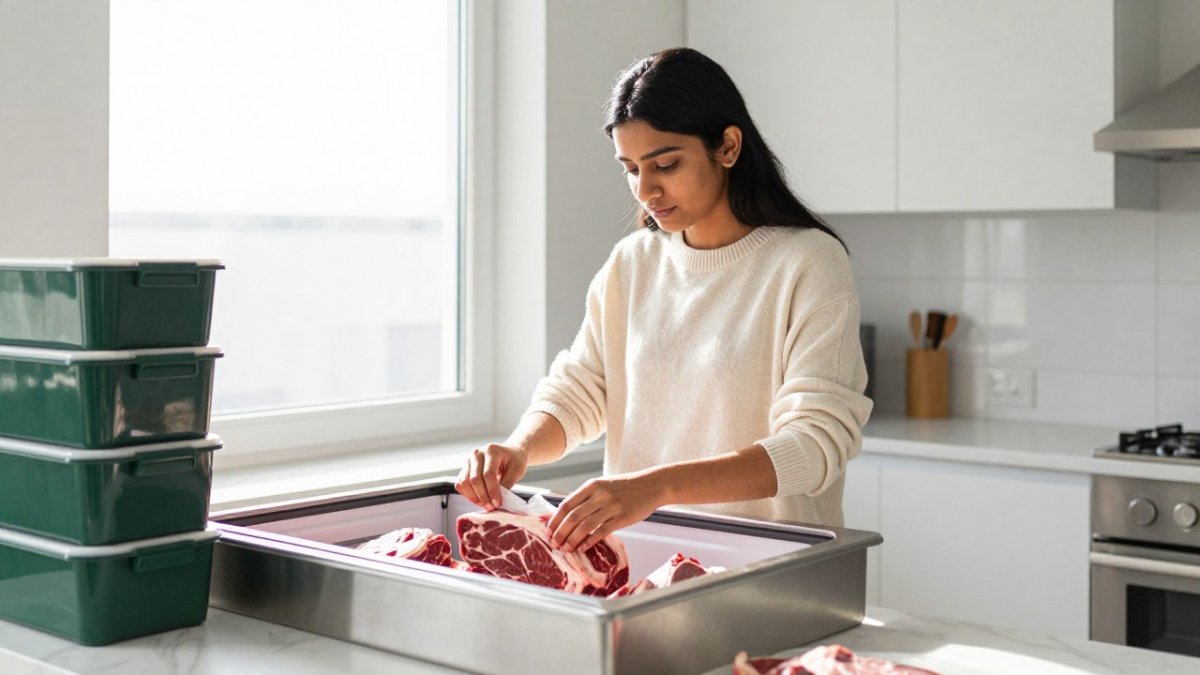
Checking meat freshness at the door means working through a fixed sequence: confirm delivery conditions, measure temperature, inspect packaging, then assess color, odor, texture, and firmness. A disciplined two-to-three-minute inspection catches most problems and gives you evidence if you need to escalate.
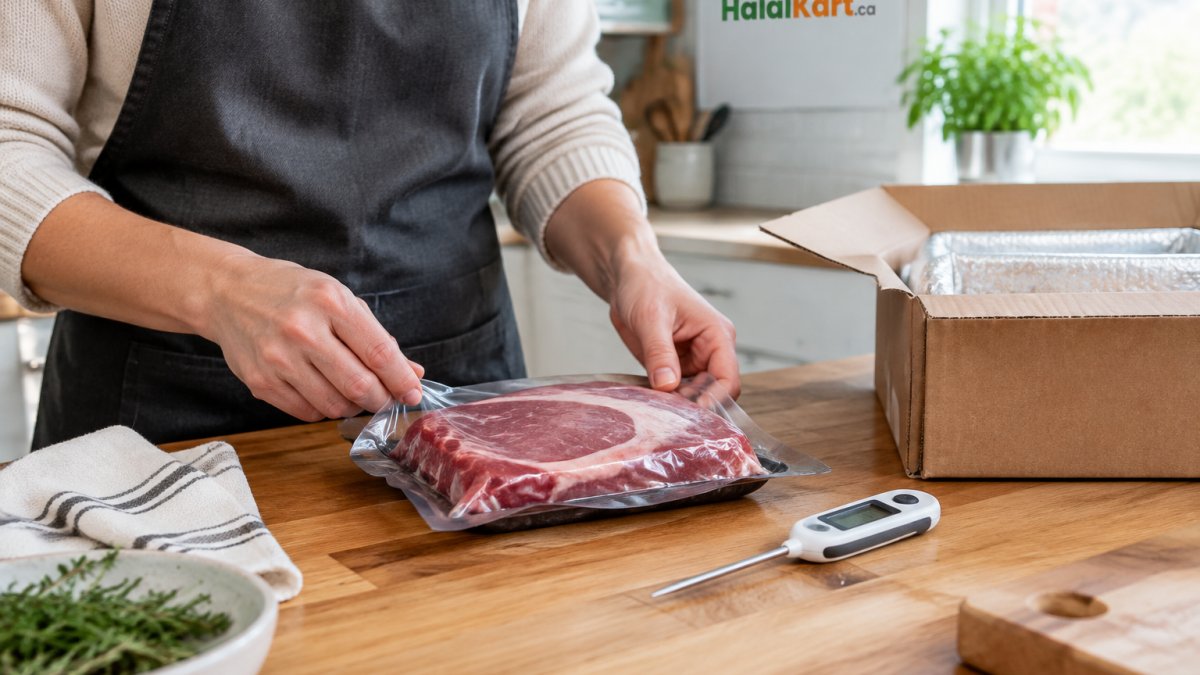
Step 1: Confirm the Delivery Conditions
Start with the outside of the box, not the meat.
- Time at the doorstep: Note when the box was dropped off and when you brought it inside. Time on a porch counts against the cold chain, even in cool weather.
- Box condition: Look for crushed corners, damp patches, or condensation, which usually mean a gel pack leaked or meat purge escaped.
- Insulation and coolant: Check whether gel packs are still frozen or cool, or whether dry ice has fully sublimated. Warm, sloshy gel packs are a warning sign.
Watch out: a box that feels cold on the outside can still hold meat that has drifted above 4°C, so never skip the probe step.
Step 2: Measure the Temperature Before Anything Else
Temperature is the single most reliable freshness signal, and it beats appearance every time. Measure before you judge color or smell.
Use a digital instant-read probe thermometer and follow this order:
- Sanitize the probe before and after each use.
- Insert into the thickest part of the cut, not the surface. Surface readings on a cold pack can be misleadingly low.
- Wait for the reading to settle, usually a few seconds on a basic instant-read model.
- Check more than one spot on larger cuts, and check the center of ground meat packs.
- Record the reading and the time you took it.
Interpret the numbers against these thresholds:
- Chilled meat at 0°C to 4°C: Within the safe range. Move it to the fridge promptly.
- Chilled meat at 4°C to 5°C: Borderline. Chill it immediately and use it first.
- Chilled meat above 5°C: A warning. If it has been above that range for long, treat it as unsafe.
Hands are poor thermometers, and a cold gel pack next to the meat can make the surface feel colder than the interior. Act on the probe reading.
Step 3: Inspect Packaging Integrity and Leaks
Packaging integrity is the quiet hero of meat delivery. A broken seal lets in air and bacteria and is often the first visible sign that the cold chain was disturbed.
Check these points:
- Vacuum-sealed packaging: The plastic should hug the meat tightly. Loose or ballooning packs have lost their seal.
- Leaking packages: Any liquid in the box or on a pack means a breach. Do not accept it.
- Excess moisture: A little purge is normal. A pool of liquid is not.
Watch out: never wash or re-wrap compromised meat and hope for the best. A seal failure is a food safety issue, and re-wrapping hides the evidence you would need for a claim.
Step 4: Assess Color, Odor, Texture, and Firmness
Once temperature and packaging pass, move to the sensory checks. Fresh meat has a characteristic look and feel.
- Beef and lamb: Deep red to purplish-red. Some brownish tint on the surface can be normal after air exposure.
- Pork: Pink to light rose. Pale or grayish tones are a red flag.
- Poultry: Pinkish-white. Gray or greenish patches mean trouble.
Now do the press test. Press the meat with a clean finger. Fresh meat springs back quickly. Meat that stays dented or feels sticky has lost firmness, which points to age or poor handling.
Smell is your fastest check. Fresh meat has a mild, clean scent. Any sour, ammonia-like, or rotten odor means you should not eat it.
Step 5: Decide and Record
Close the inspection with a clear decision and a short record.
- Pass: Temperature in range, packaging intact, sensory checks clean. Chill immediately.
- Borderline: Temperature slightly high or packaging questionable. Photograph, keep the packaging, and contact the seller before eating.
- Fail: Temperature clearly above range, leaks, or off odors. Do not eat. Document and escalate.
Write down the delivery time, temperature readings, and any defects. This record turns a vague complaint into a claim the seller can act on.
Safe Meat Delivery Temperature: What to Measure and How
The safe meat delivery temperature for chilled meat is 0°C to 4°C. Frozen meat should arrive at -18°C or colder. If you want to confirm what arrived, measure it yourself.
Here is how to measure meat temperature accurately at home:
- Use a digital probe thermometer. A basic instant-read model works well.
- Insert the probe into the thickest part of the meat, not the surface.
- Wait for the reading to settle, usually a few seconds.
- Check more than one spot on larger cuts.
- Sanitize the probe before and after each use.
Aim for the 0-4°C range for chilled meat. Anything above 5°C is a warning. If the meat has been above that range for long, treat it as unsafe.
Temperature control is the backbone of food safety. As Health Canada's food safety guidance on safe internal temperatures and storage explains, keeping food out of the danger zone is one of the most effective ways to slow bacterial growth.
Use these temperature thresholds to judge what arrived.
| Item | Value | Note |
|---|---|---|
| Chilled meat, safe range | 0°C to 4°C | Move to fridge promptly |
| Chilled meat, borderline | 4°C to 5°C | Chill immediately and use first |
| Chilled meat, warning | Above 5°C | Treat as unsafe if long above range |
| Frozen meat, safe range | -18°C or colder | Refreeze only if still solid and cold |
| Partially thawed frozen meat | Not specified | Inspect closely; do not refreeze if sat warm |
| Time meat can sit out | No more than two hours | Cut to one hour on a hot day |
| Bacteria fastest growth zone | 4°C to 60°C | Growth speeds up above 5°C |
How Long Can Meat Sit Out After Delivery?
Meat should sit out for no more than two hours after delivery, and less if the room is warm. This is the two-hour rule, and it applies to chilled and frozen meat alike.
The clock matters because bacteria multiply fastest between 4°C and 60°C. Above 5°C, growth speeds up. On a hot day, cut the window to one hour.
- Under two hours: Move meat to the fridge or freezer right away.
- Over two hours at room temperature: Discard it. Do not risk it.
- Above 5°C for an extended period: Treat it as unsafe even if it looks fine.
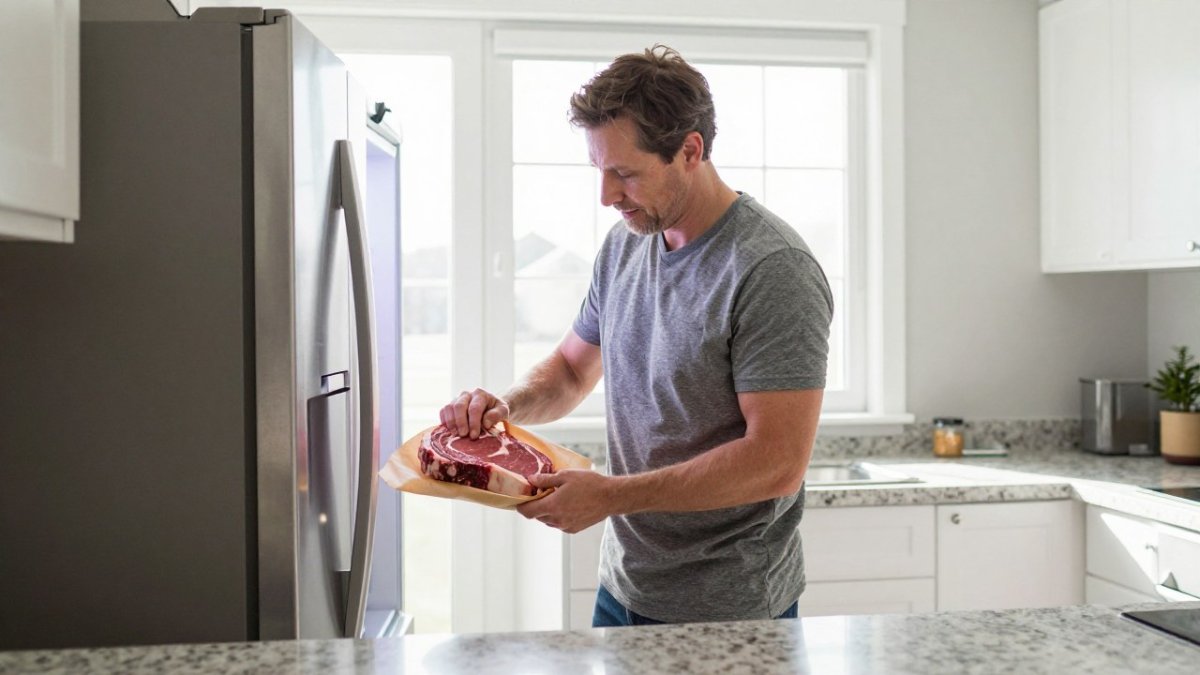
Prompt refrigeration is the simplest defense you have. Unpack, check, and chill. Do not leave meat on the counter while you sort the rest of your groceries.
What to Do When a Delivery Arrives Warm, Late, or Damaged
When a delivery arrives warm, late, or damaged, do not eat the meat. Separate the three problems, because each has a different decision path. Then document the issue, contact the seller, and ask for a replacement or refund.
Separate Transit Time From Doorstep Time
A late delivery is not automatically a spoiled one, and an on-time delivery is not automatically safe. The two clocks that matter are time in transit and time at the doorstep.
- Time in transit: How long the order spent in the courier's vehicle and warehouse. A chilled order hours past its window deserves close inspection even if the box still feels cold.
- Time at the doorstep: How long the box sat unattended before you brought it in. This is the clock most buyers forget, and it decides whether an otherwise good delivery is still safe.
On a hot day, cut the acceptable doorstep window to about one hour. In cool weather, a box with intact gel packs can hold its cold reserve longer, but the probe reading still decides.
Decision Paths by Problem Type
If the delivery arrives warm:
- Probe the thickest part of each cut and record the reading and time.
- Above 5°C for an extended period: Treat it as unsafe. Do not eat it and do not refreeze thawed meat that sat warm.
- Borderline at 4°C to 5°C: Chill immediately, use it first, and contact the seller to flag the reading.
- Still frozen and solid at -18°C or colder: It likely held. Refreeze only if it is still solid and cold.
If the delivery arrives late:
- Check the temperature first, even if the box feels cold.
- Inspect packaging for leaks or loose seals that may have developed in transit.
- If it passes, chill it and use it first. If it fails, follow the warm-delivery path.
If the delivery arrives damaged:
- Do not accept leaking or punctured packs. A seal failure is a food safety issue.
- Photograph the damage before moving anything.
- Keep the packaging, labels, and box for the seller.
- Contact the seller right away and request a replacement or refund.
Watch out: never wash or re-wrap compromised meat and hope for the best. Re-wrapping hides the evidence and does not undo contamination.
Build a Record Before You Call
A complaint without evidence is easy to dismiss. A short record turns it into a claim the seller can act on. Capture these items in one place, ideally with your phone:
- Photos of the box from outside, including damp patches or crush damage.
- Photos of the packaging showing leaks, loose seals, or punctures.
- A photo of the thermometer reading with the probe still in the meat, so the number and the cut are visible together.
Keep the packaging and labels until the issue is resolved. The box, gel packs, and label are the physical evidence of how the order was handled.
Contact the Seller and Escalate if Needed
Contact the seller right away through the channel they publish for order problems, and describe the problem in plain terms: what arrived, when, what the thermometer read, and what you photographed.
If the seller does not resolve it, escalate in steps:
- Follow the seller's published complaint process and keep a copy of every message.
- Contact the payment provider if you paid by card and the seller is unresponsive, since card networks have dispute processes.
- Report a food safety concern to the food safety authority in your province or territory.
Buyers often wait too long to report. Report on the day of delivery, while the photos, packaging, and thermometer reading are still fresh.
For questions about returns, delivery issues, and how to resolve a problem order, our frequently asked questions page covers the details.
Halal Meat Certification Verification Alongside Freshness Checks
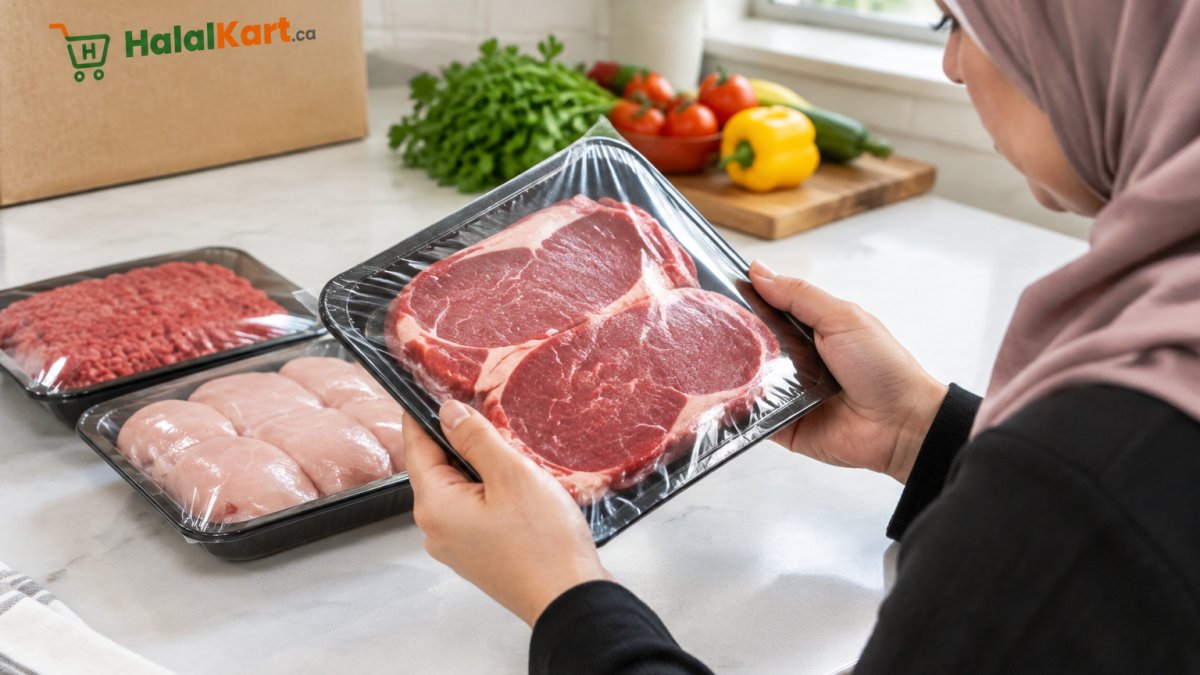
Halal meat certification verification is the process of confirming that meat was raised, slaughtered, and handled according to halal standards. It runs alongside your freshness checks, not instead of them. Freshness protects safety.
Here is what to confirm:
- A recognized certifying body backs the product. Look for a certification mark on the label.
- The supplier can show documentation linking the meat to that certification.
- Traceability holds up, meaning the supplier can trace the product back to its source.
At HalalKart, every product passes a rigorous 4-step verification process. That includes background checks and documentation reviews for all vendors, plus partnerships with recognized halal monitoring organizations.
To go deeper, our guide on how to verify halal meat online walks through checking certifications, inspecting labels, and confirming supplier credentials before you buy. If you are vetting a new supplier, our list of 9 questions to ask halal meat suppliers covers certification, traceability, and handling.
Storing and Freezing Your Delivery the Right Way
Storing meat correctly extends its life and protects flavor. Get it cold fast, keep it cold, and label it.
- Refrigerator: Keep chilled meat at 0°C to 4°C. Use it within the storage time on the label.
- Freezer: Set it to -18°C or colder. Freeze meat in portions you will use.
- Airflow: Do not pack the fridge so tight that cold air cannot move.
For detailed fridge temperatures and storage methods, read our guide on how to keep halal meat fresh. It covers the exact settings and timing that protect both safety and taste.
Order Your Next Halal Meat Delivery With Confidence
The gap between a good delivery and a risky one often comes down to a few minutes and a few checks.
HalalKart makes that easier.
Ready to browse? Explore our full range of halal groceries and fresh meat and place your next order with confidence.
The next time a box lands at your door, you will know exactly what to do.
Frequently Asked Questions
What temperature should fresh meat be when it arrives?
Chilled meat should arrive at 4°C or below, and ideally between 0°C and 3°C for maximum shelf life. Frozen meat should still be solid at -18°C or colder with no soft spots. Check with a probe thermometer in the thickest part of the cut rather than trusting the surface, and note the reading before you put anything away. If the meat reads above 5°C, treat it as a temperature problem and contact the seller before eating it.
How long can meat sit out after delivery before it becomes unsafe?
Move chilled meat into the refrigerator or freezer within two hours of delivery. In warm weather or a hot kitchen, shorten that window to one hour. Leaving meat at room temperature longer than that lets bacterial growth accelerate quickly, even if the meat still looks and smells fine. If you cannot refrigerate it right away, keep it in an insulated cooler with ice packs and log the time it spent out of the cold chain.
Can I refreeze meat that arrived partially thawed?
If the meat is still at 4°C or below and feels cold throughout, you can refreeze it, though texture and moisture loss may suffer. If any part reads above 5°C or feels warm, do not refreeze it. Instead, cook it thoroughly right away or contact the seller for a resolution. Never refreeze meat that arrived at room temperature, and never refreeze meat that has already been thawed and left out.
How do I verify halal meat certification on a delivered order?
Look for a recognized halal certification mark on the packaging, then match the certifying body and certificate number against the seller's published vendor records. Reputable sellers should be able to show which monitoring organizations they work with. If the mark is missing, faded, or does not match the seller's stated certifiers, contact the seller before consuming the product. HalalKart's four-step verification process and partnerships with recognized halal monitoring organizations are designed to make this check straightforward.