 How-to
How to Verify Halal Meat Certification: Step-by-Step
Table of Contents
- Start With the Certificate: How to Check a Halal Certificate
- How to Verify Halal Meat Certification at the Counter or Online
- Halal Certification Bodies: How to Tell a Credible Certifier From a Logo
- Questions to Ask a Halal Butcher Before You Buy
- Halal Meat Traceability: Following the Supply Chain From Farm to Counter
- When Verification Is Inconclusive: Warning Signs and Next Steps
- Conclusion: Building a Verification Habit That Sticks
- Frequently Asked Questions
Last Updated: October 12, 2026
Start With the Certificate: How to Check a Halal Certificate
Knowing how to verify halal meat certification starts with one document: the certificate. A valid halal certificate is issued by a recognized certifying body confirming a product, facility, or process meets that body's halal standard.
Most consumers stop at "is there a certificate?" The better question is "does this certificate actually cover what I'm holding?" That requires reading the document, not just seeing it.
What a Valid Halal Certificate Should Show
A certificate that holds up under scrutiny carries the same core details every time:
- The certifying body's full legal name and contact information
- A unique certificate number you can trace back to the issuer
- The legal name of the certificate holder (the company or facility being certified)
Photocopies and screenshots prove nothing on their own. Ask for the original or check the certifier's database directly, a screenshot can be edited, a live record is much harder to fake.
How to Validate the Certificate Itself
Validation is a matching exercise: check each field against an independent source, usually the certifier's database or a phone call.
Work through these matches one at a time:
- Holder name. Does the company on the certificate match the company selling you the meat? A certificate issued to a distributor does not automatically cover a different retailer or butcher.
- Facility. Does the certificate name the specific plant, abattoir, or processing site? A brand-level certificate may not cover every facility that brand uses.
- Product category. Does the scope list the category you're buying, fresh beef, frozen chicken, processed deli, and so on? A certificate for packaged goods does not cover fresh slaughter.
- Certificate number. Can you find that exact number in the certifier's records? If the number doesn't appear, the document is unverified regardless of how official it looks.
- Validity dates. Is the certificate current as of today? An expired certificate is not evidence of anything, even if the facility was compliant last year.
- Scope language. Read the scope wording carefully. "Slaughter" and "processing" are different scopes. "Halal products" is broad; a named product list is specific.
If any of those six checks fails, the certificate does not verify the product in front of you. That doesn't mean the meat is non-halal, it means the paperwork doesn't prove the claim, so treat it as unverified until the certifier confirms otherwise.
Certificate Numbers, Status, and Validity Dates
A certificate number is only useful if the certifier lets you check it. Many recognized bodies publish a searchable list of certified companies, and some publish status flags, active, suspended, or withdrawn, which matter because a certificate can be pulled mid-term.
Check two things: is the certificate still active, and does the scope match what you're buying? An expired certificate, or one covering chicken but not beef, means the product in front of you isn't covered.
What Certification Does and Does Not Establish
A halal certificate is evidence that a certifier assessed a defined scope against a defined standard. It is not a guarantee about every package on the shelf, nor a universal seal of quality.
What it typically establishes:
- The named facility or product has been assessed against that certifier's halal standard
- The certificate holder has agreed to ongoing inspection or audit
- The scope of certification is defined and dated
What it does not establish:
- That every product from that brand is covered
- That the standard used matches every consumer's expectation of halal
- That the meat in front of you came from the certified facility on the date it was slaughtered
Different certifiers apply different standards, and recognition varies. That's a reason to read the scope and the certifier's published standard rather than assuming all halal certificates mean the same thing.
How to Verify Halal Meat Certification at the Counter or Online
Verifying halal meat certification takes minutes once you know the steps: check the label, confirm the certifier, and match the product to a live certificate record.
- Read the label and note the certifier's name and logo.
- Find the certificate number or the certifier's database.
- Search the certified-company list for that business.
- Confirm the certificate is current and covers this product.
- If anything is unclear, contact the certifier before you buy.
Reading Halal Labels, Logos, and Packaging Claims
A halal logo alone means little, logos get copied, and some are invented. The logo matters only when it belongs to a certifier you can look up.
Check that the label names the certifying body, not just a generic symbol. Words like "halal-style" or "suitable for Muslims" are marketing, not certification. If no certifier is named, ask the store which one backs the claim.
Searching a Certifier's Certified-Company Database
Most credible certifiers keep a public database of certified companies and products, your fastest tool for how to check a halal certificate.
Search by company name, not just the product. Confirm the certificate status, validity dates, and scope. If the company isn't listed, the claim isn't verified, no matter what the label says.
Halal Certification Bodies: How to Tell a Credible Certifier From a Logo
A credible certifier does more than hand out logos. Recognized halal certification bodies inspect facilities, review ingredient sourcing, supervise slaughter, and audit on a schedule, and they publish their standards and let you search their records.
Red flags include no website, no searchable database, and no way to contact anyone. A certifier that won't show its standards or certified-company list isn't one you can rely on.
What Certification Scope Actually Covers
Scope is the detail most buyers skip. A certificate might cover a facility, a product line, or a single item, slaughter but not further processing.
Ask what it covers before assuming it covers everything. A butcher certified for packaged goods may not be certified for fresh slaughter. Match the scope to exactly what you're buying.
Questions to Ask a Halal Butcher Before You Buy
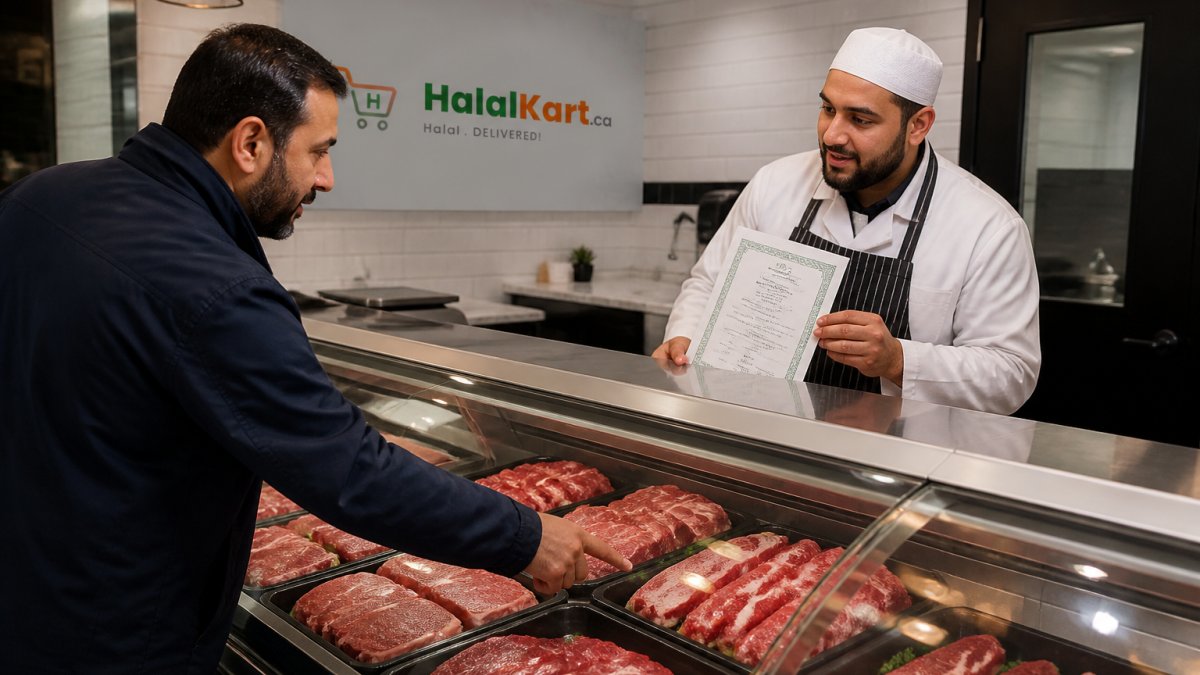
A good butcher answers these without hesitation. If they can't, that's your answer.
- Which certifier backs your halal claim?
- Can I see the current certificate?
- How do you prevent cross-contamination with non-halal meat?
Ask for the certificate number and check it yourself. A butcher who welcomes the check is one you can trust.
Halal Meat Traceability: Following the Supply Chain From Farm to Counter
Traceability means you can follow a product from the farm to the counter. For halal meat, that chain includes the slaughterhouse, the slaughterer, the supervisor, and handling at every step.
Documentation ties it together: slaughter records, inspection reports, transfer papers, and receiving logs. A supplier who can show these records demonstrates a controlled process; one who can't leaves gaps you can't verify.
What Consumers Can Actually Ask About Slaughter
You don't need to be an auditor to ask useful questions. The point is to find out whether the supplier knows their own supply chain, or whether they're repeating a label claim.
Questions worth asking a butcher, counter staff, or supplier:
- Who performs the slaughter, is it a trained Muslim slaughterer, and is that consistent across all the meat you sell?
- Is slaughter supervised, and by whom? Supervision is a separate role from the act of slaughter.
- Is the animal stunned before slaughter, and if so, how? Stunning practices vary between certifiers and between consumers' expectations.
A supplier who answers these clearly, and can point to a certifier who backs the answers, demonstrates a controlled process. One who deflects or gives vague answers shows you the limit of what they know.
Segregation, Transport, and Cross-Contamination Controls
Halal compliance doesn't end at slaughter. Meat must stay separated from non-halal product through storage, transport, and processing, where a lot of supply chains get loose.
Ask how the facility handles:
- Storage. Are halal and non-halal products stored in separate areas, or on separate racks with clear labeling?
- Transport. Are halal shipments kept separate from non-halal loads, or is the same truck used without cleaning between runs?
- Processing equipment. Are cutting surfaces, grinders, and packaging lines dedicated to halal, or cleaned and switched between products?
Cross-contamination controls are usually documented in the facility's halal plan and checked during certifier inspections. If a supplier can't describe them, they may not be enforced.
Facility Inspection and What It Confirms
Certifier inspections confirm the plant meets the certifier's hygiene and handling standards, and that the halal controls in the plan are actually in place. Inspections are typically scheduled, with some certifiers also conducting unannounced visits.
What an inspection confirms:
- The facility operates according to the certifier's halal standard
- Segregation and cleaning procedures are followed
- Slaughter practices match what the certificate claims
What an inspection does not confirm:
- That every batch produced at the facility is compliant
- That the standard used matches every consumer's expectation
- That the specific package in your hand came from an inspected run
That last point matters: certification is a facility- and process-level claim, not a per-package guarantee. If you need per-batch assurance, ask whether the supplier tracks batch numbers back to slaughter dates, some do, many don't.
Why This Matters More for Imported Meat
Imported halal meat adds distance between you and the slaughterhouse. The overseas certifier may be reputable, but its standard may differ from what you expect, and its records may be hard to check from here. Ask the retailer which certifier backs the product, whether that certifier is recognized by a domestic halal monitoring body, and whether the import documentation ties the shipment to a certified facility.
When Verification Is Inconclusive: Warning Signs and Next Steps
Sometimes the trail runs cold: the store has no certificate, the certifier has no database, or the scope doesn't match. Don't guess.
Watch for these warning signs:
- No certifier named on the label or at the counter
- A certificate that's expired or can't be found in any database
- A logo that doesn't match the certifier's official design
Your next steps: contact the certifier directly, ask the store for documentation, or buy elsewhere. Inconclusive verification isn't a failed one, but it's not a green light either.
Conclusion: Building a Verification Habit That Sticks
Verifying halal meat certification comes down to a simple habit: check the certificate, confirm the certifier, and match the scope to your purchase. It takes a few minutes and removes the guesswork.
When you'd rather skip the legwork, HalalKart does it for you. Every product goes through our 4-step verification process, backed by background checks and documentation reviews for every vendor and partnerships with recognized halal monitoring organizations. Shop Halal with HalalKart and get verified halal groceries and fresh meat delivered to your door.
Frequently Asked Questions
How can I check whether a halal certificate is valid?
Look for the certifier's name, certificate number, and validity dates on the document or label. Then visit the certifier's website and search their certified-company database for that certificate number. Confirm the company name and product scope match what you are buying. If the certificate has expired or the product falls outside the listed scope, treat the claim as unverified until you contact the certifier directly.
How do I verify that a halal certifier is legitimate?
Check whether the certifier is recognized by established halal monitoring organizations and whether they publish their certification standards, audit process, and certified-company list. A credible certifier will answer questions about slaughter supervision and facility inspections. If a logo appears on packaging but you cannot find the certifier online or confirm their standards, ask the retailer which organization issued the certificate before purchasing.
What questions should I ask a halal butcher about halal meat certification?
Ask which certifier certifies their meat, whether the certificate is current, and whether slaughter is supervised. Ask how they prevent cross-contamination between halal and non-halal products, and whether they can show documentation for the specific cuts you are buying. A butcher who can answer these questions clearly and provide paperwork is a stronger signal of halal meat traceability than a logo alone.
What should I do if I cannot confirm a meat product's halal certification?
Pause the purchase and contact the certifier named on the label or the store manager directly. If neither can confirm the certificate number, scope, or validity, treat the product as unverified. You can also check the certifier's online database yourself. When records are unavailable, buying from a retailer that documents its verification process, such as a marketplace that reviews certificates and vendor documentation, reduces the guesswork.