 blog
Instacart Alternatives for Halal Groceries
Table of Contents
- Why Instacart May Not Meet Your Halal Grocery Needs
- Understanding Halal Grocery Delivery Services
- How to Verify Halal Certification When Ordering Online
- Fresh Halal Meat Delivery: What to Expect
- Key Factors to Compare Across Halal Grocery Services
- Making Your Switch: What to Know Before You Order
- Frequently Asked Questions
Last Updated: October 11, 2026
Why Instacart May Not Meet Your Halal Grocery Needs
General delivery platforms like Instacart don't specialize in halal sourcing, making Instacart alternatives halal-focused services necessary for proper verification. You must cross-reference labels, confirm slaughter methods, and hope shoppers understand halal requirements, a time-consuming process when you need straightforward access to verified halal products.
Halal certification requires specific knowledge about sourcing and slaughter standards that general apps don't prioritize, treating halal as a dietary preference rather than a religious requirement.
Dedicated halal grocery delivery services specialize in verified halal-certified products, transparent sourcing, and trained shoppers. HalalKart, Canada's first dedicated online marketplace for halal groceries, provides peace of mind.
Understanding Halal Grocery Delivery Services
Halal grocery delivery services focus exclusively on products meeting strict Islamic dietary standards, working directly with verified suppliers and conducting rigorous certification checks.
Dedicated platforms combine verified vendor partnerships, transparent sourcing, and trained teams, the entire system is built around halal requirements from the start, not relying on shopper interpretation.
The key difference is verification depth. General apps may carry halal-labeled products but don't guarantee certification rigor. Dedicated services audit suppliers continuously, partner with recognized halal monitoring organizations, and conduct vendor background checks, so products have passed multiple verification steps.
How to Verify Halal Certification When Ordering Online
Halal certification varies by organization, region, and product type. Look for products certified by recognized bodies like ISNA, HMA, or IFANCA.
Check the product's certification documentation on the product page or vendor profile. Verify the certifying organization, certification number, date, and whether documentation is available upon request.
For fresh meat, verify that your service sources from facilities following Islamic slaughter standards with traceable supply chains and proper handling throughout delivery.
Contact customer service before ordering. Reliable services answer detailed questions about sourcing and certification without hesitation; vagueness is a red flag.
Fresh Halal Meat Delivery: What to Expect
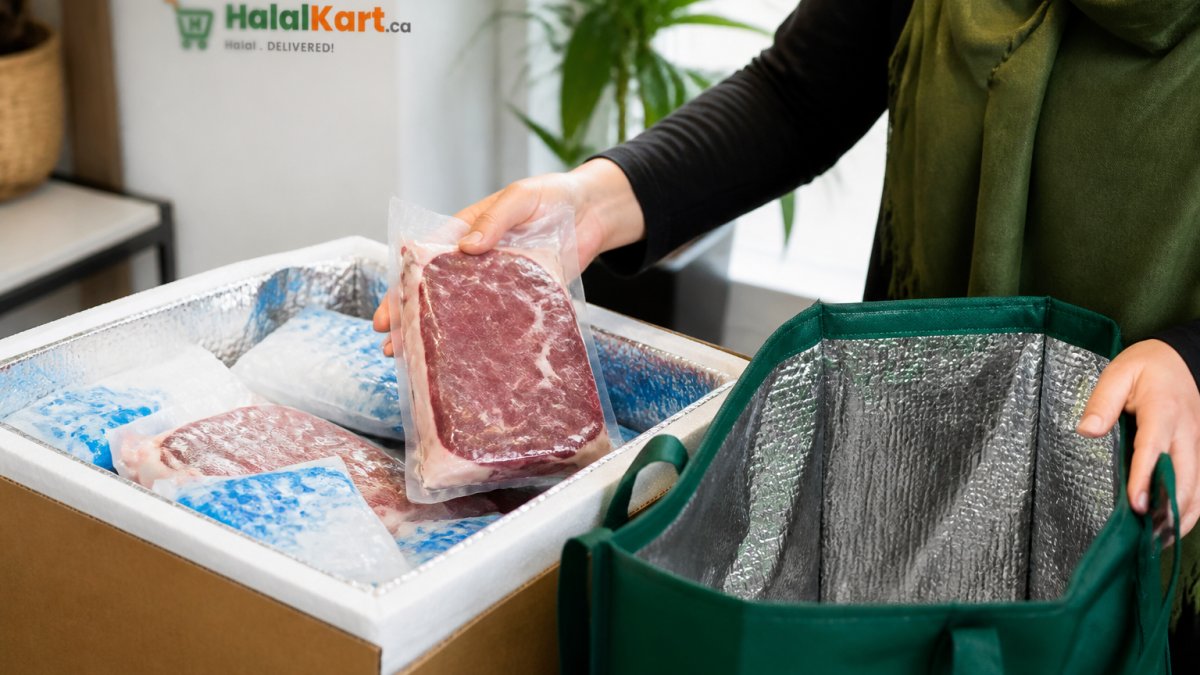
Fresh halal meat requires temperature control from packaging to delivery. Most services use insulated packaging with ice packs and expedited windows to maintain freshness.
Inspect packaging immediately: meat should feel cold with no signs of leakage. Many services include temperature guarantees with replacement or refund if meat arrives outside safe ranges.
Store halal meat immediately in freezer or refrigerator. Use frozen meat within three months, refrigerated within two days. Halal services typically provide detailed storage instructions.
Online halal meat orders can provide traceability documentation showing origin, processing facility, and certifying organization.
Key Factors to Compare Across Halal Grocery Services
Evaluate halal services on product variety, delivery speed, pricing, verification rigor, and coverage. Most critical: local availability and halal retailer partnerships, a service may excel nationally but have limited inventory locally.
Location-Based Service Availability and Halal Inventory
Halal grocery delivery coverage varies significantly by region. Services operating in major urban centres like Toronto, Vancouver, and Montreal typically partner with more halal vendors and offer deeper product selection than those serving suburban or rural areas. Before comparing features, verify whether a service even operates in your postal code.
When checking availability, also investigate which halal retailers and butchers the service partners with locally. A service may deliver to your area but source halal meat from only one or two facilities, limiting your options. Ask these specific questions:
- Does the service partner with local halal butchers certified by recognized bodies (such as those accredited by the Islamic Society of North America or the Halal Monitoring Authority)?
- Are halal products sourced from local vendors, national distributors, or both?
- Does the service maintain separate handling procedures for halal items, or do they mix halal and non-halal products in the same warehouse?
- What is the actual delivery time to your neighbourhood, same-day, next-day, or longer?
For example, a service may advertise next-day delivery nationally but only offer same-day service in downtown Toronto, with three-day delivery to surrounding regions. These differences directly affect product freshness and your ability to plan meals.
Total Cost Comparison: Delivery, Fees, Markups, and Membership
Headline delivery fees tell only part of the story. A service advertising "free delivery over $50" may charge 15-25% item markups compared to in-store prices, plus a service fee, plus a membership cost. The true cost of switching depends on your typical order size and frequency.
To compare real checkout costs, build identical sample baskets across services. A realistic halal grocery basket might include:
- 2 kg halal chicken breast
- 1 kg halal ground beef
- 2 kg halal lamb
- 5 pantry staples (rice, oil, spices, flour, lentils)
- 3 fresh produce items
- 2 prepared halal foods or snacks
Then calculate the total including:
- Item markups: Compare the per-unit price of identical products (e.g., a specific brand of halal chicken) against the in-store price at a local halal butcher or grocery store.
- Delivery fee: Note whether it's flat-rate, distance-based, or waived above a minimum order.
- Service fee: Many platforms charge 5-10% of the order total.
- Membership or subscription costs: Some services offer discounts for annual memberships ($50-150/year) or monthly subscriptions ($10-20/month).
- Minimum order requirements: If a service requires a $35 minimum but you only need $25 worth of groceries, that's a hidden cost.
For instance, ordering the same halal meat and pantry items might have different costs depending on the service. Over a month of weekly orders, these differences can compound significantly.
Also check whether the service offers loyalty programs, bulk discounts, or seasonal promotions. Some halal delivery services offer discounts during Ramadan or for repeat customers, which can offset higher base prices.
Product Variety and Availability
Most mainstream delivery apps carry some halal products, but selection can be limited and inconsistent. Dedicated halal services stock comprehensive ranges: fresh halal meat, certified pantry staples, prepared foods from halal vendors, and specialty items like halal snacks and beverages. This variety matters because it lets you consolidate shopping instead of bouncing between multiple platforms.
Check whether the service carries brands you already use. Second and third-generation Canadian Muslims often want both traditional halal items and modern convenience products, a service that offers both wins your loyalty. Look for pantry staples like halal cooking oils, spices, and grains alongside fresh meat and prepared foods.
Delivery Speed and Scheduling
Timing affects both freshness and convenience. Services offering same-day or next-day delivery keep products fresher, especially meat. You should also be able to choose your delivery window, whether that's a specific two-hour slot or a broader timeframe that fits your schedule.
Some services offer scheduled recurring deliveries for staple items, which saves time if you order the same products weekly. This feature is especially useful for families managing regular halal grocery needs.
Making Your Switch: What to Know Before You Order
Switching to a new grocery delivery service requires a small adjustment, but the process is straightforward for general groceries. For halal shopping, the process demands extra attention to substitution policies, shopper training, and handling instructions, areas where many general delivery apps fall short.
Setting Up Halal-Specific Preferences and Substitution Controls
Before placing your first order, familiarize yourself with the platform's substitution and special-instructions features. This is where halal requirements often break down with general delivery services.
When adding items to your cart, look for fields that allow you to:
- Disable automatic substitutions entirely for halal-sensitive items. If the service doesn't have this option, contact customer service before ordering to confirm they will contact you before substituting any meat or certified products.
- Add detailed handling instructions in the order notes. For example: "This order contains halal meat. Please do not place it near non-halal items. Keep separate from pork products. Do not use the same bags or coolers as non-halal groceries."
- Specify acceptable alternatives in advance. Write something like: "If [specific halal chicken brand] is unavailable, acceptable substitutes are [list 2-3 alternatives]. Do not substitute with non-halal brands. Contact me before substituting."
- Request a specific shopper or shopper type if the service allows it. Some platforms let you request shoppers familiar with halal requirements or religious dietary needs.
Dedicated halal services typically have these controls built in and train shoppers on halal handling.
Verifying Shopper Training and Handling Procedures
Before your first order, confirm that the service trains shoppers on halal requirements. Ask customer service directly:
- Are shoppers trained on halal food handling and the importance of keeping halal items separate from non-halal products?
- Do shoppers receive instructions about temperature control for halal meat, or do they treat it like any other fresh meat?
- If a substitution is necessary, will the shopper contact you before making it, or will they substitute at their discretion?
- What is the service's policy if a shopper fails to follow halal handling instructions?
A reliable halal grocery service will have clear answers to these questions. If a service seems uncertain or dismissive about halal handling, that's a red flag.
Building Your First Order and Testing the Service
Start by browsing the platform's full product range before committing to a large order. Many services let you build a cart without checking out, so you can verify they carry what you need.
Create a list of your regular purchases, the items you buy every week or month, and search for them on the new platform. Note any gaps and decide if you're comfortable sourcing those items elsewhere or if the service offers acceptable alternatives.
When you place your first order, keep it moderate in size and include a mix of items: fresh halal meat, pantry staples, and prepared foods.
Inspecting Your Delivery and Documenting Issues
When your order arrives, inspect it immediately and document any problems:
- For halal meat: Check that packaging is intact, the meat feels cold to the touch, and there are no signs of thawing or leakage. Verify that the meat was not stored near non-halal items (ask the driver or check the delivery notes).
- For packaged halal products: Confirm that certification labels are intact and match what you ordered.
- For temperature: If the service provides temperature guarantees, check the packaging for temperature-monitoring stickers or documentation.
- For substitutions: If anything was substituted, verify that the replacement is also halal-certified and acceptable to you. If an unacceptable substitution was made, photograph it and contact customer service immediately.
Take photos of any issues and keep them for your records. Most services will replace items or issue refunds if they arrive damaged or incorrectly substituted.
Providing Feedback and Refining Your Orders
After your first few orders, rate the service and provide detailed feedback about what worked and what didn't. If a shopper handled your halal items well, mention it.
Use this feedback to refine your ordering process. You might discover that certain items are consistently out of stock, certain delivery windows are more reliable, or certain shoppers are more careful with halal requirements. Adjust your orders accordingly.
Finally, check whether the service delivers to your area consistently. Many halal grocery services started in major urban centres and have expanded gradually. If you're in the suburbs or a smaller city, verify coverage before committing to regular orders.
Frequently Asked Questions
What should I compare when choosing a halal grocery delivery service as an Instacart alternative?
Focus on four core areas: halal certification verification methods, product variety (especially fresh meat and pantry staples), delivery speed and scheduling flexibility, and total costs including service fees and membership. Check whether the service partners with recognized halal monitoring organizations and offers transparent sourcing information. Availability in your area is also critical, as many specialty halal services have geographic limitations.
How can I check whether meat sold online is halal-certified?
Look for explicit halal certification labels from recognized bodies like HMA, ISNA, or IFANCA. Request the vendor's documentation before purchasing. Reputable halal grocery delivery services display certification details in product listings and provide supplier background information. Ask the service directly about their verification process and whether they conduct periodic audits. Never assume halal status based on vendor name alone.
Is halal meat delivery safe, or does it spoil during shipping?
Quality halal grocery delivery services use insulated packaging with ice packs or refrigerated transport to maintain product integrity. Delivery timing is crucial, same-day or next-day options minimize spoilage risk. Check the service's handling standards and delivery guarantees. Many offer temperature-monitored packaging and allow you to specify delivery windows. If meat arrives compromised, reputable services have replacement guarantees.
Can I get halal groceries delivered the same day?
Same-day halal grocery delivery depends on your location and the service's operational capacity. Many halal-focused delivery platforms offer scheduled delivery within 24-48 hours, which is faster than traditional grocery shopping. Some services in major urban areas provide same-day options for orders placed before a cutoff time. Check your local availability on the service's website, as suburban and rural areas may have longer delivery windows.