 blog
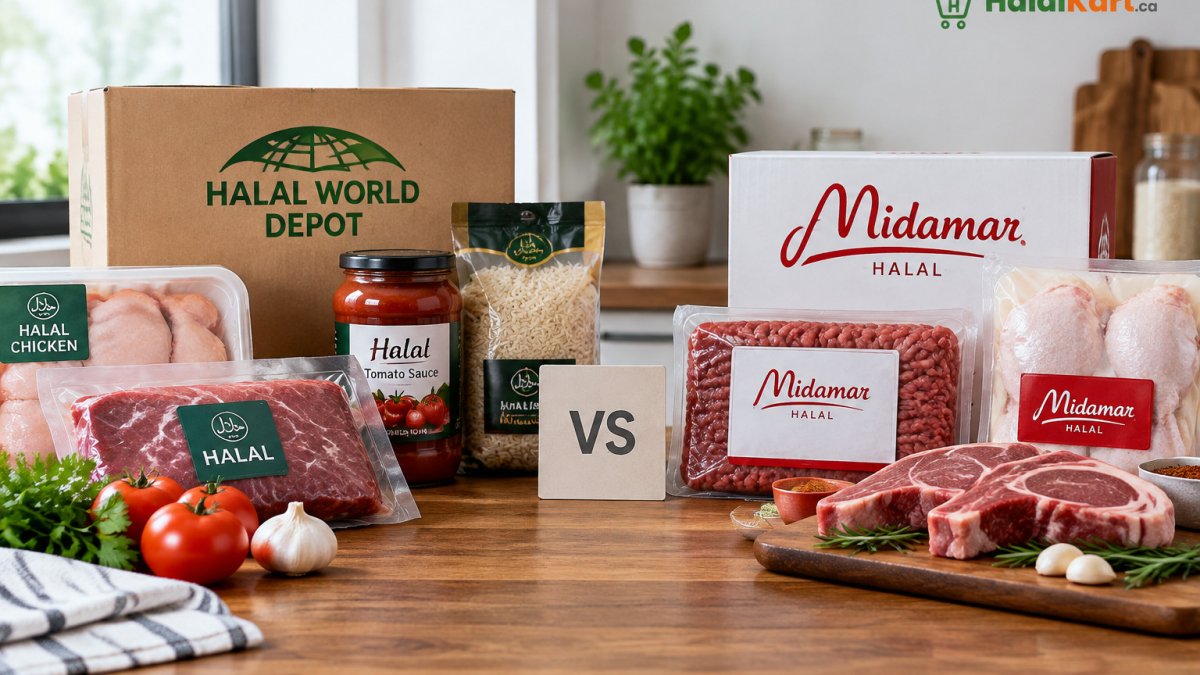
Halal World Depot vs Midamar Halal: Which to Choose?
Last Updated: November 14, 2026
Quick Summary
Choosing in the halal world depot vs midamar halal comparison comes down to model: Halal World Depot is a marketplace with many sellers and a wide product selection, while Midamar Halal is a branded meat producer with a deep meat and deli range. Pick the marketplace for one-stop grocery orders and the branded retailer for meat-focused buying.
- Marketplace certification varies by seller, so confirm a named certifier and certificate number before buying.
- Brand-level documentation is easier to check but still requires confirming the exact product.
- Build the same representative basket at both providers and compare the final delivered total.
- The branded retailer model means one controlled shipment and one set of shipping terms.
- HalalKart uses a 4-step verification process with background checks for every vendor.
Table of Contents
- Halal World Depot vs Midamar Halal at a Glance
- What Halal World Depot Reviews Reveal About Product Range and Service
- What Midamar Halal Reviews Say About Meat Selection and Shipping
- Halal Meat Certification Verification: How Both Providers Prove Compliance
- Pricing, Shipping, and Cold-Chain Handling Compared
- Halal Grocery Delivery Alternatives for Canadian Households
- Which Provider Fits Your Household? A Decision Guide
- Shop Verified Halal Groceries with Confidence
- Frequently Asked Questions
Halal World Depot vs Midamar Halal at a Glance
Choosing between Halal World Depot and Midamar Halal comes down to what you value most: a broad marketplace catalog or a branded meat range. This comparison from HalalKart breaks down product range, certification, pricing, cold-chain handling, and customer support so you can decide with evidence instead of marketing copy.
Both providers sell halal meat and groceries online, but they are not built the same way. Below, we compare the two on the factors that matter when you shop online.
| Factor | Halal World Depot | Midamar Halal |
|---|---|---|
| Model | Marketplace with many sellers | Branded meat producer and retailer |
| Strength | Wide product selection | Deep meat and deli range |
| Certification | Varies by seller | Brand-level claims |
| Delivery | Multi-vendor shipping | Direct shipping |
| Best for | One-stop grocery orders | Meat-focused buyers |
What Halal World Depot Reviews Reveal About Product Range and Service
Customer complaints we see in marketplace settings usually involve split shipments and uneven communication. Neither is a dealbreaker, but both reward a careful buyer who reads the fine print.
What Midamar Halal Reviews Say About Meat Selection and Shipping
Shipping is more predictable when one company fulfills everything. The thing nobody tells you about branded retailers is that a narrow catalog cuts both ways: you get consistency, but you may still need a second order elsewhere for grocery products. For households that buy meat in bulk and fill the pantry separately, that split is manageable. For one-stop shoppers, it is friction.
Halal Meat Certification Verification: How Both Providers Prove Compliance
Halal meat certification verification is the process of confirming that a product's certifier, slaughter method, and supply chain meet recognized halal standards.
What to look for on any product page
Before you compare providers, know the four things that make a certification claim checkable:
- The certifier's name, not just a halal logo. A logo without a named certifying body is not verifiable.
- The slaughter method: hand slaughter (zabiha) versus machine slaughter. Many buyers treat this as the deciding factor, and the two are not interchangeable.
- A traceable certificate number that the certifier can confirm against the product or lot.
- Product-level scope: whether the certificate covers the specific cut or prepared item you are buying, not just the brand's general operations.
Halal World Depot: marketplace-level verification
A common pattern in marketplace settings is that well-documented sellers publish a certifier name and certificate reference, while others publish only a logo. Treat the absence of a named certifier as a reason to ask the seller directly before you buy.
Midamar Halal: brand-level documentation
Brand-level documentation is easier to check, but it is not self-verifying. Confirm the exact product, not just the brand.
Distinguishing verified facts from customer claims
This is where most comparisons blur the line. Customer reviews frequently assert that a product is "100% zabiha" or that a certifier "doesn't count." Those are claims, not documentation. A workable rule:
- Verified fact: a named certifier, a certificate number, and a stated slaughter method that the certifier can confirm.
- Customer claim: any assertion about slaughter method or certifier standing that is not backed by a published certificate or a direct confirmation from the seller.
When the two conflict, trust the documentation and ask the seller to reconcile the difference in writing. Save the product page and label in case of a dispute.
A verification sequence that works for either provider
- Identify the certifier named on the product page or label.
- Confirm the certifier is recognized by a halal monitoring authority.
- Check whether the item is hand slaughter or machine slaughter.
- Look for a certificate number you can trace to the certifier.
- Ask the seller directly if documentation is not published.
- Save the product page and label before checkout.
Watch out: a halal logo alone is not verification. If the certifier is not named and the slaughter method is not stated, you have not verified anything, regardless of which provider you are buying from.
For a deeper walkthrough of the documentation side, see this guide on how to verify halal meat online.
Pricing, Shipping, and Cold-Chain Handling Compared
Pricing between the two depends on what you order, how much, and where it ships, so compare final totals at checkout rather than list prices alone. A lower item price can lose its edge once shipping and handling are added, especially on smaller orders. The practical way to compare is to build the same representative basket at both providers and compare the delivered total, not the sticker price.
How to build a comparable basket
Pick a small, fixed set of items you would actually buy, then price the identical basket at both providers:
- One beef cut (for example, a family-sized pack of ground beef or a specific steak cut).
- One poultry item (chicken breast or a whole chicken).
- One deli or prepared item.
- One pantry or frozen grocery item, if the provider carries it.
Record four numbers for each basket: item subtotal, shipping charge, any cold-pack or handling fee, and the final delivered total. That final number is the only figure worth comparing, because shipping and handling can flip the ranking on smaller orders.
Shipping thresholds and minimum orders
Both providers ship meat, and both structure shipping around order size, but the mechanics differ by model:
Cold-chain handling and packaging
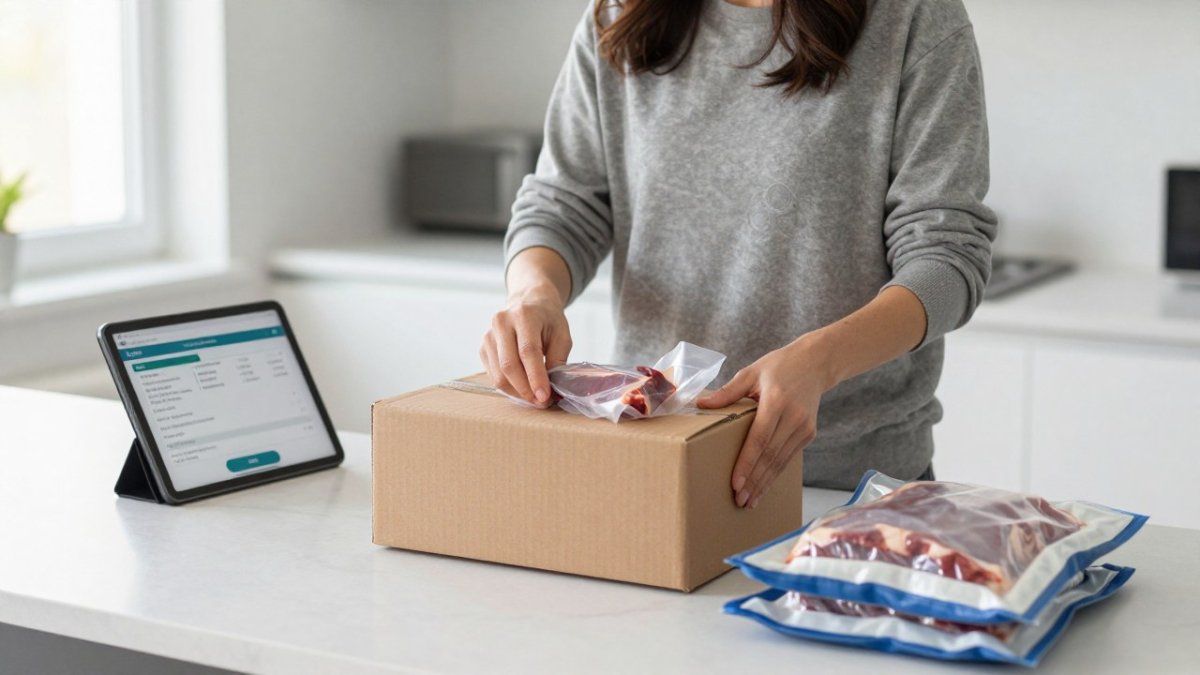
Meat quality and freshness depend on packaging, insulation, and transit time. When a parcel arrives, check that vacuum seals are intact, that the meat is still cold to the touch, and that packaging shows no signs of thawing. Our guide on whether your delivered meat is still fresh walks through the checks step by step.
Returns, refunds, and resolving a bad delivery
Returns and refund policies matter, and for perishable meat the policy matters more than the price. Before ordering, confirm three things:
- Who covers a spoiled or temperature-compromised delivery, and what evidence they require (photos of the packaging, the label, and a temperature reading).
- The window for reporting a problem, since perishable claims usually have a short deadline.
- Whether a refund, replacement, or store credit is the default remedy.
Confirm the seller's policy in writing before checkout, and keep the order confirmation and photos together in case you need to escalate.
A quick decision rule
If your priority is a single controlled shipment with consistent packaging and one set of shipping terms, the branded retailer model is simpler to price and to resolve problems with. If your priority is one order covering meat plus groceries, the marketplace model can save a second shipment, but budget for split deliveries and check each seller's shipping and return terms before you commit.
Halal Grocery Delivery Alternatives for Canadian Households
Halal grocery delivery alternatives fall into three groups: marketplaces, branded meat shippers, and dedicated halal platforms. Each solves a different problem, and most households end up mixing two of them at first.
At HalalKart, we built Canada's first halal-only online marketplace around a rigorous 4-step verification process, with background checks and documentation reviews for every vendor. We also work with recognized monitoring organizations, including HMA, ISNA, and IFANCA, and keep standards in place through periodic audits and community feedback.
If you want to weigh more options first, this comparison of the best halal meat delivery services covers pricing, coverage, and packaging side by side.
Which Provider Fits Your Household? A Decision Guide
The right provider depends on your shopping pattern, not on which brand markets louder. Use this guide to decide quickly:
- Choose a marketplace if: you want groceries, meat, and specialty products in one order and you are willing to check seller terms.
- Choose a branded meat retailer if: meat is your priority.
- Choose a verified halal platform if: certification transparency and food safety top your list, and you want vendor checks done for you.
A parallel head-to-head like this Midamar Halal vs Iqbal Foods comparison shows how to structure the same decision before you commit.
Shop Verified Halal Groceries with Confidence
The real challenge is not finding halal food online. It is knowing which seller actually meets the standard you keep at home.
That is the gap we set out to close. HalalKart offers a halal-only marketplace with a rigorous 4-step verification process, comprehensive vendor background checks, and continuous monitoring through periodic audits and community feedback.
Get started with HalalKart and shop verified halal groceries with peace of mind. Browse the full range in our collections and order your essentials today.
Verification is the part of online halal shopping nobody enjoys, and it is exactly where most platforms leave you on your own. HalalKart handles that work with a 4-step verification process, vendor documentation reviews, and ongoing audits backed by community feedback. Get started with HalalKart and put a verified halal marketplace to work for your household.
Frequently Asked Questions
What is the difference between Halal World Depot and Midamar Halal?
Halal World Depot and Midamar Halal differ in how they operate. Check each site's certification page and delivery coverage before ordering, and confirm whether items ship to your region.
How can I verify halal meat certification before ordering?
Look for the certifying body's name and logo on the product page, not just the word halal. Reputable retailers list the certifier, the slaughter method, and whether certification covers the specific facility. Cross-check the certifier against recognized monitoring organizations, and ask customer service for documentation if it is not published. A retailer that cannot name its certifier or show a certificate is a red flag worth taking seriously.
Do Halal World Depot and Midamar Halal deliver to Canadian addresses?
Before ordering, enter your postal code at checkout to confirm service, and check whether shipping costs, duties, or cross-border fees apply.
Which store is better for bulk halal meat orders?
Confirm cold-chain handling and delivery windows in writing, and ask about the refund policy if a shipment arrives thawed or damaged.