 blog
Midamar Halal vs Iqbal Foods: Which Should You Choose?
Last Updated: November 7, 2026
Quick Summary
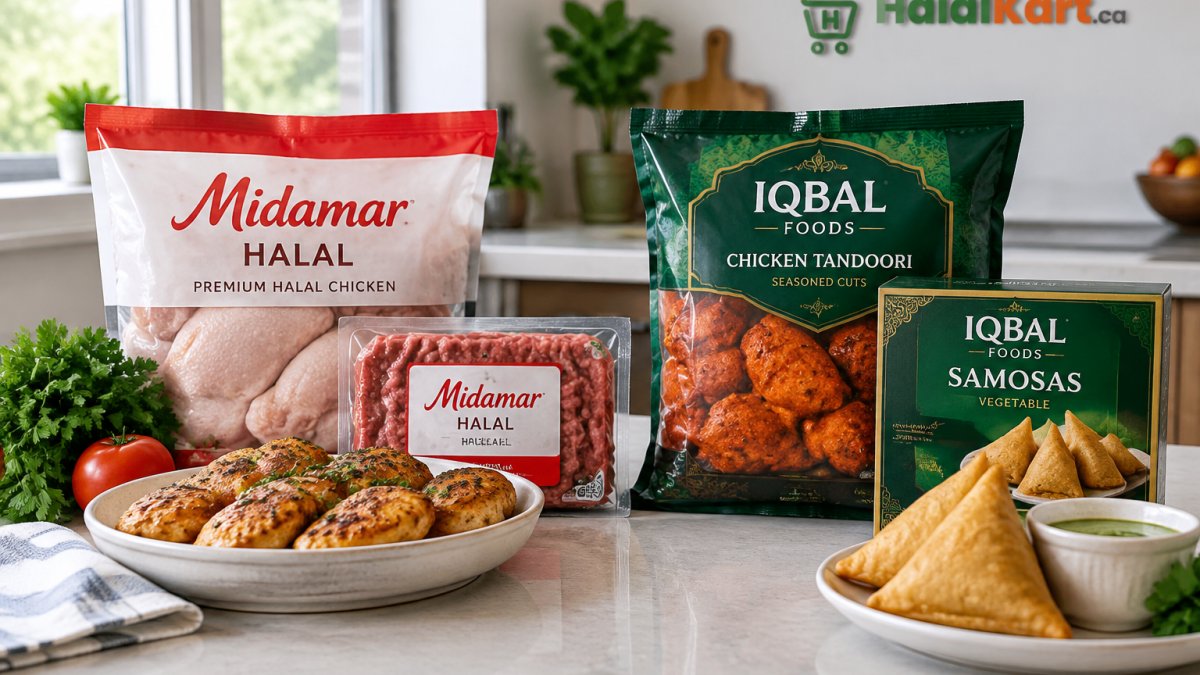
Midamar Halal vs Iqbal Foods is not a like-for-like choice: Midamar Halal is a packaged-food producer and exporter sold through distributors and retailers, while Iqbal Foods is a physical grocery retailer with aisles and an in-store butcher counter. Choose Midamar for frozen and processed products, Iqbal for fresh meat and full weekly shops.
- Midamar Halal sells packaged, frozen and processed foods through distributors and retailers, not its own store.
- Iqbal Foods offers a fresh meat counter and in-person aisles for weekly household grocery runs.
- Verify certification by checking the certifying body's full name, mark and certificate scope on the label.
- Compare value using unit price, converting package size and shelf price on the same day.
- Add any delivery fee to the basket total and divide by total weight for a true delivered unit price.
Table of Contents
- Midamar Halal vs Iqbal Foods: The Core Difference
- Iqbal Foods Product Selection: What the Aisles Actually Hold
- How to Verify Halal Certification on Any Label
- Halal Meat Quality and Freshness: What to Look For
- Online Halal Grocery Delivery: Where Each Option Fits
- Price, Value, and Unit-Price Comparison
- Which Option Fits Your Household?
- Start Your First Verified Halal Order
- Frequently Asked Questions
Midamar Halal vs Iqbal Foods: The Core Difference
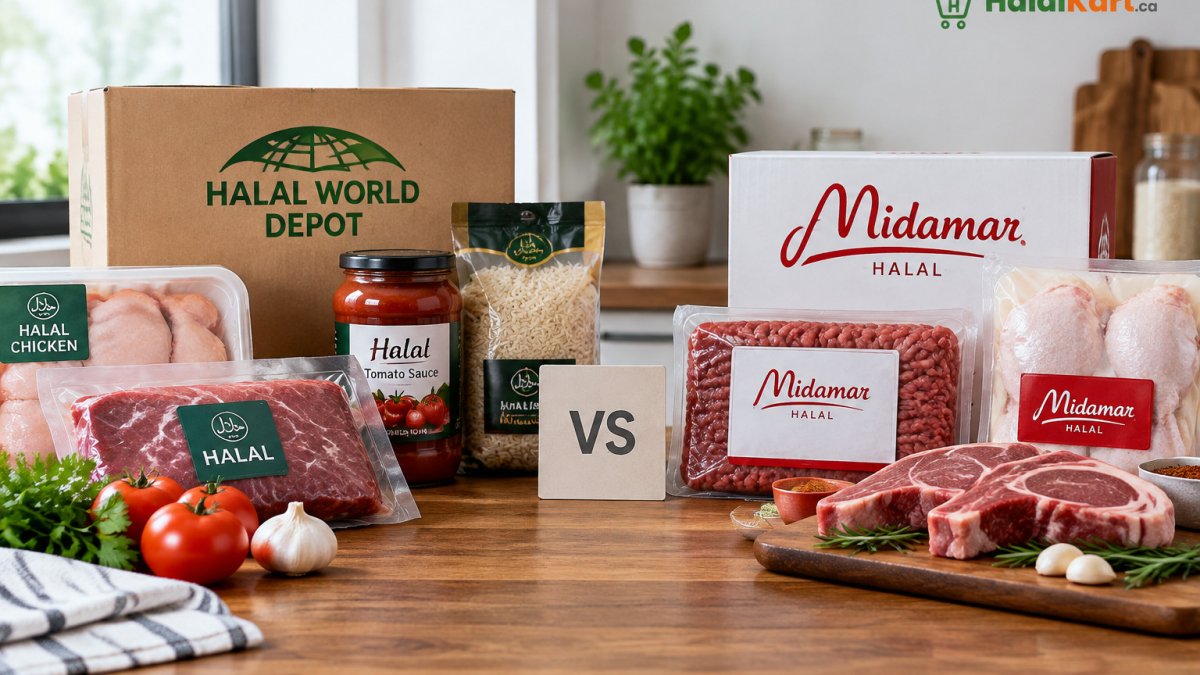
Midamar Halal vs Iqbal Foods comes down to a single structural gap: one is a packaged-food brand sold through distributors, and the other is a physical grocery retailer with its own aisles and meat counter. That distinction decides almost everything else, from what you can actually buy to how you verify it. This guide from HalalKart breaks down both options honestly, including where each one falls short.
Here's the part most comparisons miss. You are not choosing between two identical stores. Judged on the same criteria, they serve different shopping trips.
| Factor | Midamar Halal | Iqbal Foods |
|---|---|---|
| Business type | Packaged-food producer and exporter | Physical grocery retailer |
| Core strength | Processed and frozen halal products | Fresh meat, produce, staples |
| Fresh meat counter | Not applicable | Yes, in-store butcher service |
| Shopping method | Through distributors and retailers | In-person aisles |
| Certification visibility | On packaged labels | On labels plus staff questions |
| Best for | Stocking pantry and freezer | Weekly household grocery runs |
Neither option is wrong. They answer different questions, and knowing which question you're asking saves you a wasted trip.
Iqbal Foods Product Selection: What the Aisles Actually Hold
For pantry staples, lentils and everyday essentials, browsing a full halal grocery range online gives you a clearer picture of what is actually available before you leave the house. That is worth doing if availability has burned you before.
How to Verify Halal Certification on Any Label
Verifying halal certification means checking three things on the package: the certifying body's name, a certification mark or registration number, and whether the scope of that certification actually covers the product in your hand. A logo alone proves nothing if the certifier is unknown or the certificate covers a different facility.
Use this checklist before you buy:
- Identify the certifying organization by full name, not just a symbol
- Confirm the certification mark appears on the specific product, not only the brand's website
- Check whether the certificate covers the processing facility and the product line
- Look for a registration or certificate number you can trace
- Ask the retailer which certifier they work with, and whether documentation is on file
- Treat unclear or missing certification as unverified until proven otherwise
For packaged goods, the label carries the burden of proof. For fresh meat, ask the store directly which certifier backs the product. A step-by-step guide to verifying halal meat online walks through checking certifications and supplier credentials before you commit to an order.
Halal Meat Quality and Freshness: What to Look For
Judging halal meat quality starts with the fundamentals: color, smell, texture and packaging integrity. Fresh beef should look deep red rather than brown at the edges, chicken should smell clean rather than sour, and vacuum-sealed packs should hold tight with no air pockets or leaking. Those signals tell you more than any shelf label.
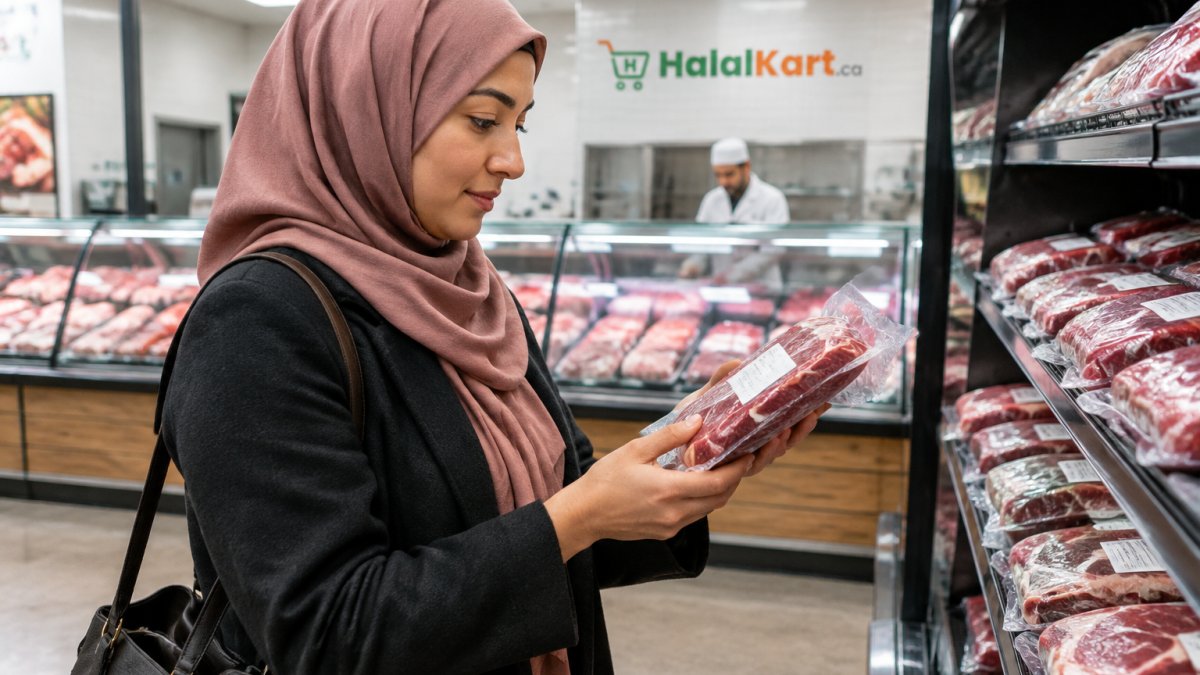
At a counter, watch how staff handle the product and whether they can answer questions about sourcing or certification.
Storage after purchase matters just as much. Getting meat into the fridge quickly and keeping it at a safe temperature protects both flavor and safety. Our guide on keeping halal meat fresh covers fridge temperatures and storage methods that protect what you paid for.
Online Halal Grocery Delivery: Where Each Option Fits
Online halal grocery delivery changes the calculus because it removes the two things that make in-store shopping costly: travel time and queue time.
Before committing to any online order, confirm the delivery area. Checking delivery availability first avoids the frustration of filling a cart for an address that is out of range. Suburban households in particular should verify coverage before building a weekly routine around a platform.
Price, Value, and Unit-Price Comparison
Price comparisons between these two are not straightforward, because they sell different things.
The honest method is unit price. Divide the total price by the weight or volume, then compare like with like: fresh beef per kilogram against fresh beef per kilogram, lentils per gram against lentils per gram. Do this consistently and the value picture becomes clear.
Here is how to build a fair, dated basket comparison yourself. Pick matching items, record the package size and the shelf price on the same day, and convert everything to a common unit.
| Item | Package size | Shelf price | Unit price |
|---|---|---|---|
| Basmati rice | 5 kg bag | $X | $X per kg |
| Red lentils | 2 kg bag | $X | $X per kg |
| Ground beef | 1 kg pack | $X | $X per kg |
| Chicken (whole) | per kg | $X | $X per kg |
| Frozen paratha | 1.5 kg pack | $X | $X per kg |
Fill in the actual shelf prices on the day you shop, and note the date next to each row. Prices move with the item, the retailer, the week, and the region, so a comparison without a date is not a comparison.
Watch out: comparing a bulk pack against a small retail pack without converting to unit price makes the bulk option look cheaper when it may not be once waste is counted. Buy the size your household will actually finish.
If you order online, add any delivery fee to the basket total and divide again by the total weight to get a true delivered unit price.
A second value factor is waste. Fresh meat bought at a counter can be portioned to the exact amount you need, while a packaged frozen product is fixed at the pack size. If a pack is larger than your household will finish before it degrades, the effective unit price is higher than the shelf label suggests. Weigh the pack against your actual weekly consumption before deciding which is cheaper.
Finally, record where each price came from, such as the in-store shelf tag or an online listing, and disclose the source next to each figure.
Which Option Fits Your Household?
The right choice depends on your shopping pattern, not on which business is objectively better. Match your household to the option that fits how you actually buy food.
- Choose Midamar Halal if: you want packaged, frozen or processed halal foods with label-based certification, and you are happy to buy through a retailer or distributor.
- Choose Iqbal Foods if: you want to walk aisles, choose fresh cuts at a counter, and do a full weekly grocery shop in person.
- Choose a verified online marketplace if: you want delivery, consolidated shopping and documented certification checks without a trip.
That third path is where HalalKart fits. We built a halal-only marketplace around a 4-step verification process, with background checks and documentation reviews for vendors, and partnerships with recognized halal monitoring organizations including HMA, ISNA and IFANCA. It is not a replacement for a butcher counter you trust. It is a way to consolidate the rest of the shop without lowering your standard. For a direct side-by-side, see our Iqbal Foods alternative comparison.
Start Your First Verified Halal Order
HalalKart exists to remove it. Our 4-step verification process checks vendors' background and documentation, and periodic audits and community feedback keep standards in place after onboarding. One platform covers groceries, fresh meat and lifestyle products from local artisans.
Get started with HalalKart and shop your essential halal groceries with the verification already done.
Frequently Asked Questions
What is the difference between Midamar Halal and Iqbal Foods?
Midamar Halal is a packaged-food brand: its products arrive boxed, frozen, or vacuum-sealed and are sold through retailers and distributors. Iqbal Foods is a grocery retailer with physical stores and a product range that includes fresh meat, produce, and South Asian and Middle Eastern groceries. One is a brand you find on a shelf; the other is a store you walk into. That distinction matters most when you are buying fresh meat, where you want to see the counter, ask the butcher questions, and check packaging dates in person.
How can I verify halal certification on packaged meat?
Look for a certification mark from a recognized halal monitoring body, then check the scope of that certification: does it cover the slaughter, the processing plant, or only the final packaging? The certifier's website should list the plant or brand by name. If the mark is unfamiliar, search the certifier's directory before you buy. A logo alone is not proof; the certifier's published scope is. When in doubt, ask the retailer which body certified the product and whether they can show documentation.
Does Iqbal Foods sell halal-certified meat?
Certification details can vary by supplier and by cut, so ask at the counter which certifier backs the meat you are buying and whether documentation is available. For packaged items, check the label for a certification mark and confirm the certifier's scope. Freshness signals also matter: look for dated packaging and staff who can answer questions about sourcing.
Which is better for halal groceries: Midamar Halal or Iqbal Foods?
It depends on what you are buying. Compare selection, certification scope, and delivery coverage before deciding. If you want convenience and verified certification without driving to a store, an online halal marketplace that documents its verification process can consolidate the trip.