 blog
Instacart vs Halal Delivery: Which Fits Your Shopping?
Last Updated: November 22, 2026
Quick Summary
Choose a dedicated halal grocery delivery service if certification, meat quality and clear halal status matter most, since every product is vetted before listing. A general app like Instacart suits shoppers who want wide variety and only buy a few halal items. Compare the total delivered cost of a realistic basket, not the item price alone.
- On a general app, halal status depends on each retailer and brand, while dedicated services vet products before listing.
- Check the certifying body, expiry date, covered products and whether gelatin or enzymes are addressed.
- Build total delivered cost from item price, delivery fee, service fee and any membership or small-order charge.
- Inspect chilled meat on arrival and contact the service before using anything warm or with damaged packaging.
- Confirm your postal code, delivery windows and the reporting window for chilled items before ordering.
Table of Contents
- Comparing Halal Certification and Verification
- Halal Grocery Delivery Fees and Total Cost
- Product Range: Meat, Groceries and Specialty Items
- Halal Meat Delivery: Freshness, Packaging and Cold Chain
- Delivery Areas, Timelines and Issue Resolution
- Choosing the Right Option for Your Household
- Frequently Asked Questions
If you want to buy halal groceries without leaving home, you have two main options: a general grocery app like Instacart, or a dedicated halal grocery delivery service. The right choice depends on what you buy, how much you trust the certification behind it, and what you pay in fees. This comparison from HalalKart walks through each factor so you can decide for your household.
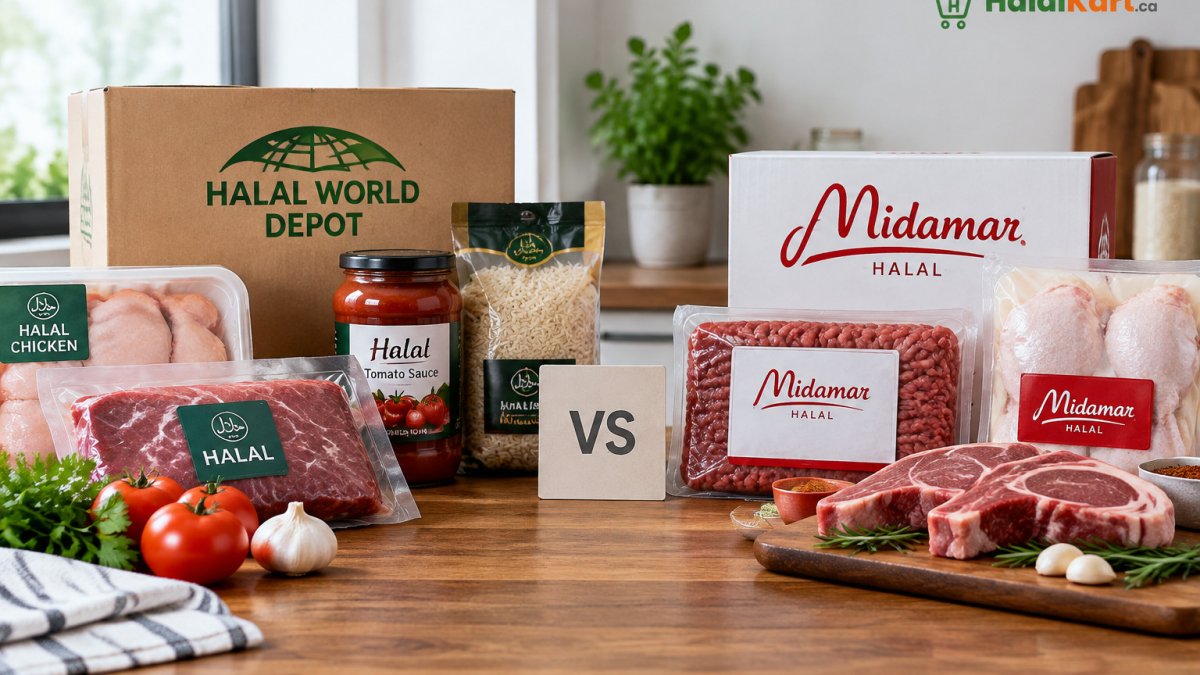
Instacart is a general grocery platform. It connects you with stores in your area, and a shopper fills your order from whatever those stores stock. Halal products may appear, but they sit alongside everything else. A dedicated halal delivery service works the other way around. Every product is chosen for halal suitability before it is listed, so the catalogue is narrower but more focused. Canadian Food Inspection Agency guidance on food labelling and claims
We recommend checking the store, not just the app. On Instacart, the halal status of an item depends on the individual retailer and brand. On a dedicated platform, the vetting happens before the product reaches you.
Comparing Halal Certification and Verification
Certification is where the two options diverge most. Many general grocers stock products with a halal logo, but a logo alone tells you little. You need to know who issued it, whether it is current, and which products it covers.
Dedicated halal platforms usually build verification into their process. You can compare Instacart alternatives for halal groceries to see which verified halal delivery services fit your needs. At HalalKart, every product passes a four-step verification process before it is listed. We also review vendor documentation and monitor partners through periodic audits.
What to Check on a Halal Certificate
Before you trust any halal claim, check these details:
- The name of the certifying body and whether it is recognized
- The expiry date, so you know the certificate is current
- Which specific products or facilities the certificate covers
- Whether ingredients like gelatin, enzymes or flavourings are addressed
Certification standards vary between bodies, so a logo from one organization may not match another. Health Canada food ingredient and labelling requirements
Halal Grocery Delivery Fees and Total Cost
Price comparisons are harder than they look because the sticker price on an item is rarely the price you pay. To compare a general grocery app against a dedicated halal service fairly, you need to build the total delivered cost line by line, so you can run the numbers on your own basket.
Start with the item price. On a general grocery platform, the price you see can differ from the in-store shelf price, and that difference varies by retailer. Neither approach is automatically cheaper; the point is to compare like with like, using the same basket of goods on both services. HalalKart pricing depends on quantity, dates and delivery, so check the website for current prices.
Next, add the delivery fee. This usually depends on order size, delivery distance and the time slot you choose. Peak windows and longer distances tend to cost more, and some services waive or reduce the fee above a minimum order threshold. Check whether the threshold is measured before or after other fees, because that changes the math.
Then add the service fee. General grocery apps commonly charge a service fee calculated as a percentage of the order subtotal, sometimes with a floor and a ceiling. Dedicated services may fold service costs into item pricing or charge a flat handling fee instead. A percentage-based fee scales with your basket, so a large weekly shop can carry a noticeably higher service charge than a small top-up order.
Finally, account for membership and small-order charges. A membership or subscription can lower per-order delivery fees but only pays off if you order often enough to recover the annual cost. Small-order fees apply when your basket falls below a minimum, so consolidating into fewer, larger orders usually beats several small ones.
A practical way to compare is to write out one representative weekly basket, say, halal chicken, lamb, pantry staples and a few specialty items, and price it on both services, adding item price, delivery fee, service fee and any membership or small-order charge. Divide the total by the number of items to get a per-item delivered cost, which is the number that actually tells you which service fits your household. Because fees change with order size, distance and timing, confirm the current fee schedule on the HalalKart delivery areas page before you finalize the comparison, and recheck it whenever your basket size changes.
Watch out: a low item price can be erased by a percentage service fee plus a delivery charge on a small order, so never compare a single item's price in isolation, compare the total delivered cost of a realistic basket.
The article breaks down the fee components that determine what you actually pay for a delivered basket.
| Cost component | What it means | Note |
|---|---|---|
| Item price | Price of the products in your basket | Can differ from in-store shelf price |
| Delivery fee | Charged by order size, distance and time slot | Peak windows and distance can raise it |
| Service fee | Often a percentage of the order subtotal | Scales with basket size |
| Membership | Annual cost that can lower per-order fees | Pays off only with frequent orders |
| Small-order fee | Applies when the basket falls below a minimum | Consolidate into fewer, larger orders |
Product Range: Meat, Groceries and Specialty Items
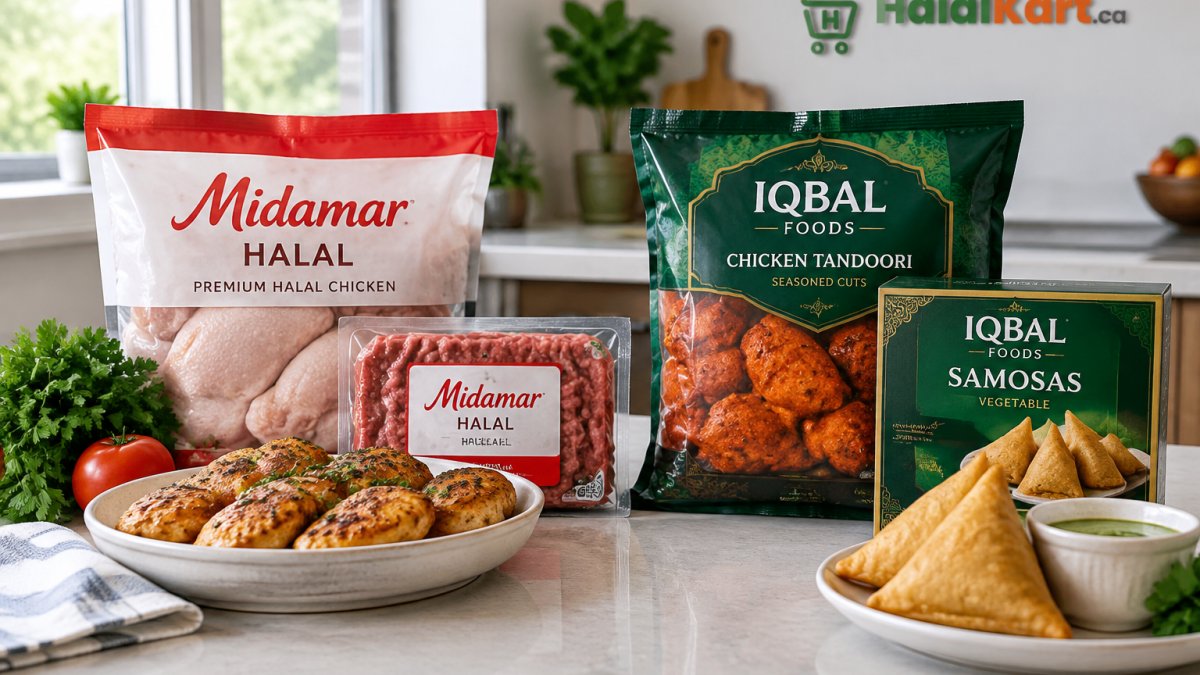
General apps win on breadth. You can add halal meat, pantry staples and household goods in one order, and the choice is wide. Dedicated services focus on halal-certified categories.
Ask yourself what you actually buy. If you need a single weekly shop of mostly everyday groceries, a general app may be enough. If your list is weighted toward halal meat and specialty items, a dedicated marketplace usually saves you time checking labels.
Halal Meat Delivery: Freshness, Packaging and Cold Chain
Fresh meat is the hardest category to deliver well. Look for insulated packaging, clear temperature handling and a delivery window you can plan around. Use this delivery-day checklist for checking meat freshness on arrival to judge whether your order is still safe to use. Check the packaging the moment your order arrives, and put chilled items in the fridge straight away.
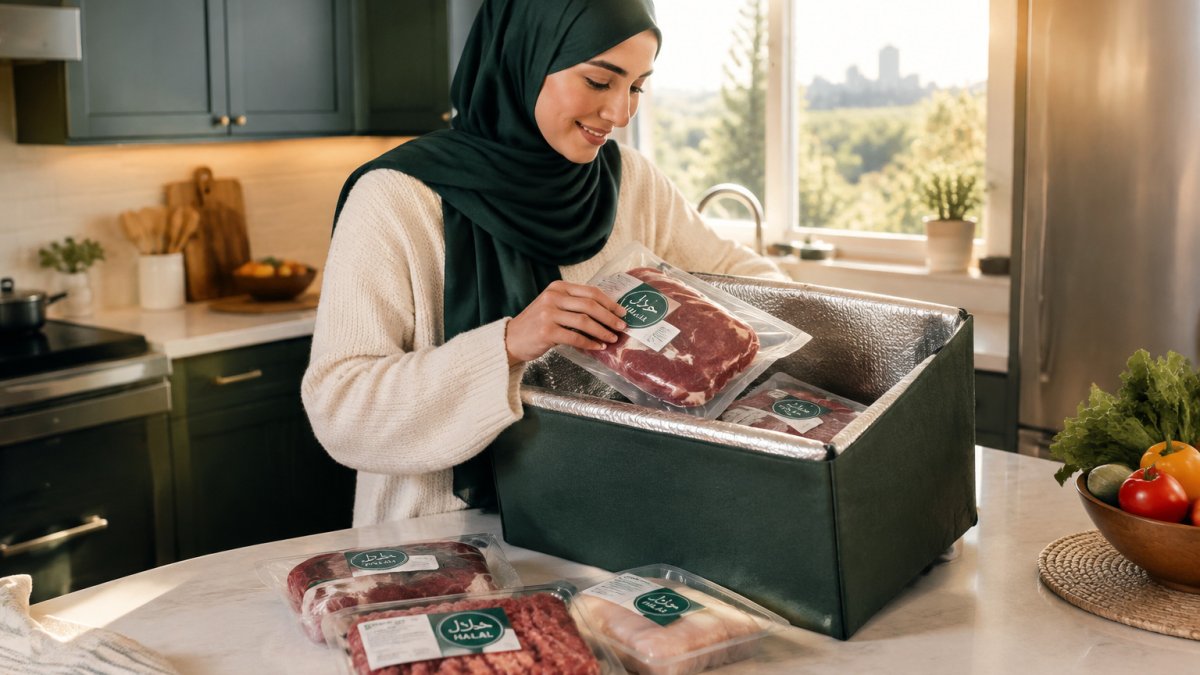
Watch out: if an order arrives warm or with damaged packaging, contact the service before you use the meat. Keep your order confirmation so you can report the problem quickly.
Delivery Areas, Timelines and Issue Resolution
Delivery coverage matters more than most shoppers expect, and it is where a general grocery app and a dedicated halal service can diverge sharply. General apps tend to serve dense urban areas well because they rely on nearby retailers and a pool of shoppers, but coverage can thin out in suburbs and rural postal codes where store density is lower. Some dedicated halal services ship orders on a scheduled basis rather than by same-day courier.
Confirm your postal code before you commit to any service, and ask a second question: what delivery windows are offered in your area? A service that covers your postal code but only delivers on certain days or within a narrow window may not fit a household that needs a mid-week top-up. Compare the earliest available slot, the latest slot, and whether weekend delivery is offered, because those three details usually decide whether a service is practical for weekly shopping.
Timelines also depend on the product. Fresh and frozen meat needs a cold chain, so a scheduled shipping model must arrive within a window that keeps chilled items safe. Ask how the service packs chilled and frozen goods, and what happens if a delivery is delayed in transit. A courier model from a local store is usually faster but limited by store stock; a shipping model is broader but slower and more dependent on packaging.
Issue resolution is the part most comparisons skip, and it matters most for meat. Ask each provider, before you order, how it handles four situations: a missing or incorrect item, a damaged package, a thawed or warm chilled item, and a late delivery. Get the answer in writing where possible, the refund or replacement policy, the time limit for reporting a problem, and whether the resolution is a refund, a credit or a redelivery.
Keep your order confirmation and any photos until the issue is closed. If a chilled item arrives warm or a package is damaged, contact the service before you use the product, because using it can complicate a refund. A clear, written returns and refunds policy is one of the best signals of how much trust to place in a service, and it is worth more than a slick app interface.
You can check delivery availability for your area on the HalalKart delivery areas page, and confirm the reporting window and refund terms before your first chilled order.
Watch out: a service that covers your postal code may still have a narrow delivery window or a short reporting limit for chilled items, so confirm both before you rely on it for a weekly halal meat order.
Choosing the Right Option for Your Household
Pick a general app if convenience and variety matter most and halal items are a small part of your list. Pick a dedicated halal service if certification, meat quality and clear halal status matter more than range. Many households use both, buying specialty halal meat from a dedicated service and everyday groceries from a general app.
If halal verification is your main concern, our step-by-step guide to verifying halal meat certification explains what to check before you order. Browse the full range at Shop Halal to see what a dedicated marketplace offers.
Ready to shop with confidence? HalalKart brings verified halal groceries, fresh meat and everyday essentials into one place, with a four-step verification process behind every listing. Shop Halal today and see the difference a dedicated halal marketplace makes.
Frequently Asked Questions
Is Instacart a good option for buying halal groceries?
Instacart works for general groceries, but it does not sort its catalogue by halal status, and most stores there do not show certification details on each item. Shoppers who need halal products have to check labels, certification marks and ingredient lists themselves for every order. For a basic list of halal-friendly staples it can be workable, but for fresh meat and specialty items a dedicated halal marketplace removes much of that manual checking. Compare what each service shows you at checkout before deciding.
How can I check whether meat ordered through a grocery delivery app is halal-certified?
Start by looking for a certification logo and the name of the certifying body on the product or listing, then confirm that body is recognized and that the certificate is current. Read the listing for the slaughter method and the source of the meat. If the listing does not state these details, contact the seller before you order. A halal-focused marketplace typically shows certification information on the product page, which makes the check faster.
What should I look for when choosing a halal grocery delivery service?
Check how the service verifies its vendors and products, whether certificates are displayed and who issued them, and how clearly ingredient lists are shown. Review the delivery area so you know whether your suburb is covered, and read the packaging and cold-chain practices for fresh meat. Compare the total cost, including delivery fees and minimum order amounts, rather than only the item prices. Finally, find out how returns and problems with an order are handled.
How do I compare grocery delivery fees and product availability?
Add an identical basket on each platform and compare the subtotal, service fee, delivery fee and any small-order charge in Canadian dollars. Note the delivery window and whether your postal code is served at all. Product availability varies, so check that your regular brands and specialty items are listed before you commit. Fees and availability change over time, so confirm them on the site at the moment you order.