 blog
Order Halal Groceries for Home Delivery: 2026 Guide
Table of Contents
- Why More Families Order Halal Groceries for Home Delivery
- Organic Halal Meat Delivery Options: What to Look For
- How to Verify Halal Certification Before You Order
- Halal Food Safety Standards Canada Shoppers Should Know
- Delivery Zones, Fees, and What Actually Lands on Your Bill
- Building a Full Halal Grocery Order: Meat, Pantry, and Produce
- Storage and Handling Tips for Delivered Halal Groceries
- Frequently Asked Questions
Last Updated: October 9, 2026
Why More Families Order Halal Groceries for Home Delivery
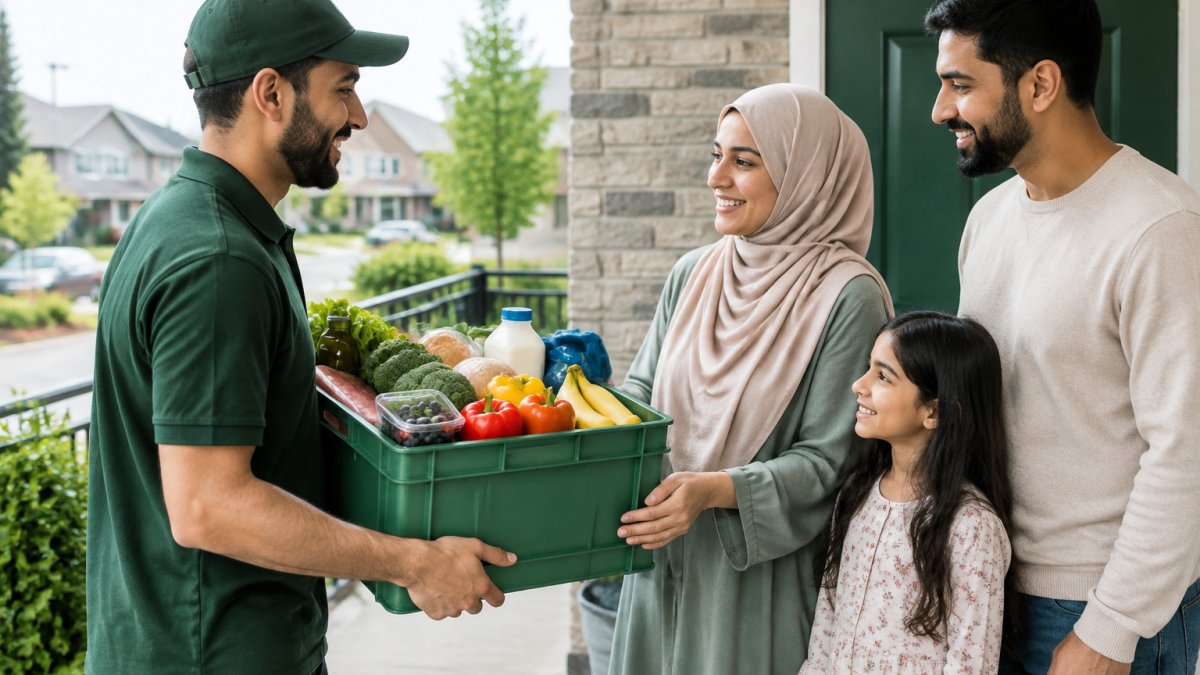
Ordering halal groceries for home delivery has moved from a niche convenience to a routine part of how many households shop. We built our marketplace around one idea: you should not have to choose between verified certification and a modern shopping experience.
The shift makes sense. Driving across town to a single butcher, then to a separate store for pantry staples and produce, eats an afternoon. Consolidating that into one delivery removes the trip without removing the standards.
Convenience Without Compromising Certification
Convenience usually comes with a trade-off. In grocery delivery, the trade-off is often transparency: you cannot inspect the counter, ask the butcher questions, or read the certificate on the wall.
That is the gap a dedicated halal marketplace is designed to close. When you order halal groceries for home delivery from a platform built only for halal products, every listing is already inside the scope.
Organic Halal Meat Delivery Options: What to Look For
Organic halal meat delivery options vary widely in what they actually guarantee. Three things matter most: the slaughter method, the feed and raising standards, and the paperwork that proves both.
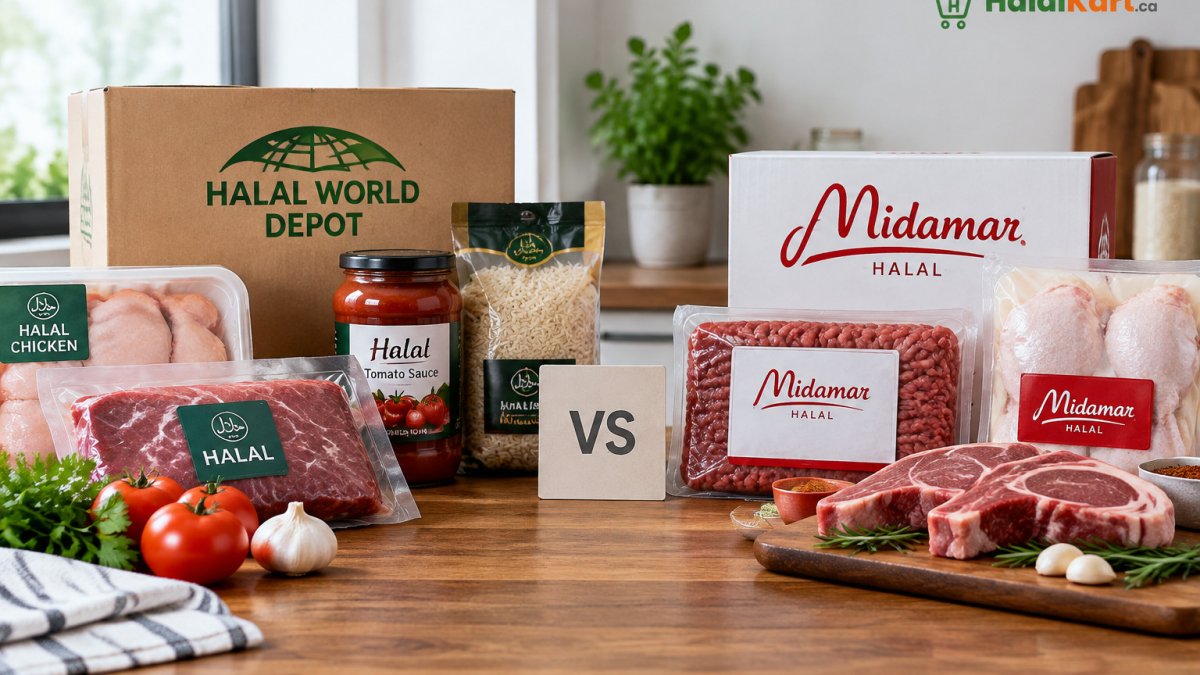
When you compare organic halal meat delivery options, look past the marketing language on the product page. Ask what the certification body verifies and how often it re-checks the supplier.
Zabiha, Grass-Fed, and Organic: Sorting the Labels
Zabiha refers to meat from an animal slaughtered according to Islamic requirements, with the name of God invoked at the time of slaughter.
Grass-fed describes what the animal ate. It says nothing about how it was slaughtered.
Organic describes the farming system: feed, medication, and living conditions. Like grass-fed, it is silent on slaughter method.
That is why a product can be organic and not halal, or halal and not organic. The labels answer different questions.
Where the Organic Claim Comes From
In this market, an organic claim on a meat product is not self-declared. It traces to a certification body accredited under the Canadian Organic Regime, which is administered by the Canadian Food Inspection Agency.
So a fully documented organic halal product carries two distinct credentials:
- A halal certification from a recognized halal monitoring body
- An organic certification from a CFIA-accredited certifier
If a listing shows only one, you are only getting half the story. If it shows neither and relies on the words "organic" and "halal" as adjectives, treat the product page as marketing until proven otherwise.
A Practical Label-Reading Order
When you open a product page, read in this sequence:
- Halal certifier name. Not "halal certified", the actual organization.
- Organic certifier name. Look for a CFIA-accredited body, not a house brand.
- Slaughter method statement. Hand-slaughtered zabiha vs. machine-slaughtered is a meaningful distinction for many households, and the better listings say which.
- Country of origin. Imported organic halal meat may meet a foreign standard that does not map cleanly onto Canadian organic rules.
- Cut and packaging format. Vacuum-sealed vs. tray-packed affects freezer life and how the meat handles after thawing.
Why This Matters More for Delivery Than In-Store
In a butcher shop, you can ask the person behind the counter to show you the certificate binder. On a delivery platform, you cannot. That asymmetry is exactly why the label-reading order above matters: you are substituting a documented paper trail for a face-to-face conversation. Platforms that understand this publish certifier names, certificate numbers, and expiry dates directly on the product page.
How to Verify Halal Certification Before You Order
Verification starts with the certifying body, not the product name. A legitimate listing names the organization that certified the supplier and lets you confirm it independently.
Here is the checklist we would run before placing a first order anywhere:
- Does the listing name a specific certifying organization, not just "halal certified"?
- Can you find that organization's own directory and confirm the supplier appears in it?
- Is the certification current, with a visible expiry or renewal date?
HalalKart runs a four-step verification process for every vendor: background checks, documentation review, partnerships with recognized halal monitoring organizations, and ongoing monitoring through periodic audits and community feedback. Our partnerships with bodies including HMA, ISNA, and IFANCA reflect the standard we hold suppliers to.
Halal Food Safety Standards Canada Shoppers Should Know
Food safety in Canada is regulated at the federal level, and halal certification sits alongside those rules rather than replacing them.
For shoppers, the practical takeaway is that halal certification and Canadian food safety compliance are two separate checks. A supplier should be able to satisfy both. You can read the federal labeling requirements directly through the Canadian Food Inspection Agency food labeling guidance.
Cold Chain and Packaging: What Protects Your Meat
Fresh meat is the part of a delivery order most likely to go wrong, and temperature is the reason. The cold chain is the unbroken sequence of refrigeration from the supplier's cooler to your door.
What to look for in packaging:
- Insulated liners or boxes with coolant packs sized to the delivery window
- Vacuum-sealed or tightly wrapped cuts that limit air exposure
- A delivery window short enough that the meat is not sitting in a vehicle for hours
If a platform cannot explain its cold chain in plain terms, treat that as a signal.
Delivery Zones, Fees, and What Actually Lands on Your Bill
Delivery cost is where online grocery pricing gets murky. The listed price of an item is rarely the full cost of getting it to your kitchen. Here is the framework you can apply yourself.
The Fee Stack, Line by Line
Fees to expect on a halal grocery delivery order:
| Charge | What It Covers | How to Compare It |
|---|---|---|
| Delivery fee | Transport to your address | Flat rate vs. distance-based |
| Minimum order | Threshold to qualify for delivery | Lower minimums suit smaller households |
| Cold chain packaging | Insulation and coolant | Sometimes bundled, sometimes separate |
| Substitution policy | What happens if an item is out of stock | Refund vs. swap vs. nothing |
| Service or small-order fee | Platform overhead on small carts | Often waived above a spend threshold |
| Peak or weekend surcharge | Higher-demand delivery windows | Sometimes avoidable by choosing off-peak slots |
Ask two questions before your first order: do you deliver to my address, and what is the total cost including packaging? Suburban addresses are often outside specialty delivery zones, so confirm coverage before building a cart.
Delivery vs. Pickup: The Real Break-Even
The honest comparison is not "delivery fee vs. free pickup." It is total delivered cost versus total pickup cost, and pickup is never actually free once you count the trip.
Build the comparison in four lines:
- Delivery side: item subtotal + delivery fee + packaging + any surcharge.
- Pickup side: item subtotal (often lower, since some platforms discount pickup) + fuel or transit cost + parking + your time.
- Time value: how long the round trip takes, multiplied by what an hour of your time is worth to you.
- Basket size: the larger the cart, the more the fixed delivery fee spreads across items and the better delivery looks.
A common pattern: for small top-up orders, a few pounds of meat and a bag of rice, pickup or a quick local run usually wins on pure dollars. For a full weekly or biweekly restock that would otherwise mean three separate stops (butcher, South Asian or Middle Eastern grocer, mainstream supermarket), delivery tends to win once you price the time and fuel honestly.
Zone Coverage and Scheduling Realities
Delivery zones for halal specialty platforms are typically tighter than for national grocery chains, because the cold chain has to hold and the driver network is smaller. Practical checks before you commit:
- Enter your full postal code, not just the city, to confirm coverage.
- Check whether the zone is served daily or only on specific days.
- Check cutoff times for next-day slots, since halal meat orders often need lead time for cutting and packing.
What Actually Lands on Your Bill
The number that matters is the all-in cost per order, not the headline delivery fee. Add the item subtotal, delivery fee, packaging charge, any surcharge, and subtract any first-order or subscription discount. Divide by the number of meals or the number of pounds of meat in the cart to get a cost-per-unit figure you can compare across platforms. That single number is the only fair basis for choosing between two halal delivery services, or between delivery and doing the trip yourself.
Building a Full Halal Grocery Order: Meat, Pantry, and Produce
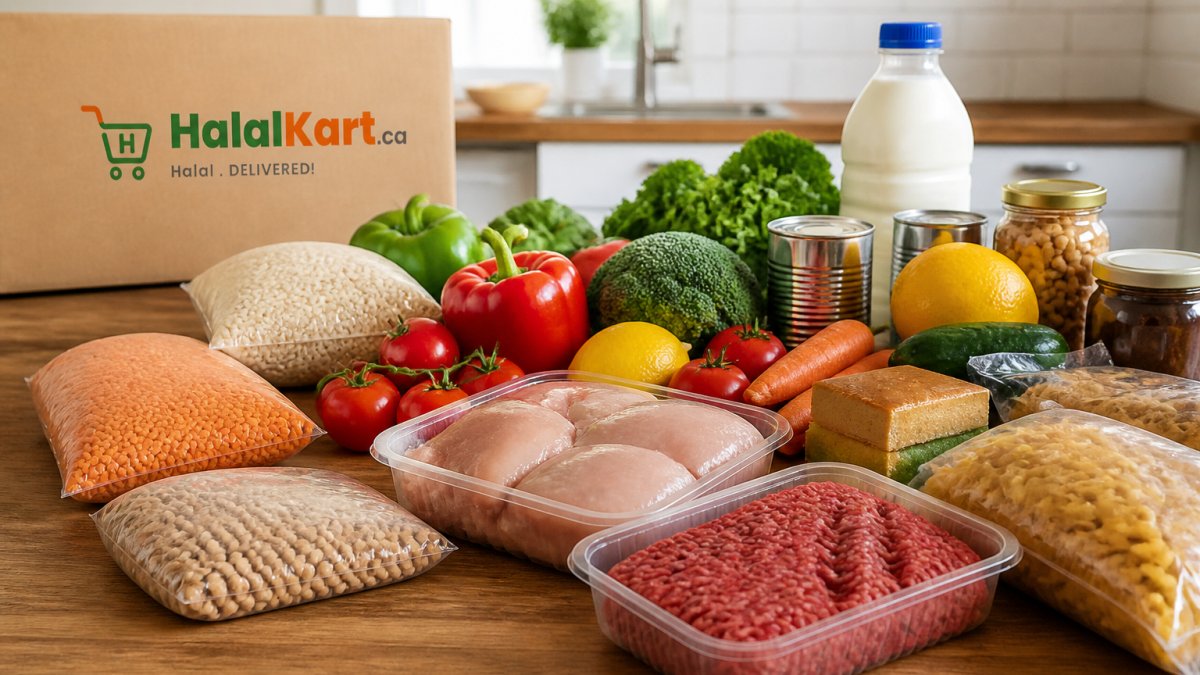
A complete order covers three categories, and building them together is what makes delivery worth it.
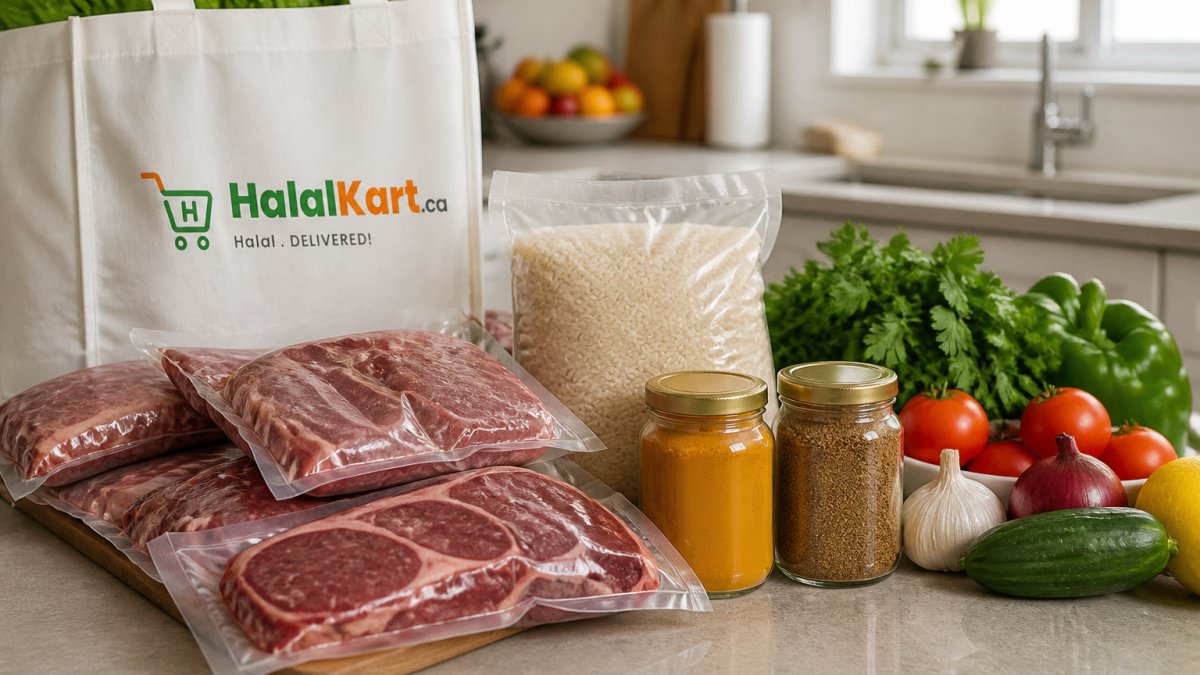
Start with meat: lamb, goat, beef, veal, and poultry, plus cold cuts and processed items if your household uses them.
For a household cooking South Asian, Middle Eastern, or East African food regularly, the pantry list is where a single-platform order saves the most time.
Storage and Handling Tips for Delivered Halal Groceries
Get perishables into the fridge or freezer as soon as the order arrives. That single habit prevents most spoilage problems.
A few specifics:
- Refrigerate fresh meat immediately, and freeze anything you will not cook within a few days.
- Keep raw meat sealed and on the bottom shelf so nothing drips onto other food (Safe food storage).
- Store spices away from heat and direct light; a cupboard near the stove shortens their life.
Freezer space is the usual constraint. If yours is limited, order fresh meat in smaller quantities more often rather than stocking up.
Frequently Asked Questions
How can I verify if groceries are certified halal in Canada?
Check the packaging for a certification logo from a recognized halal monitoring organization, then confirm that certifier is listed on the product or vendor page. A trustworthy platform publishes its verification steps, including documentation reviews and periodic audits. HalalKart uses a 4-step verification process and partners with recognized bodies such as HMA, ISNA, and IFANCA, so every item can be traced back to a verified supplier before it reaches your door.
Is it cheaper to order halal groceries online or shop in-store?
It depends on what you buy and how you value your time. Online orders add delivery fees, but they also cut impulse purchases and travel costs, and bulk purchase pricing on staples can offset the difference. HalalKart has not published fixed pricing, so compare your regular basket against current rates on the platform. Factor in fuel, parking, and the hours spent driving between a butcher and a supermarket before deciding which option costs more.
What should I look for when choosing a halal meat delivery service?
Look for four things: transparent certification with named monitoring organizations, a documented verification process for vendors, clear delivery zones and cold chain packaging, and responsive customer support. Ask how the service handles a product that fails to meet halal standards. A platform that answers these questions openly, rather than vaguely, is far more likely to protect your dietary requirements order after order.
Do I need to be home to receive fresh halal meat delivery?
Not always, but someone should move the order into a fridge or freezer quickly. Insulated packaging with gel packs keeps meat at safe temperatures during transit, yet it is not a substitute for refrigeration. If you cannot be home, choose a delivery window when a family member is available, or ask whether the service offers scheduled pickup at a local point instead of leaving perishables at the door.
Ordering halal groceries for home delivery only works if the certification behind the order holds up. The convenience is real, but it depends entirely on verification you can check. HalalKart connects you with verified halal-certified groceries, fresh meat, and pantry staples from vetted vendors, backed by our four-step verification process and ongoing audits. Get started with HalalKart and shop a marketplace built for halal standards first.