
 How-to
How to Identify Authentic Halal Labels on Your Groceries
Last Updated: October 26, 2026
Quick Summary
To identify authentic halal labels, check that the mark names a certifier and carries a certificate number, then confirm the certifier's accreditation and that the certificate is current and covers the specific product and facility. A logo alone is only a claim, not proof.
- A crescent with the word halal and nothing else is a generic claim, not a certification.
- Certificates have issue and expiry dates, and an expired certificate means the product may not be certified now.
- A certificate for one product line does not cover a new line the brand launches later.
- Phrases like halal-style or halal-friendly are marketing words, not certifications.
- If a product is not listed by the certifier, ask the brand for the certificate number and verify it directly.
Table of Contents
- Why a Halal Logo Alone Doesn't Prove a Product Is Halal
- How to Verify Halal Certification Step by Step
- Halal Certificate vs Halal Label: What Each One Actually Confirms
- How to Check If Meat Is Halal at the Counter or Online
- Reading Ingredient Lists for Haram and Doubtful Ingredients
- Spotting Counterfeit, Copied, and Misleading Halal Marks
- How Halal Marks Differ Across Countries and Certification Bodies
- What to Do When a Halal Label Can't Be Verified
- Frequently Asked Questions
Why a Halal Logo Alone Doesn't Prove a Product Is Halal
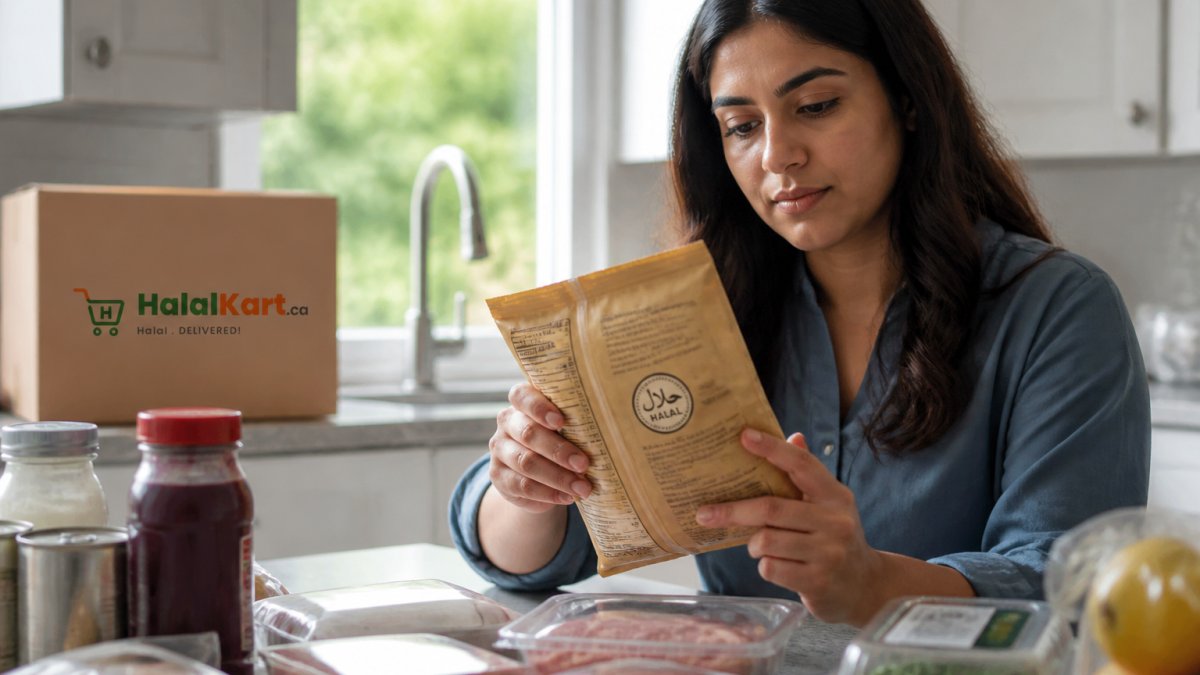
A halal logo is a claim, not proof. Anyone can print a crescent and the word "halal" on packaging.
Here's the core problem. Grocery shelves carry dozens of halal marks, and no single global logo exists. Each certification body uses its own design, its own rules, and its own monitoring.
So the logo is your starting point, never your finish line.
- A logo shows intent to certify
- A certificate number shows who certified it
- A certifier's accreditation shows whether that body is credible
Most shoppers stop at step one. That's where mistakes start.
How to Verify Halal Certification Step by Step
Verifying halal certification is not a single check but a chain of evidence.
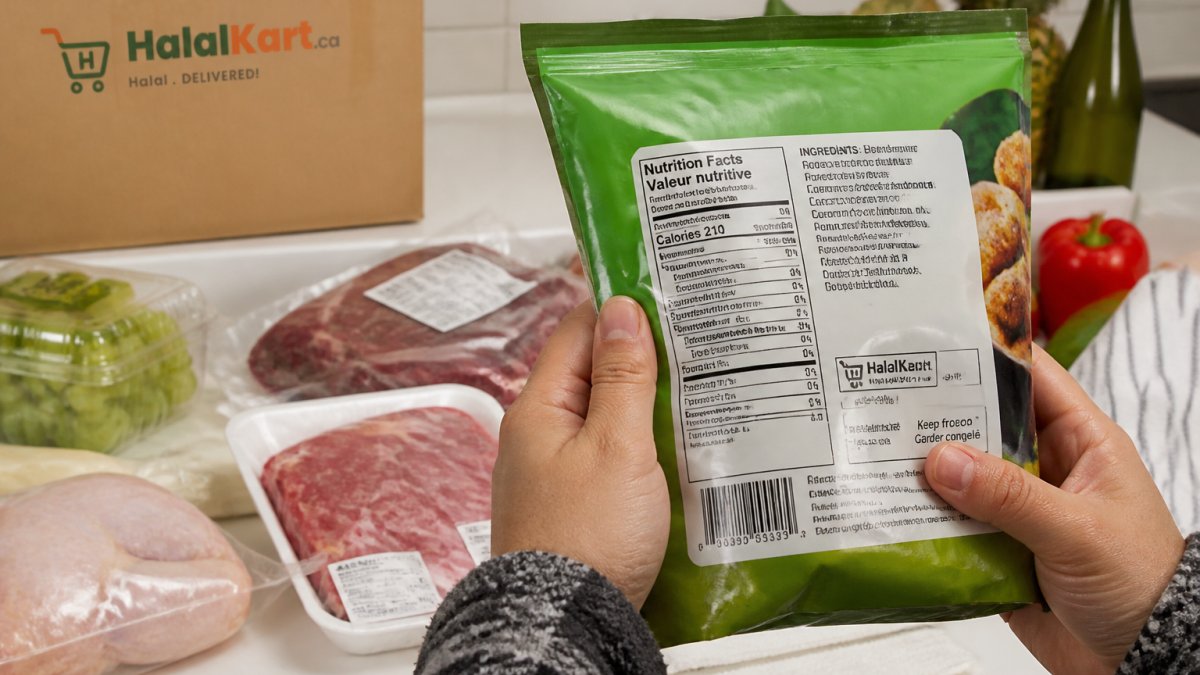
Work through these steps in order. Stop at the first link that fails.
- Locate the mark and read the fine print. The mark should include the certifier's name or a recognizable logo, and ideally a certificate number. A crescent with the word "halal" and nothing else is a generic claim, not a certification.
- Identify the certifier. Write down the exact name. Certifiers range from large international bodies to small local organizations. The name is your search key for everything that follows.
- Check the certifier's accreditation. Accreditation means an independent authority has audited the certifier's own standards and procedures. Look for a statement of accreditation on the certifier's website, or a listing in a recognized directory. If the certifier cannot name its accrediting body, treat the certification as self-declared.
- Confirm the certificate is current. Certificates have issue and expiry dates. An expired certificate means the product was certified at some point but may not be now. Check the date on the certificate record, not just the presence of a number.
- Confirm the certificate covers this product and this facility. A certifier may certify one product line but not another, or one facility but not a co-packer. The certificate should name the product category and the production site. A brand-level claim ("our products are halal") is weaker than a product-level certificate.
- Cross-check the packaging claim against the certifier's record. The certifier's online list should show the brand and product. If the product is not listed, ask the brand for the certificate number and verify it directly with the certifier.
- Save the evidence. Photograph the mark, the certificate number, and the certifier's listing. If you buy again, you can re-check the certificate status without repeating the whole process.
The Canadian Food Inspection Agency guidance on food labelling is a useful reference for what labels must legally disclose.
Check the Certifier's Accreditation and Certificate Number
Accreditation is the backbone of any halal claim.
A common pattern among legitimate certifiers is to publish a searchable list of certified products and facilities, along with certificate numbers and expiry dates.
Watch out for certificate numbers that appear nowhere on the certifier's website. Reputable bodies publish their certified products and facilities.
For deeper guidance, our guide on how to verify halal meat certification walks through certificates, certifiers, and traceability in detail.
Look Up the Product on the Certifier's Website or App
Most recognized certifiers let you search their certified product list online. Type in the brand or product name and confirm it appears. Some offer a smartphone scan of the barcode or QR code on the package, which links straight to the certificate record.
If the product is not listed, ask the store or the brand directly. A missing listing does not always mean the product is haram.
What Certification Does and Does Not Guarantee
A halal certificate confirms that a certifier has reviewed a specific product or facility against its own standard. It does not guarantee that every product from that brand is halal, that the facility has never had a cross-contamination incident, or that the certifier's standard matches your own school of thought.
Work through these checks in order and stop at the first link that fails.
| Step | What to do | What confirms it |
|---|---|---|
| 1 | Locate the mark and read the fine print | Certifier name or logo, ideally a certificate number |
| 2 | Identify the certifier | Exact name written down as your search key |
| 3 | Check the certifier's accreditation | Statement of accreditation or directory listing |
| 4 | Confirm the certificate is current | Issue and expiry dates on the certificate record |
| 5 | Confirm the certificate covers this product and facility | Product category and production site named |
| 6 | Cross-check the packaging claim against the certifier's record | Brand and product shown on the certifier's online list |
| 7 | Save the evidence | Photo of the mark, certificate number, and listing |
Halal Certificate vs Halal Label: What Each One Actually Confirms
A halal label is a printed claim on packaging. A halal certificate is a document issued by a certification body that names the product, the facility, and the period the certification covers. The label tells you what the brand wants you to believe.
That difference matters when you shop. A label can be copied, misprinted, or applied to the wrong batch. A certificate has a paper trail.
- Halal label: consumer-facing mark on the package
- Halal certificate: the certifier's record of what was reviewed
- Certification status: whether that record is current or expired
What a Certificate Covers, and What It Does Not
A certificate is not a blanket approval of a brand. It is scoped. Most certificates name a specific product category, a specific production facility, and a validity period.
This is where many shoppers over-trust a label. Seeing a certifier's mark on one product does not mean every product from that brand is certified.
A certificate also does not guarantee that the certifier's standard matches your own.
The Limits of a Label Without a Certificate
A label with no certifier name and no certificate number is a marketing claim. It may be accurate, but you have no independent way to confirm it. The same applies to phrases like "halal-style," "halal-friendly," or "made with halal ingredients." These are not certifications. They carry no third-party review behind them.
To understand what certification actually means and who issues it, see our overview of Canada's first halal marketplace and its approach to verification.
How to Check If Meat Is Halal at the Counter or Online
Checking meat is halal starts with the source, not the sign. At a counter, ask which certifier backs the meat and whether the certificate covers the specific cut you're buying.
A generic halal sign behind a counter proves very little on its own. The stronger check is a named certifier with a certificate that covers the supplier and the slaughter method.
Trace the Slaughter and Sourcing Chain
Traceability means you can follow the meat from the supplier to the certifier's record. Ask three questions:
- Who slaughtered the animal, and under which certifier's supervision?
- Does the certificate cover this facility and this product?
- Can the store show the certificate on request?
If any answer is vague, treat the claim as doubtful. You can apply the same checks to products you buy online by browsing halal meat and poultry where each listing names its certifier.
Reading Ingredient Lists for Haram and Doubtful Ingredients
Ingredient lists hide more risk than logos do. Scan for haram ingredients first, then flag doubtful ones for a closer look.
- Clearly haram: pork and its derivatives, alcohol used as an ingredient, gelatin from non-halal sources
- Doubtful: mono- and diglycerides, some emulsifiers, natural flavors, rennet, and certain E-codes
- Usually safe: plain plant oils, single-ingredient foods, and products with a named halal certifier
E-codes deserve special attention. Some emulsifiers and stabilizers can be animal-derived or plant-derived, and the label rarely says which. When a doubtful ingredient has no certifier backing the product, contact the brand and ask for the source.
Spotting Counterfeit, Copied, and Misleading Halal Marks
Counterfeit halal marks exist. Some are copied from real certifiers. Others are invented logos designed to look official. The tell is usually the same: no certifier name, no certificate number, no searchable record.
A few patterns to watch for:
- A logo that mimics a known certifier but has a slightly different name
- A mark with no accompanying certifier information anywhere on the package
- A restaurant sign that claims halal with no certifier named
These are marketing words, not certifications. They carry no third-party review behind them.
How Halal Marks Differ Across Countries and Certification Bodies
Halal marks are not standardized across borders.
This creates a real problem for imported goods. A product certified overseas may carry a mark that no local monitoring organization recognizes. That doesn't automatically make it haram.
The practical fix is to check whether the overseas certifier is recognized by a monitoring organization that operates where you shop. If it isn't, ask the brand for documentation before you rely on the mark.
What to Do When a Halal Label Can't Be Verified
Unverified labels need a decision path, not panic. Work through these options in order:
- Contact the brand and ask for the certifier's name and certificate number
- Search the certifier's website for the product
- Ask the retailer whether they can confirm the certificate
- Choose a product with a mark you can verify instead
- If the product matters to you, buy from a source that documents its verification
Seeing how a trusted marketplace verifies halal integrity gives you a concrete fallback when a label can't be confirmed. Our commitment to halal integrity explains the checks we run before a product reaches our shelves.
For a full walkthrough of checking certifications and supplier credentials before you buy, read our step-by-step guide on how to verify halal meat online.
The gap between a printed logo and a real certificate is where most shopping mistakes happen.
Frequently Asked Questions
How do you verify that a halal label is authentic?
Start by identifying the certification body named on the package, not just the logo. Look for a certificate number or reference you can look up on that certifier's website or app. Confirm the certifier is currently accredited and that the product name and manufacturer match the certificate. Then scan the ingredient list for haram or doubtful ingredients. If any of these steps fail, treat the halal labels as unverified and contact the manufacturer or retailer before buying.
Is a halal logo enough to confirm that a product is halal?
No. A logo is only a packaging claim until you can trace it to a certifier, a valid certificate, and a product that matches that certificate. Copied or generic halal marks exist, and some products carry a logo without a certificate number. Use the logo as a starting point, then verify the certifier's accreditation and the certificate details. A mark you cannot trace back to a recognized certification body proves very little on its own.
How can you check whether meat is halal-certified?
Ask for the certifier's name and certificate reference, then confirm the slaughter method and sourcing chain behind the meat. At a counter, request documentation linking the supplier to a recognized halal monitoring organization. Online, check whether the retailer publishes its verification process and audit schedule. For meat especially, traceability from farm to package matters as much as the stamp on the label.
What should you do if a halal label or certificate cannot be verified?
Treat the product as doubtful and avoid it until you have confirmation. Contact the manufacturer or retailer and ask which certification body issued the claim and for the certificate reference. If they cannot provide it, report the product to the certifier named on the pack if one is listed. Choosing retailers that publish their verification steps, like a documented multi-step review and periodic audits, removes most of this guesswork before you buy.