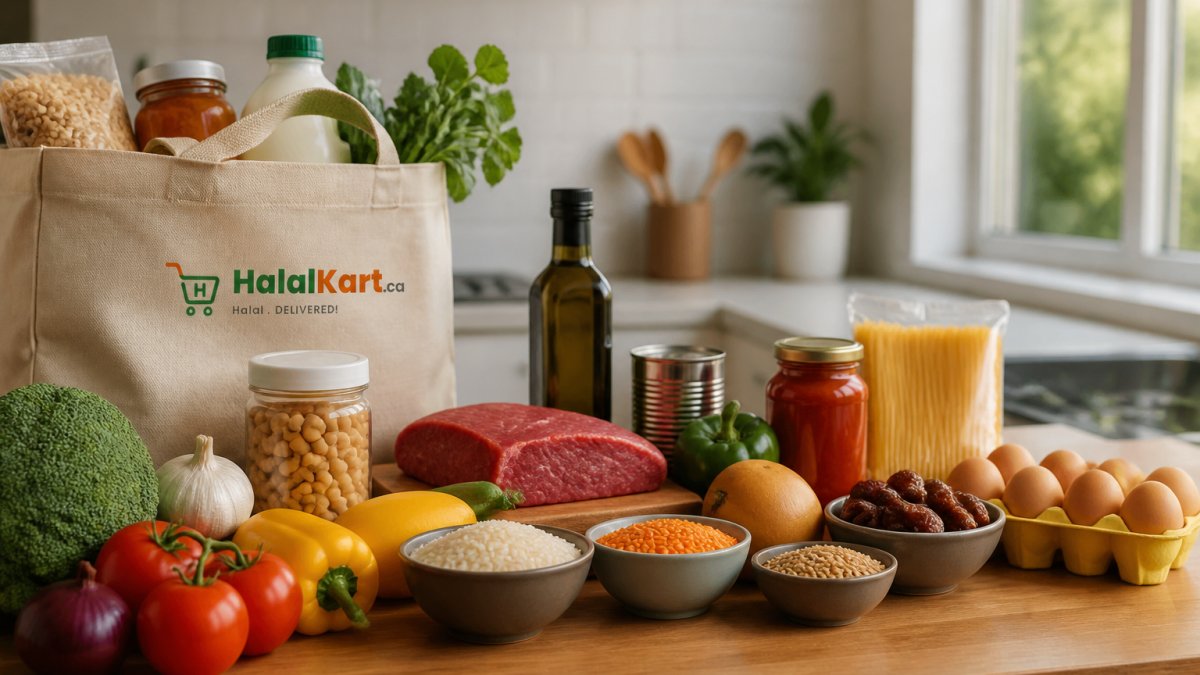
 Listicle
7 Modern Halal Grocery Shopping Apps for 2026
Last Updated: November 4, 2026
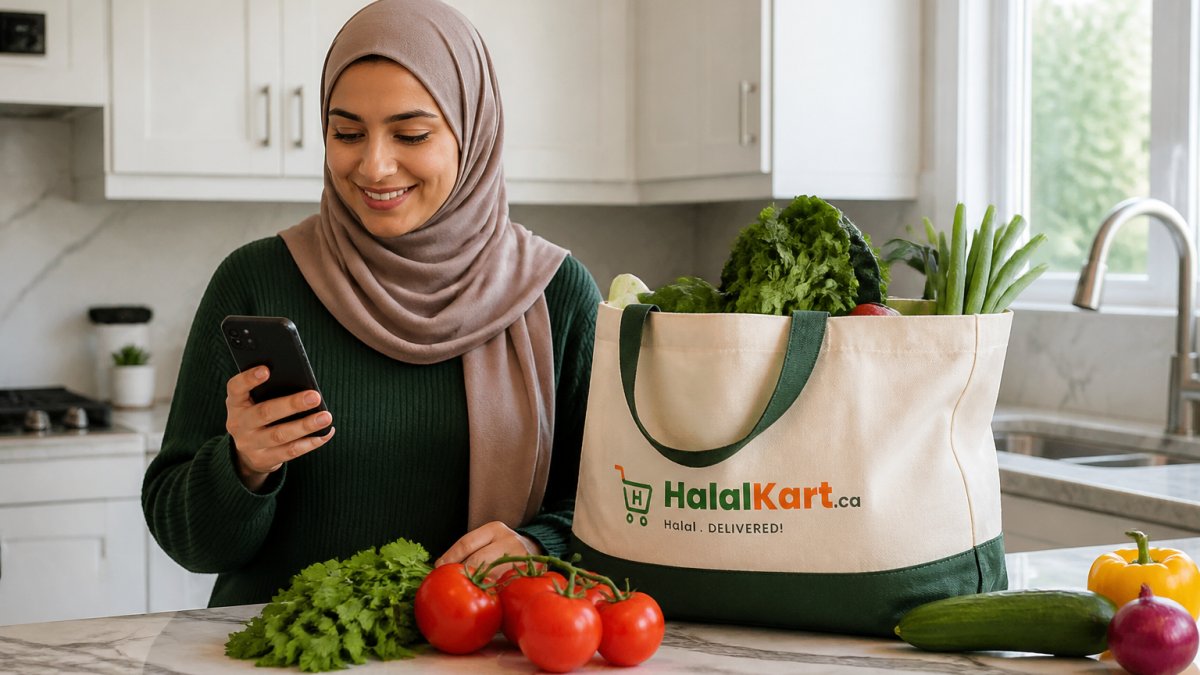
Quick Summary
Modern halal grocery shopping apps in 2026 split into three clear groups: full-basket delivery marketplaces, product scanners that check ingredients on the spot, and discovery tools that map butchers and markets near you. HalalKart is a halal-only marketplace with a four-step verification process, while Tayib and HalalChecker AI are scanner tools and Zabihah is a discovery tool.
- HalalKart's four-step verification covers vendor background checks, documentation review, monitoring partnerships, and periodic audits.
- HalalKart works with various certification bodies
- Scanner apps return compliant, non-compliant, or unknown verdicts based on ingredient databases.
- Verifying certification takes four steps, and most shoppers skip checking that it covers the specific product.
- Price the same representative basket in each app and build it to the final payment screen before comparing.
Table of Contents
- How Halal Grocery Apps Have Changed in 2026
- 1. HalalKart: The Dedicated Local Halal Grocery Marketplace
- 2. Tayib and HalalChecker AI: Halal Food Scanner Apps Compared
- 3. Zabihah and AimHalal: Discovery and Delivery Tools
- What to Look for in a Halal Grocery Delivery App
- How to Verify Halal Certification Before You Check Out
- Quick Comparison: Costs, Coverage, and Features
- Shop Halal: Start Your First Verified Order
- Frequently Asked Questions
How Halal Grocery Apps Have Changed in 2026
Modern halal grocery shopping apps have moved well past the days of phone calls to a butcher and guesswork at the supermarket shelf. Modern halal grocery shopping apps in 2026 split into three clear groups: full-basket delivery marketplaces, product scanners that check ingredients on the spot, and discovery tools that map butchers and markets near you. Shoppers often have to choose between finding halal food and finding convenience, and rarely get both with proof attached.
That gap matters more as more households order food online. According to Statistics Canada's retail e-commerce data, online shopping continues to take a larger share of household spending each year, and grocery is one of the fastest-growing categories. The apps below are the ones worth your phone's home screen, sorted by what they actually do well.
1. HalalKart: The Dedicated Local Halal Grocery Marketplace
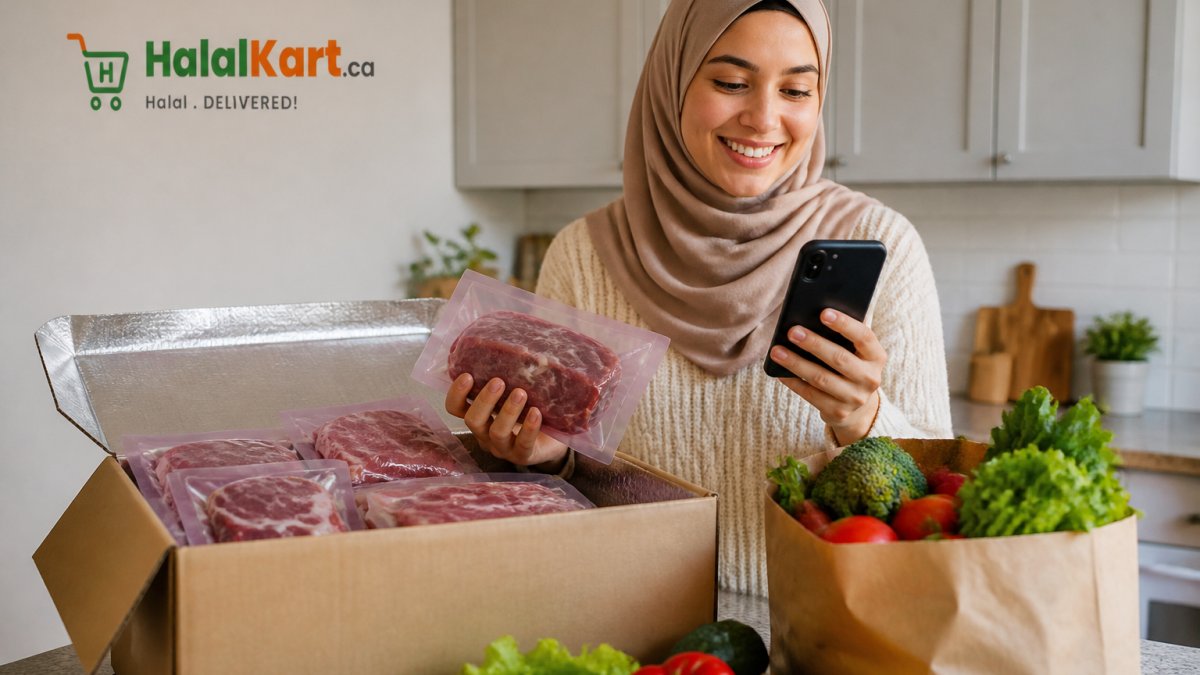
HalalKart is a halal-only online marketplace built for families who want verified groceries, fresh meat, and lifestyle products delivered together. Its four-step verification process covers vendor background checks, documentation review, partnerships with recognized halal monitoring organizations, and continuous monitoring through periodic audits and community feedback. HalalKart works with HMA, ISNA, and IFANCA.
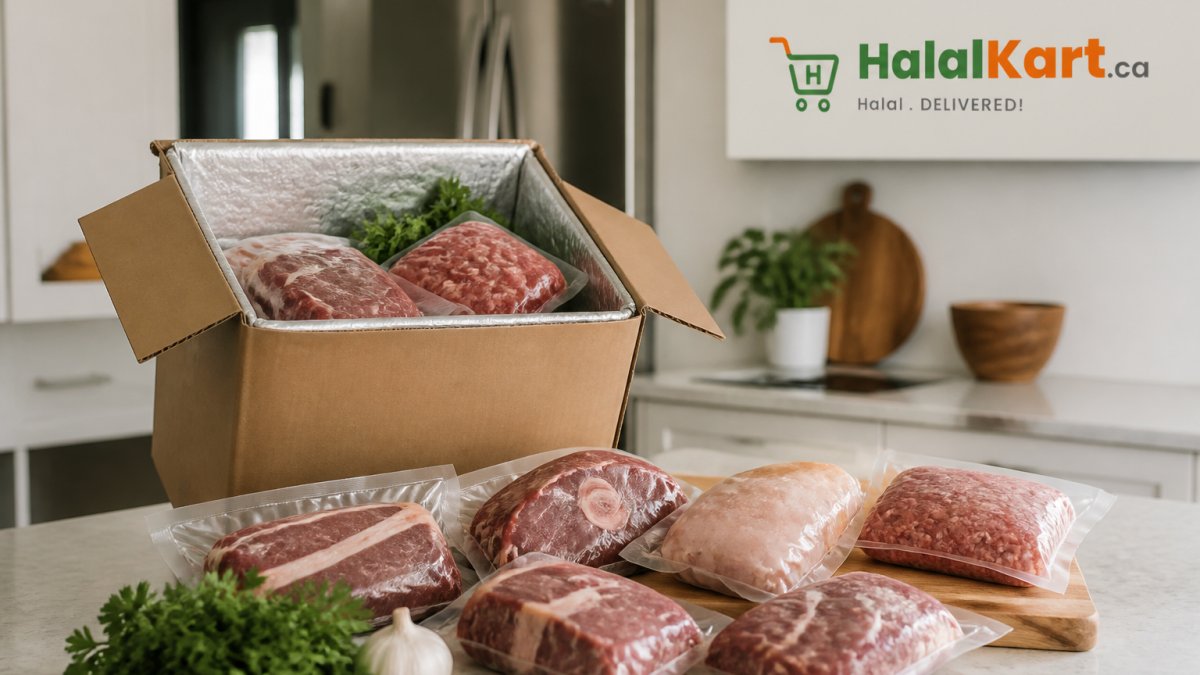
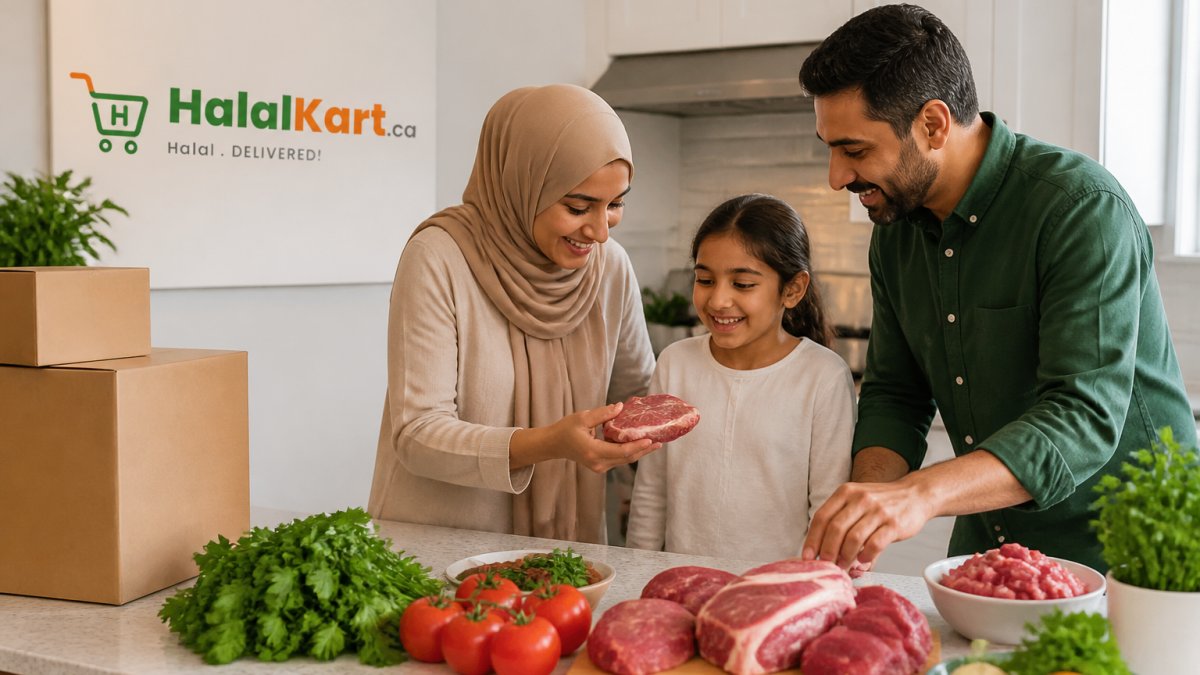
HalalKart carries halal-certified products from local artisans and businesses, and it brings groceries, fresh meat and lifestyle products together so you can shop them in one order.
Best for: families who want one verified basket delivered, not a certification checklist to run themselves. Skip if: you only need a single item and your local butcher already stocks it.
Explore Halal Vendors to see the current product range before you commit to a first order.
2. Tayib and HalalChecker AI: Halal Food Scanner Apps Compared
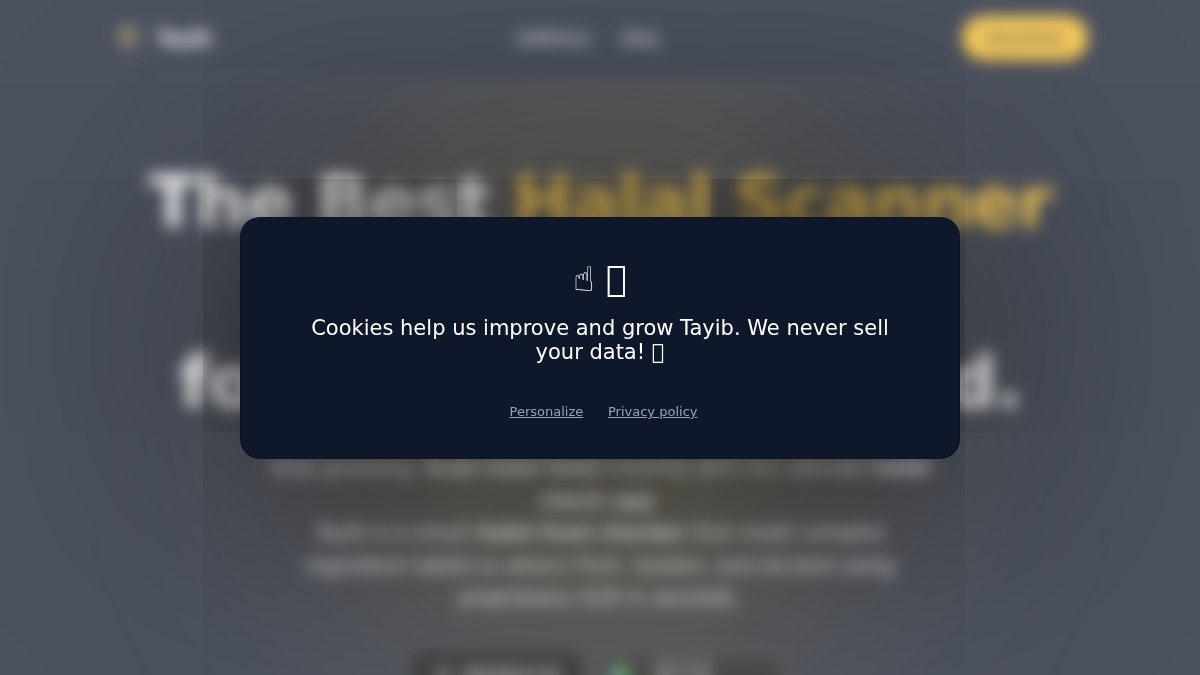
A halal food scanner app reads a barcode or a photo of an ingredient list and flags ingredients that may not be halal-compliant. These tools don't sell groceries; they answer the question "can I put this in my cart?" in the aisle.
Tayib and HalalChecker AI are focused scanner tools rather than shopping platforms, and they are not products HalalKart offers.
How a scanner actually reaches a verdict. Most scanners work in three layers. First, the barcode or photo identifies the product and pulls its ingredient list from a database. Second, the app matches each ingredient against a list of substances that may be halal, may be haram, or are ambiguous, gelatin, mono- and diglycerides, rennet, L-cysteine, natural flavors, and alcohol used as a carrier solvent are common examples. Third, the app returns a color or label: compliant, non-compliant, or unknown.
Where scans fail. A barcode identifies a product, not a production run. If a manufacturer changes a supplier or reformulates without changing the barcode, the database can lag behind the shelf. Photo-based scans depend on image quality and on whether the ingredient list is printed in a language or format the app recognizes.
What scanners cannot tell you. A scanner cannot confirm slaughter method, cross-contamination controls at a facility, or whether a certifier's mark on the package is current. Those require a certification check, which is a separate step. Treat a green result as a helpful signal, not a certificate.
How to use a scanner well. Scan the product, read the flagged ingredients rather than only the color, and cross-check any meat or dairy item against the certifier's mark on the package. For packaged foods with long ingredient lists, a photo scan of the label is often more useful than a barcode scan because it shows you what the app is reading. If the app returns "unknown," treat that as a prompt to check the certifier, not as a pass.
3. Zabihah and AimHalal: Discovery and Delivery Tools
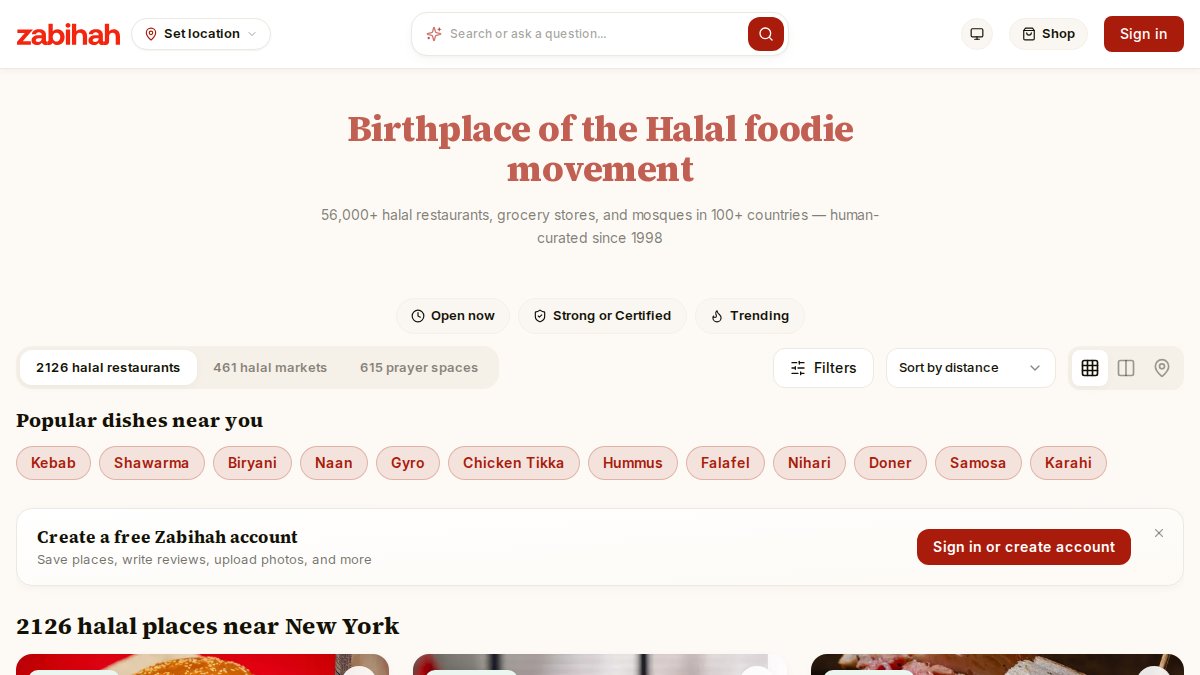
Zabihah is a discovery tool, not a store. It lists halal restaurants, groceries, butchers, and markets, with user ratings and reviews. Use it to find a butcher near a new address or check whether a market is worth the drive.
The catch with both is verification depth. Listings and reviews tell you what other shoppers experienced, not what documentation a vendor holds. Confirm certification directly before relying on a new shop for your household's regular meat supply.
What to Look for in a Halal Grocery Delivery App
A useful halal grocery delivery app should make certification easy to check, handle perishables carefully, and show the full cost before checkout.
The woman is Canadian.
Start with verification. Ask how the platform checks vendors: documentation review, third-party monitoring, or nothing at all. Then look at cold-chain handling for meat and dairy, because a long delivery window can affect perishable quality. Finally, check delivery area and fees together, since a low delivery fee means little if your address sits outside the service zone.
For a closer look at how full-basket services compare on cost, coverage, and cold-chain handling, see our guide to halal grocery delivery for busy families.
How to Verify Halal Certification Before You Check Out
Verifying halal certification takes four steps: identify the certifying body on the package, confirm that body is recognized, check the certification covers this specific product and facility, and keep the receipt or batch details in case of a recall. Most shoppers skip step three, which is where mistakes hide.
- Find the certification logo and the certifier's name, not just the word "halal"
- Confirm the certifier appears on a recognized monitoring organization's list
- Check the certification applies to this product line, not only the brand
- Look for a batch or lot code on meat packaging
- Save your order confirmation for traceability
Watch out: a "halal" claim printed by the manufacturer without a certifier's mark tells you nothing about slaughter method or cross-contamination controls. If a product fails your check after delivery, report it to the platform and ask how the vendor's audit record handles it.
For the full walkthrough, read how to verify halal meat certification step by step, and for label-spotting at the shelf, see how to identify authentic halal labels on groceries.
Quick Comparison: Costs, Coverage, and Features
Pricing depends on basket size, quantity, delivery area, and any membership tier, so check current prices directly with each provider.
Compare total basket cost, not delivery fee. The number that matters is what leaves your account after checkout. Build a representative basket, one meat item, one dairy item, one pantry staple, one produce item, and price it in each app that serves your address.
Check minimum order thresholds. Some delivery marketplaces set a minimum basket before checkout is allowed. If your household shops in small weekly trips, a minimum order can affect your total. Scanner and discovery apps do not sell groceries, so minimums do not apply to them.
Confirm coverage by postal code, not by city. Delivery zones are drawn by postal code or radius, and a platform that serves your city may not serve your block. Enter your full postal code in each app before you build a basket.
Check cold-chain terms for meat and dairy. Look for delivery windows, insulated packaging, and what happens if a delivery arrives late. A marketplace that batches orders across a wide zone may stretch the cold chain on a hot day.
Review payment and membership options. Check whether the app accepts the payment methods your household uses, whether prices are shown in Canadian dollars before checkout, and whether a membership tier is required to avoid delivery fees.
App | Type | Verification approach | Coverage model | Cost structure to check | Best for |
|---|---|---|---|---|---|
HalalKart | Halal-only marketplace | 4-step process, audits, HMA/ISNA/IFANCA partnerships | Delivery by service area | Delivery fee, minimum order, membership tier | One verified basket, delivered |
Tayib | Scanner | AI product checks, ad-free | No delivery; works anywhere | Free or one-time app cost | Quick in-aisle checks |
HalalChecker AI | Scanner | Barcode, ingredient photo, product photo | No delivery; works anywhere | Free or one-time app cost | Packaged foods with unclear labels |
Zabihah | Discovery | User ratings and reviews | Listing coverage, no delivery | Free | Finding butchers and markets nearby |
AimHalal | Discovery + delivery | Combined scanning and delivery | Delivery by service area | Delivery fee, minimum order | One app for finding and ordering |
For current delivery fees, minimum orders, and basket costs in your area, check each platform directly and price the same representative basket in each. Rates can change by zone and order size.
Watch out: a delivery fee quoted on an app's home screen may exclude service fees, small-order surcharges, and driver tips that appear only at checkout. Build the basket to the final payment screen before you compare.
Shop Halal: Start Your First Verified Order
Start with a small test basket: one meat item, one pantry staple, one product you already know well. That shows you how a platform handles packing, cold-chain handling, and product accuracy. Check delivery coverage for your address first, then confirm the certification path for the meat you order.
HalalKart is a halal-only marketplace with a four-step verification process, comprehensive background checks and documentation reviews for vendors, partnerships with recognized halal monitoring organizations, and continuous monitoring through periodic audits and community feedback. You can shop verified groceries, fresh meat, and lifestyle products in one place.
Get started with HalalKart and shop your first verified order with confidence.
Frequently Asked Questions
What are the best halal grocery apps in 2026?
The best option depends on whether you need delivery or a product check. HalalKart is a dedicated halal marketplace with a 4-step verification process. Tayib and HalalChecker AI are scanner tools for checking packaged foods. Zabihah helps you find halal shops, butchers, and markets near you. Most shoppers use a delivery app for staples and a scanner for new products.
Is there a halal food scanner app that tells you whether food is halal?
Yes. Tayib and HalalChecker AI are scanner tools that can be used to check products. Results are a starting point, not a guarantee. Ingredient names and supplier sources can change between batches, and a scanner only reads what is printed on the label. For meat and anything with animal-derived additives, confirm the certification body on the package and check it against the certifier's own directory.
How can I check whether a grocery app verifies halal certification?
Ask three questions: which certifiers it recognizes, how it documents each supplier, and how often it re-checks. A credible halal grocery delivery app names its certification partners, reviews vendor paperwork, and audits periodically. HalalKart, for example, uses a 4-step verification process with background checks, documentation review, and continuous monitoring through periodic audits and community feedback, and works with recognized halal monitoring organizations. If an app cannot explain its process in plain terms, treat its halal claims as unverified.
Can halal grocery apps help me find local halal businesses?
Discovery apps like Zabihah list halal businesses, though local coverage varies. A dedicated halal marketplace can bring together products from local artisans and businesses, so you can order them without visiting each shop. Check the delivery area before you build a basket, since specialty services often have narrower coverage than mainstream grocery apps.
Are halal scanner apps reliable for checking packaged foods?
They are useful for flagging obvious problems, such as pork-derived gelatin or alcohol in flavoring, but they are not a substitute for certification. Scanner accuracy depends on the ingredient data the app holds, and recipes change without notice. Use a scanner for a quick first pass, then verify any product carrying a certification mark by checking the certifier directly. For fresh meat, buy from a supplier that documents its slaughter and handling process.
The real test of any halal grocery app isn't its design; it's whether you can trace every item in your basket back to a certifier you trust. Pick the tool that makes that trace short, and let the convenience follow.