 blog
Halal Grocery Delivery for Busy Families: 2026 Guide
Table of Contents
- Why Halal Grocery Delivery Works for Busy Families
- What to Look For in Halal-Certified Groceries Online
- Beyond Meat: Full-Basket Grocery Delivery for Families
- A Halal Grocery Shopping Checklist for Busy Weeks
- Halal Meal Planning for Families: Stretch the Budget, Cut the Stress
- Delivery Areas, Fees, and Order Minimums: What to Expect
- Delivery Reliability and Cold-Chain Handling: Keeping Fresh Meat Fresh
- Conclusion
- Frequently Asked Questions
Last Updated: October 14, 2026
Why Halal Grocery Delivery Works for Busy Families
Halal grocery delivery for busy families solves one problem: getting verified halal food to your door without spending a Saturday driving between butchers and specialty stores. At HalalKart, we built our marketplace around that need, one place to order verified halal groceries, fresh meat, and pantry staples.
A weekly halal shop often means three errands, a halal butcher, a South Asian or Middle Eastern grocer, and a third stop for everyday items, and most of an afternoon.
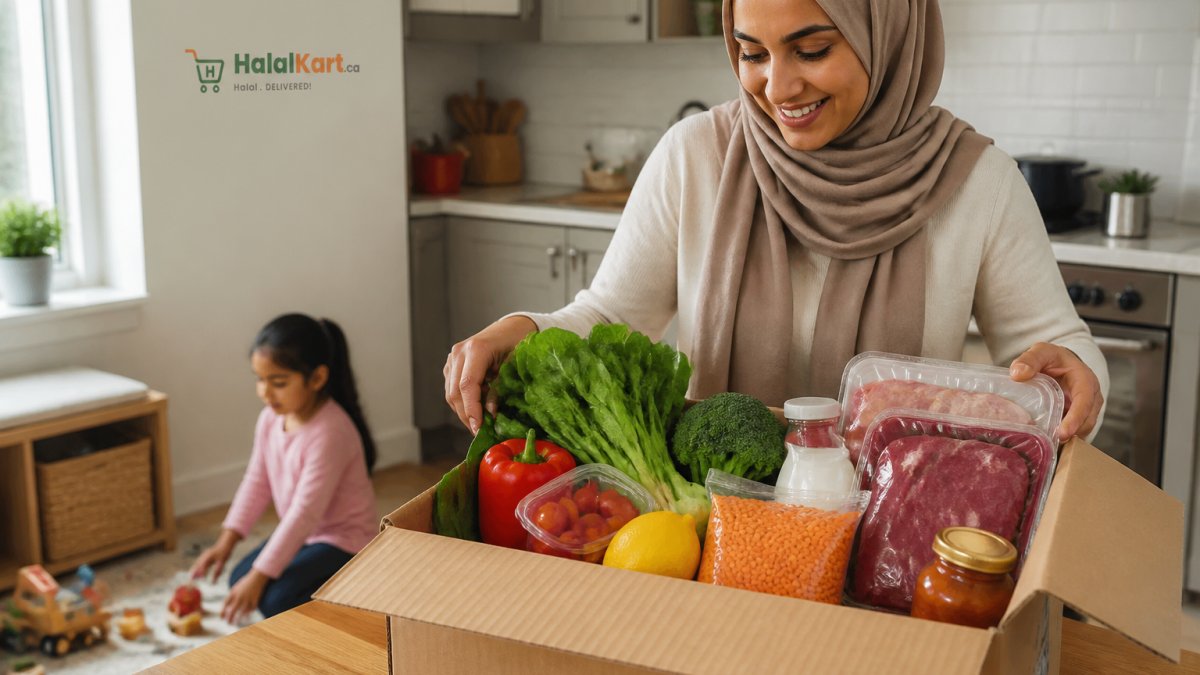
Online ordering collapses those trips into one: build a basket, pick a delivery window, and the order arrives chilled and packed.
What to Look For in Halal-Certified Groceries Online
Halal-certified groceries online should come with proof, not just a label: who certified the product, which monitoring body stands behind it, and how vendors are checked before they sell.
Look for these signals before you order:
- Named certifying organizations rather than a vague "halal" badge
- A published verification process for vendors, not just products
- Documentation checks and periodic audits
How to Verify Halal Claims Before You Order
Verification starts with asking who certified the product and whether that certifier is recognized. A logo proves little if you cannot trace it to a real monitoring organization.
Ask three questions of any store:
- Which certification bodies do you recognize?
- How do you vet a new vendor before their products go live?
- Do you re-check suppliers after onboarding?
HalalKart answers these with a four-step verification process covering background checks, documentation review, and ongoing audits, and partners with recognized halal monitoring organizations so standards behind each listing are traceable. If a store cannot answer clearly, treat that as a warning sign.
Beyond Meat: Full-Basket Grocery Delivery for Families
Full-basket grocery delivery means your order is not limited to protein. A complete halal grocery run includes rice, flour, spices, oils, dairy, frozen items, snacks, and household basics, and a store that only ships meat leaves you making the other trips anyway.
That gap is where most specialty services fall short. They handle the butcher counter well and little else. For a family, the value comes from filling the whole pantry in one checkout.
Three Service Types, Three Different Jobs
Most halal delivery options fall into one of three buckets. Knowing which one you are buying prevents the most common disappointment: paying grocery prices for a meat box, or expecting a full pantry from a butcher.
| Service Type | What It Covers Well | Where It Falls Short | Best For |
|---|---|---|---|
| Halal butcher or meat delivery | Fresh and frozen meat, custom cuts, bulk packs | Produce, dairy, pantry, household goods | Families who already shop a mainstream grocer for everything else |
| Specialty halal grocer | Meat plus imported pantry staples, spices, frozen foods | Limited produce, few household basics, narrower delivery windows | Households cooking mostly from one cuisine |
| Halal marketplace or full-basket service | Meat, produce, dairy, pantry, frozen, household basics in one order | Delivery area may be narrower than a national grocer | Families who want one weekly order and one delivery fee |
A butcher box solves protein. A marketplace solves the week. If your goal is to stop making three stops, only the third category removes the other two trips.
What a Real Family Basket Looks Like
A practical full-basket order is built around meals, not aisles.
| Basket Category | Typical Items | Typical Weekly Quantity | Rough Cost Range |
|---|---|---|---|
| Fresh meat and poultry | Chicken, beef, lamb, custom cuts | 3-5 kg | $45-$90 |
| Pantry staples | Rice, flour, lentils, spices, oil | 1-2 kg rice, 2-3 kg flour, assorted | $25-$45 |
| Produce | Onions, tomatoes, potatoes, greens, fruit | 8-12 kg | $30-$55 |
| Dairy and chilled | Milk, yogurt, cheese, eggs | 4-6 L milk, 2 dozen eggs | $20-$35 |
| Frozen and ready items | Frozen vegetables, parathas, samosas, ready meals | 4-8 items | $15-$30 |
| Household basics | Snacks, drinks, cleaning supplies | Assorted | $15-$30 |
The point is the shape of the basket: meat is usually the largest line, but rarely more than a third of the total. A service that only sells you that third is not solving your week.
Cost Per Meal: The Number That Actually Matters
If a basket produces family dinners plus breakfasts and lunches, that is before counting the store trips you skipped.
The comparison that matters is cost per meal, including your time and the fuel and parking you skipped. A cheaper basket from three stores is not cheaper if it costs you a Saturday afternoon.
To estimate your own cost per meal:
- Add up the total order, including delivery fee and any tip.
- Count the dinners the basket will realistically produce.
- Divide total by dinners, then by the number of people eating.
- Compare that number to what you would spend ordering in or buying prepared food for the same meal.
Where Full-Basket Services Still Fall Short
No single service covers everything. Check these limitations before relying on one order per week:
- Produce variety may be narrower than a large mainstream grocer, especially for out-of-season items.
- Specialty or ethnic brands can be inconsistent in stock, so a staple you depend on may not always be listed.
- Household and cleaning goods are often the last category added, and selection is usually thin.
A workable pattern is one full-basket halal order per week for the core shop, plus a quick local top-up for anything missed, two stops instead of five.
A Halal Grocery Shopping Checklist for Busy Weeks
A halal grocery shopping checklist keeps a rushed order from becoming a missing-ingredient week. The goal is a repeatable list you can work through in minutes, not a fresh plan every time.
Use this as a starting template:
- Confirm the week's dinners and list every ingredient
- Check the freezer and pantry before adding duplicates
- Add fresh meat and poultry, noting any custom cuts
Keep the list saved and reuse it weekly, adjusting quantities rather than structure. A stable list is faster than rebuilding from scratch and stops small items slipping through.
Halal Meal Planning for Families: Stretch the Budget, Cut the Stress
Halal meal planning for families works best when it starts from what you already have: plan meals around the protein and staples in your basket, then fill gaps.
A simple method:
- Pick four to five dinners for the week.
- Identify the shared ingredients across them.
- Order those ingredients in bulk where it makes sense.
- Leave one night open for leftovers or a heat-and-eat meal.
Bulk ordering and larger meat boxes lower cost per meal because you buy fewer, larger packs. Cooking once and eating twice, leftovers or batch cooking, cuts both cost and weeknight effort. For families watching the budget, cost per meal beats the checkout total.
Delivery Areas, Fees, and Order Minimums: What to Expect
Delivery areas, fees, and order minimums vary by service, so confirm all three before you build a basket. A store that serves your neighborhood may still have a minimum that changes how you shop.
How to Check Coverage Before You Commit
Most services publish a postal-code checker or delivery-zone map. Use it before you build a basket. Two patterns are common:
- Radius-based coverage: the service delivers within a set distance of a depot or store. Suburbs just outside the radius are excluded even if they are close in driving time.
- Postal-code or zone lists: coverage is defined by forward sortation area (the first three characters of your postal code). This is more predictable but can leave gaps between zones.
If you are outside a city core, test your full postal code rather than your city name. A city can be listed as served while specific neighborhoods are not.
What Fees and Minimums Actually Cost You
Delivery fees typically follow one of three structures, and the structure matters more than the headline number:
| Fee Structure | How It Works | Effect on a Family Order |
|---|---|---|
| Flat fee | Same charge regardless of basket size | Rewards larger, less frequent orders |
| Tiered by order size | Fee drops as basket grows | Encourages topping up to hit the next tier |
| Free above a threshold | No fee once you pass a set basket value | Can push you to buy items you did not need |
Order minimums work the same way. A $40 minimum is easy to clear with meat alone; a $75 minimum forces you to add pantry or household items. A minimum higher than your typical weekly basket means over-ordering or an unplanned fee.
Run the numbers on your own basket:
- Estimate your typical weekly total.
- Add the delivery fee at that basket size.
- Divide the fee by the number of dinners the basket produces.
Pickup, Substitutions, and Delayed Orders
Three operational details separate a reliable service from a frustrating one:
- Pickup option: if delivery does not cover your address, some services offer a pickup point. Confirm the location and hours before relying on it.
- Substitutions: when an item is out of stock, does the service substitute, refund, or remove it? A clear substitution policy prevents surprise baskets.
- Delayed or missed orders: ask what happens if your window is missed, is the fee refunded, is the order re-delivered, and are chilled items still safe?
For chilled and frozen items, a delayed delivery is not just an inconvenience. Ask how the service handles a window that slips by hours, and whether cold-chain packaging is rated for that gap.
A Quick Comparison Checklist
Before you commit to any service, confirm all of the following in one pass:
- Your full postal code is covered
- The delivery fee structure and any free-delivery threshold
- The order minimum, and whether fresh meat counts toward it
HalalKart's service area and current fees or minimums are listed on our site, check them before your first order. If a service cannot answer these questions clearly, treat that as a warning sign, the same standard you would apply to halal certification.
Delivery Reliability and Cold-Chain Handling: Keeping Fresh Meat Fresh
Cold-chain handling keeps fresh meat safe from the store to your door. Meat and poultry need consistent refrigeration in transit, which depends on insulated packaging, cooling elements, and short delivery windows.
What reliable cold-chain delivery looks like:
- Insulated liners or boxes with cooling packs for chilled items
- Delivery windows short enough that meat is not sitting out
- Separate packing for raw meat and ready-to-eat items
When your order lands, unpack chilled items first, meat and dairy into the fridge or freezer before dry goods. If something arrives warm or damaged, report it immediately and keep the packaging.
Conclusion
The real challenge with halal grocery delivery is trust: knowing the meat is genuinely halal, the cold chain held, and the store will still be there next week. HalalKart addresses that with a four-step vendor verification process, partnerships with recognized halal monitoring organizations, and ongoing audits backed by community feedback. Our marketplace brings verified halal groceries, fresh meat, and pantry staples into a single order delivered to your door.
Frequently Asked Questions
How does halal grocery delivery work?
You order online from a halal-focused platform, choosing fresh meat, pantry items, and household staples in one basket. The service packs your order, often with separate handling for raw meat, and delivers to your door within a scheduled window. HalalKart, for example, verifies every vendor through a 4-step process that includes background checks, documentation review, and periodic audits, so you can confirm certification before checkout.
How can I check whether groceries are halal-certified?
Look for a certification mark from a recognized halal monitoring body, then check that the certifying organization is named on the product page or packaging. Ask the retailer how it verifies suppliers. HalalKart partners with organizations such as HMA, ISNA, and IFANCA and reviews vendor documentation before listing products, which gives you a documented trail rather than a label alone.
Can I order halal meat and groceries together online?
Yes. A full-basket halal delivery service lets you add fresh meat, chicken, fish, produce, and pantry staples to the same order. This saves a separate trip to a butcher and a supermarket. Check that the service packs raw meat separately and uses insulated liners or cold packs, especially if you are ordering custom cuts or bulk meat boxes for the week.
What should I do if a halal grocery order arrives with a missing or damaged item?
Contact the delivery service within its stated window, usually the same day, and include your order number and a photo of the issue. A reliable halal grocery delivery platform will replace the item or issue a refund and log the problem with the vendor. If the item's halal status is in question, report it so the service can review the supplier's certification.