 Comparison
Are There Better Tasteport Alternatives for Canada?
Last Updated: October 25, 2026
Quick Summary
The best tasteport alternatives for Canada verify halal certification at the product level, deliver across Canadian provinces, and show the full landed cost before checkout. HalalKart is our top pick because it runs a rigorous 4-step verification process on every vendor and product. Compare certification depth, coverage, and total cost before you switch.
- HalalKart screens every vendor through background checks, documentation reviews, periodic audits, and community feedback.
- Instacart does not certify halal status itself; verification is left to the partner store.
- Total five lines when comparing platforms: item subtotal, delivery fee, service fee, minimum order, and membership.
- Confirm coverage by entering your full postal code and reaching a checkout screen with a delivery slot.
- Run a small test order with fresh meat, a frozen item, and a certified packaged good before switching.
Table of Contents
- What to Compare in a Tasteport Alternative
- Halal Grocery Delivery: What Actually Matters
- Instacart Halal Groceries: Convenience Without Certification
- How to Verify Halal Certification Before You Order
- Online Halal Meat Delivery: Freshness and Cold-Chain Checks
- Price Comparison Tools and Flyer Apps as Supplements
- Choosing Your Halal Grocery Platform
- Frequently Asked Questions
What to Compare in a Tasteport Alternative
The best Tasteport alternatives for Canada are platforms that verify halal certification at the product level, deliver across Canadian provinces, and show the full landed cost before checkout.
Tasteport built an audience by making halal groceries easier to order online. That does not mean it is the right fit for every household.
Three things separate a serious halal grocery platform from a generic delivery app:
- Certification depth. Is halal status checked per product, or assumed from the store's reputation?
- Coverage. Does delivery reach your address, including suburbs outside the city core?
- Total cost. What do the service fee, delivery fee, and minimum order add up to?
A common mistake is comparing headline prices only. A lower shelf price loses its edge once delivery fees and minimum orders are added.
If you are weighing delivery services more broadly, our guide to halal grocery delivery for busy families compares full-basket services, costs, and cold-chain handling. For a direct look at how Instacart-style options stack up, see our Instacart alternatives for halal groceries.
Halal Grocery Delivery: What Actually Matters
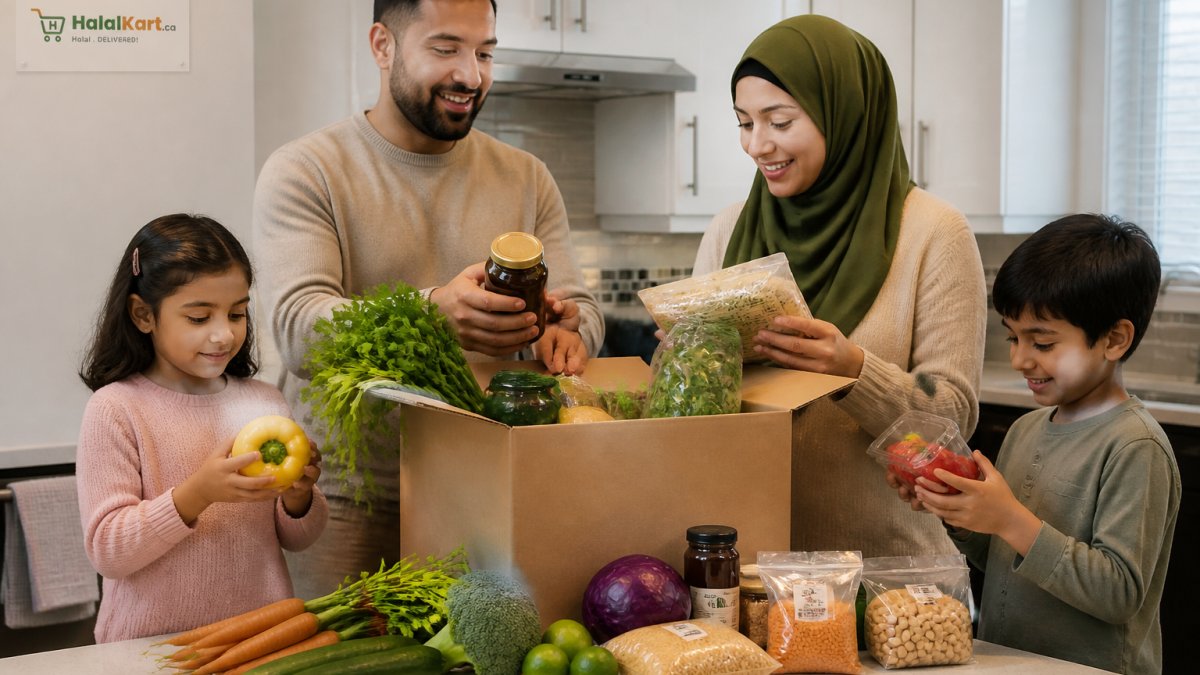
What most guides miss is that halal integrity can break after certification. A certified supplier is one thing. Correct storage, separate handling, and temperature control through the delivery run are another.
Four checks matter most:
- Named certifier. Which body certified the product, and can you see it on the listing?
- Per-product verification. Is halal status confirmed item by item, or applied store-wide?
- Cold-chain handling. How is fresh meat packed, and how long is it in transit?
- Substitution policy. What happens if an item is out of stock, and who approves the swap?
At HalalKart, we built the platform around the first two. Every vendor goes through comprehensive background checks and documentation reviews, and we monitor suppliers through periodic audits and community feedback.
Instacart Halal Groceries: Convenience Without Certification
Instacart halal groceries are convenient but not halal-verified.
That distinction matters. You are trusting whoever packed the order to know which products qualify.
The convenience is real, though. Same-day windows, broad store choice, and a familiar app lower the barrier.
Where it falls short is transparency. You cannot see a certifier list, an audit trail, or a documented verification step on the product page.
How to Verify Halal Certification Before You Order
You verify halal certification by checking the certifier's name, matching it against the product label, and confirming the supplier's documentation is current. Do this before you add an item to your cart, not after it arrives.
A practical sequence we recommend:
- Identify the certifying body named on the product listing
- Confirm that body is recognized and that its scope covers this product type
- Check the certification mark on the package matches the listing
The facility-versus-product distinction trips people up most. A certified facility can still produce uncertified items. Ask which one you are buying.
For a full walkthrough, our step-by-step guide on how to verify halal meat online covers label checks and supplier credentials. If you want the deeper version, how to verify halal meat certification explains certificates, certifiers, and traceability in detail.
Online Halal Meat Delivery: Freshness and Cold-Chain Checks
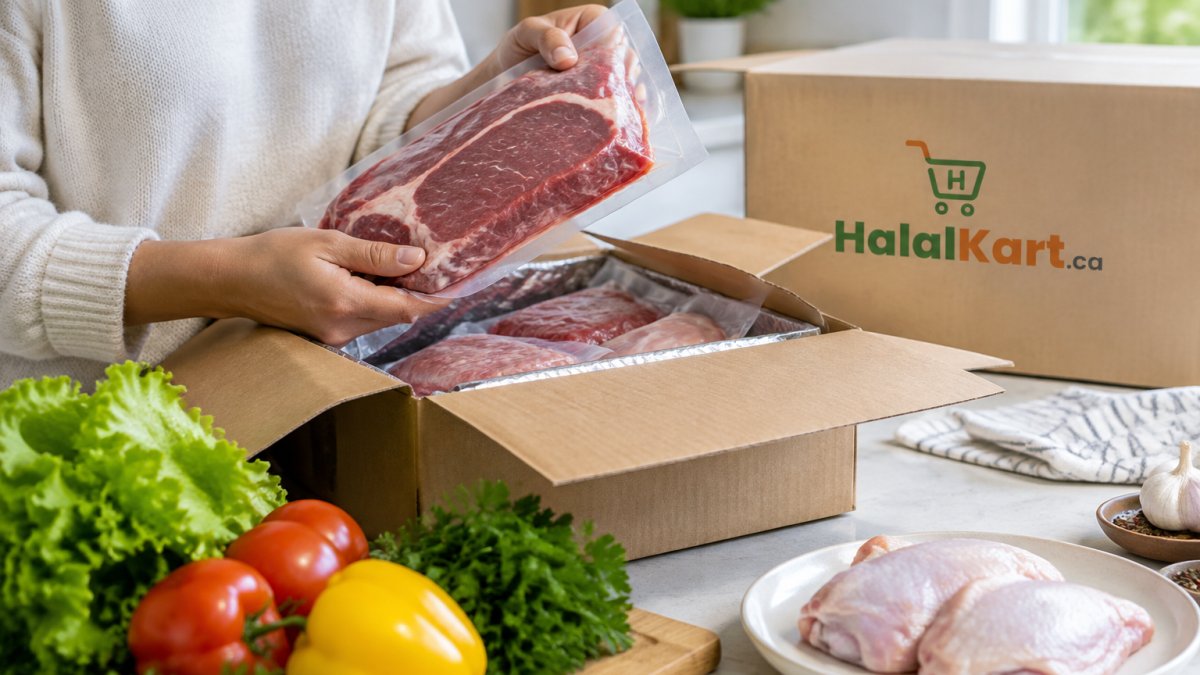
Online halal meat delivery works when the seller controls temperature from packing to doorstep, and that control is what you should test before your first order.
Ask three questions:
- How is it packed? Insulated liners and gel packs are standard; ask how long they hold temperature.
- How long is transit? A next-day window is safer than a multi-day one for fresh cuts.
- What is the delivery window? A narrow window beats a vague all-day estimate.
Watch out: a low delivery fee often signals a longer consolidated route, which means more time out of refrigeration.
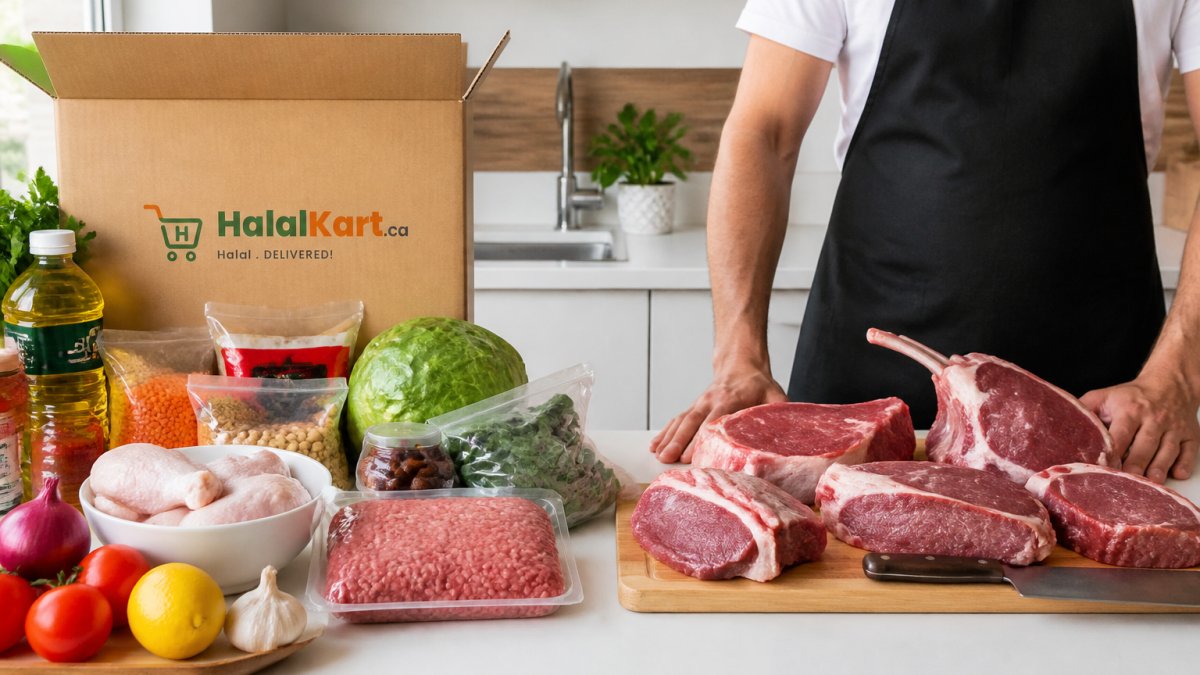
If you are comparing meat delivery services specifically, our roundup of the best halal meat delivery services covers pricing, coverage, certification, and packaging side by side.
Price Comparison Tools and Flyer Apps as Supplements
Flyer and price-comparison apps are useful supplements, not replacements for a verified halal grocery platform. They help you spot deals and build a budget, but they do not confirm certification or handle delivery.
Flipp, for example, lets shoppers browse grocery flyers and compare advertised prices across stores. Basket Savings takes a list-based approach to comparing grocery costs. GroceryChop appears in app comparisons covering deals, lists, cashback, and delivery. Use them for what they do well:
- Tracking weekly flyer promotions
- Building a shopping list before you order
- Spotting price gaps between stores
None of these tools verifies halal status, and none of them shows you the landed cost of a delivered halal order. Treat them as a cost layer on top of your certification layer, never as a substitute.
Build a landed-cost comparison before you switch
A headline shelf price is not the price you pay. To compare a Tasteport alternative fairly, total five lines for the same basket at each platform:
- Item subtotal, the shelf prices for the exact same products, same sizes, same brands where possible.
- Delivery fee, the flat or distance-based charge shown at checkout, not the promotional first-order rate.
- Service fee, many marketplaces add a percentage-based service charge on top of the subtotal.
- Minimum order, the threshold you must hit before delivery is allowed; a $35 minimum changes the math on a small household basket.
- Membership or subscription, only count it if you would actually use it enough to offset the fee.
A simple worksheet: write the five lines for Platform A and Platform B side by side, add them, and divide by the number of items. The platform with the lower shelf price often loses once the service fee and minimum order are included. A common pattern is a lower item subtotal offset by a higher percentage service fee, which is exactly the trap a flyer app will not catch for you.
Where flyer apps still earn their place
Use flyer apps to set your target item prices before you open any delivery platform. If Flipp shows a cut of halal chicken at a local store, that is your benchmark shelf price.
What none of these tools will tell you is whether the meat is certified, how it was stored, or what happens if an item is out of stock.
Choosing Your Halal Grocery Platform
Choosing a halal grocery platform comes down to matching verification depth and delivery coverage to your household's needs. Price matters, but it ranks third behind proof of certification and reliable cold-chain delivery. What most guides skip is the step that decides whether a platform is usable at all: confirming it actually delivers to your address, and understanding what you are switching away from.
Start with why you are leaving Tasteport
The right alternative depends on the reason for the switch. Match your reason to the check that matters most:
| If your reason is... | Check this first | Why |
|---|---|---|
| Selection is too narrow | Category breadth and specialty items | A halal-only marketplace trades general merchandise for verification depth |
| Delivery does not reach you | Province and city coverage | A platform that cannot deliver to your postal code is not an option |
| Fees feel high | Landed cost: item subtotal, delivery, service fee, minimum | The cheapest shelf price can carry the highest total |
| Ordering experience is clunky | Substitution and support policy | A smooth app does not fix a bad out-of-stock process |
| Certification proof is unclear | Named certifier and per-product status | Proof beats assumption for fresh meat |
Verify availability before you commit
A service can operate in one region and not another, so confirm coverage for your own address rather than assuming national availability. A practical check:
- Enter your full postal code at checkout, not just the city.
- Confirm the delivery window offered for your area, not the platform's headline same-day claim.
- Check whether fresh meat and frozen items are available in your zone, since cold-chain coverage can be narrower than dry-goods coverage.
A repeatable way to judge service quality
Rather than trusting social recommendations, run a small, documented test before you switch your weekly shop:
- Place one small order covering a fresh meat item, a frozen item, and a packaged good with a visible certification mark.
- Record the delivery window you were promised and the time it actually arrived.
- Check the packing, insulated liner, gel packs, and whether the meat was still at temperature on arrival.
- Test the substitution policy by ordering an item likely to be out of stock, and note whether you were asked to approve the swap.
- Note the refund process if anything arrives damaged or wrong, and how long it takes to resolve.
That five-step test tells you more about reliability than any review roundup, and it is the same method you can apply to any Tasteport alternative you are considering.
The decision table
| Priority | What to Check | Why It Matters |
|---|---|---|
| Certification | Named certifier, per-product status | Proves halal integrity |
| Coverage | Delivery to your postal code | Avoids failed orders |
| Cold chain | Packing method, transit time | Protects fresh meat |
| Total cost | Item subtotal, delivery fee, service fee, minimum order | Reveals true price |
| Substitutions | Approval process, policy | Prevents unwanted swaps |
| Reliability | Documented test order | Confirms the promise holds |
HalalKart is our top pick for households that want verification built into the platform rather than left to chance. It is a halal-only marketplace, so every vendor is screened, and our partnerships with recognized global halal monitoring organizations back the process.
Best for: Families who want documented halal verification on groceries and fresh meat. Skip if: You only need mainstream packaged goods and already trust your local store's sourcing.
Frequently Asked Questions
What are the best alternatives to Tasteport for grocery delivery?
The best tasteport alternatives depend on whether you need verified halal certification or just convenience. HalalKart is built specifically for halal groceries with a 4-step verification process and partnerships with HMA, ISNA, and IFANCA. Instacart offers broad grocery selection but does not verify halal status. Price-comparison apps like Flipp and Basket Savings help you find deals but do not deliver. Match the platform to your priority: certification, speed, or cost.
Which grocery delivery services offer halal-certified products?
HalalKart is a dedicated halal marketplace where every vendor passes background checks, documentation reviews, and periodic audits. Mainstream delivery apps carry halal items but do not verify certification, so the burden falls on you. When comparing halal grocery delivery options, ask whether the platform publishes its verification steps and which monitoring organizations it works with. That transparency separates a certified service from one that simply stocks halal-labeled products.
How can I verify that groceries are halal-certified?
Check the certification body named on the package and confirm it is recognized, such as HMA, ISNA, or IFANCA. Look for a certification logo with a traceable certificate number. For meat, ask whether the animal was slaughtered according to halal requirements and whether the facility is audited. Platforms that explain how to verify halal certification, including their audit schedule and vendor screening, give you a paper trail you can check before ordering.
Is Instacart a good option for halal groceries?
Instacart halal groceries can work if you already know which local stores stock certified products, because the app itself does not verify halal status. You are relying on the store's labeling and your own checks. It suits shoppers who want speed and broad selection. If certification matters more than variety, a dedicated halal platform removes the guesswork and the need to inspect every item before checkout.
Can I order halal meat and groceries online?
Yes. Online halal meat delivery is available through dedicated halal marketplaces that ship fresh and frozen meat with cold-chain packaging. Confirm the delivery area covers your address, check the minimum order and delivery fee, and ask how the platform handles substitutions if an item is out of stock. For fresh meat, verify the packaging method and expected delivery window so nothing spoils in transit.