 How-to
7 Steps to Find Local Halal Artisans Near You
Last Updated: November 10, 2026
Quick Summary
To find local halal artisans, search by category such as halal butcher or halal bakery, then check two sources for every lead: an online listing plus a community recommendation. Verify certification and sourcing before you buy, and place a test order before committing to a regular supplier.
- Split your search into stages instead of searching once and giving up.
- Ask which organization certifies the supplier and confirm the certificate is current.
- HalalKart uses a four-step verification process for its vendors.
- Markets and community events surface artisans who are not yet in directories.
- Use local artisans for fresh meat and baked goods, larger suppliers for volume.
Table of Contents
- Start With a Practical Search Plan for Halal Artisans
- What Is the Halal Supply Chain Process and Why It Matters
- How to Verify Halal Food Suppliers Before You Order
- Use Directories, Apps, and Community Recommendations
- Find Halal Artisans at Markets, Fairs, and Workshops
- Contact and Evaluate an Artisan Before You Commit
- The Benefits of Buying Local Halal Products
- Shop Verified Halal Artisans on HalalKart
- Frequently Asked Questions
Start With a Practical Search Plan for Halal Artisans
Finding local halal artisans starts with a clear plan, not random scrolling. Halal artisans are independent makers who produce food and goods to halal standards: butchers, bakers, specialty food makers, and craftspeople who work within verified halal rules.
Most people search once, get overwhelmed, and give up. A better approach is to split the hunt into stages.
Here is the search plan we recommend:
- Define what you need: fresh meat, baked goods, pantry staples, or specialty items.
- Search by category, not just by name: "halal butcher," "halal bakery," "halal caterer."
- Check two sources for every lead: an online listing plus a community recommendation.
- Verify before you buy: confirm certification and ask about sourcing.
- Start small: place a test order before committing to a regular supplier.
A structured search can produce suppliers you can rely on for years.
Here is the search plan the article recommends, stage by stage.
| Step | What to do |
|---|---|
| Define what you need | Fresh meat, baked goods, pantry staples, or specialty items |
| Search by category | "Halal butcher," "halal bakery," "halal caterer" |
| Check two sources | An online listing plus a community recommendation |
| Verify before you buy | Confirm certification and ask about sourcing |
| Start small | Place a test order before committing to a regular supplier |
What Is the Halal Supply Chain Process and Why It Matters
The halal supply chain process is the full path a product travels from source to sale, kept separate from non-halal items and documented at every step.
Why should a shopper care? Because certification is only as strong as the chain behind it.
A clean supply chain usually shows:
- Traceable sourcing: the supplier can name where meat and ingredients come from.
- Separate handling: halal items stay apart from non-halal items in storage and transit.
- Record keeping: certificates and documents are current and available on request.
- Regular review: the supplier undergoes periodic audits, not a one-time check.
When you ask an artisan about their supply chain, you are really asking whether their halal claim holds up from farm to counter.
How to Verify Halal Food Suppliers Before You Order
Verification is the step most shoppers skip, and it is the one that matters most. A halal claim is easy to print on a label. Proof takes a little more digging.
Start with the certificate. Ask which organization certifies the supplier and check that the certificate is current. HalalKart works with recognized halal monitoring organizations, and uses a four-step verification process for its vendors.
Then run through this checklist:
- Ask for the certifying body's name and confirm the certificate is valid
- Check that the certificate covers the specific products you want
- Ask where the meat or ingredients are sourced
- Confirm how halal items are stored and transported
- Read recent online reviews for complaints about labeling or freshness
Watch out: a supplier who cannot name their certifier, or who gets defensive when asked, is a red flag. For quick answers on how certification works on our marketplace, see our frequently asked questions.
Use Directories, Apps, and Community Recommendations
Directories and apps give you a starting list. Community recommendations tell you which names on that list are worth your time.
Online, look for:
- Halal business directories that list butchers, bakers, and specialty food makers by category
- Smartphone applications built for halal grocery shopping and product scanning
- Online reviews on Google and community forums, read for patterns rather than single complaints
- Social media groups where local families share personal recommendations
Offline, the best leads often come from people. Ask at your mosque, a local halal grocer, or a community group.
Compare what you find. If you want a shortcut, our guide to halal grocery shopping apps covers the tools worth trying.
Find Halal Artisans at Markets, Fairs, and Workshops
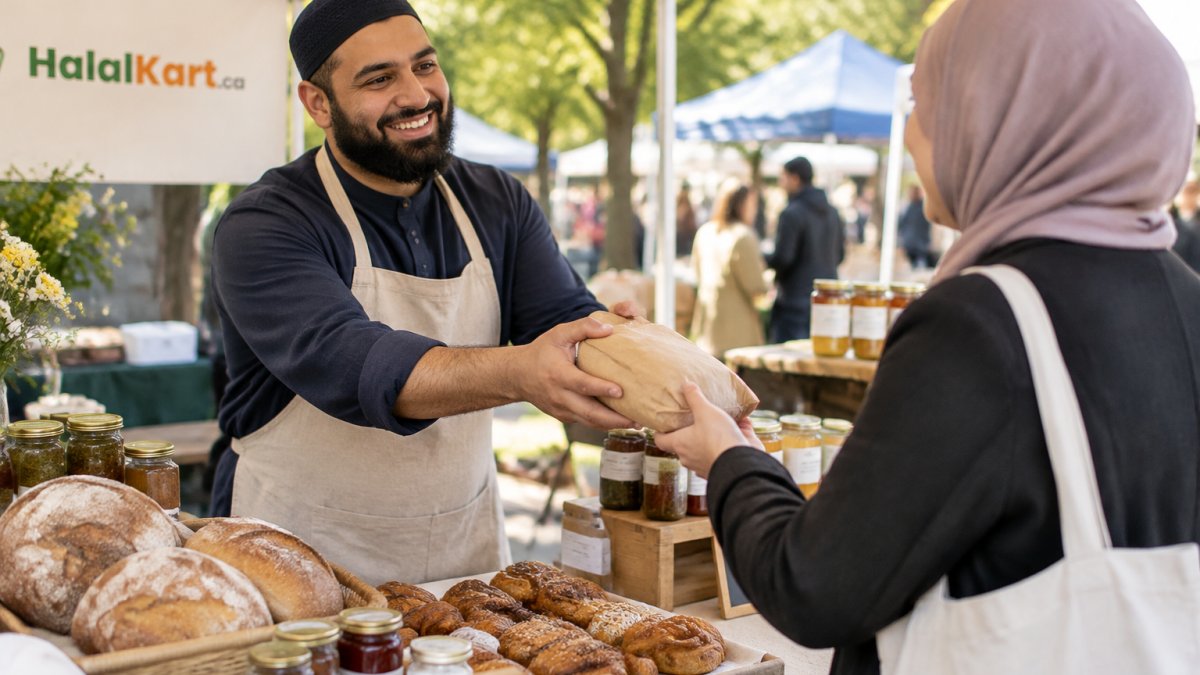
Markets and community events are where hidden gems turn up first. Some artisans start at a weekend market stall before building an online presence, so local makers may not appear in directories yet.
Build a market shortlist before the weekend
Do not show up and wander. Spend twenty minutes midweek building a shortlist:
- Check municipal market listings. Most cities publish a seasonal roster of farmers' markets, night markets, and craft fairs with vendor categories. Filter for food makers rather than produce-only stalls.
- Search event platforms by category. Look for "halal," "Middle Eastern," "South Asian," and "artisan food" alongside your neighborhood name. Vendors often tag themselves even when the organizer does not.
- Follow community calendars. Mosque bulletins, cultural association newsletters, and local Muslim Facebook or WhatsApp groups announce pop-ups and bazaars weeks before they appear on general event sites.
- Ask a halal grocer. Store owners usually know which makers supply them and which markets those makers attend.
What to look for at the stall
A market stall is a five-minute interview. Walk up, ask what they make, and work through the same core questions you would ask by phone:
- Which certifying body, if any, covers your products?
- Where do you source your meat, dairy, and flavorings?
- How do you store and transport finished goods?
- Do you take custom orders, and what is your lead time?
Take a photo of the label and the business card, and note the stall name. Labels often list the certifier and a batch or production date, which you can check later against the certifying body's public directory.
Watch out: a stall selling packaged goods with no ingredient list, no certifier name, and no contact information is difficult to verify after the fact, treat it as a sample, not a supplier, until you can confirm the details.
Workshops, classes, and demonstrations
Cooking classes, baking workshops, and butchery demonstrations run by halal artisans are the highest-signal offline channel because you see the production process directly. You learn how the maker handles ingredients, whether equipment is dedicated, and how they talk about sourcing.
Seasonal timing matters
Market attendance follows a seasonal calendar, so check event listings for the period you plan to shop. If you are searching outside a major city, the local agricultural fair or regional craft show may be the only place to meet specialty makers in person, so plan around those dates rather than expecting a permanent storefront.
Turn a market contact into a repeat supplier
Before you leave the stall, ask two questions: how do you prefer to be contacted, and do you deliver or offer pickup? Then follow up within a few days while the conversation is fresh. A short message referencing what you bought or tasted gives the maker context and makes a test order easy to arrange. Artisans who sell at markets often run small batches, so confirm lead times early, especially before holidays when demand spikes.
Contact and Evaluate an Artisan Before You Commit
A first conversation tells you a lot. Reach out by phone, message, or in person, and ask the same core questions every time so you can compare fairly.
What to ask:
- Which organization certifies your products?
- Where do you source your meat and ingredients?
- How do you handle and store halal items?
- What is your delivery or pickup process?
- Can I start with a small order?
Then judge the response. Clear, specific answers are a good sign. Vague or evasive answers are not.
If you are an artisan yourself and want to reach more halal-conscious customers, you can grow your business with HalalKart and join a verified marketplace.
The Benefits of Buying Local Halal Products
Buying local is not just a feel-good choice; it changes what you can verify. A short supply chain gives you more access to the people and records behind a halal claim, and it usually gives you more flexibility on custom orders. The trade-offs are real too, so it helps to know what you are gaining and what you are giving up.
What a shorter chain actually buys you
- Verification you can complete yourself. When the maker is local, you can visit the production space, meet the person who handles sourcing, and check certificates in person rather than relying on a photo on a website.
- Fresher product with clearer dates. You can ask directly about batch dates and shelf life.
- Customization. Local artisans are more likely to adjust a recipe, cut, or order size because they are not managing a national distribution schedule.
- Accountability close to home. A local maker's reputation depends on neighbors and repeat customers, which tends to produce responsive communication when something goes wrong.
- Community impact. Spending with local Muslim-owned businesses keeps money circulating in the community and supports makers who may be too small to appear in national directories.
The trade-offs to weigh
Local does not automatically mean cheaper or more convenient. Availability can be inconsistent, a baker who sells out at Saturday market may not have stock midweek. Delivery zones are usually narrower, and some makers offer pickup only. Certification coverage can also vary: a local maker may hold certification for meat but not for every prepared product, so confirm the scope rather than assuming the whole catalog is covered.
How to decide between local and larger suppliers
Use local artisans where verification and freshness matter most, fresh meat, baked goods, seasonal specialties, and custom orders for gatherings. Use larger certified suppliers where volume, consistent stock, and broad delivery coverage matter more. The right mix depends on how often you order, how much you value meeting the maker, and whether your schedule can accommodate small-batch lead times.
For a deeper look at how sourcing decisions affect verification, read our guide to the benefits of locally sourced halal meat.
Shop Verified Halal Artisans on HalalKart
The search process works, but it takes time.
Vendors go through our four-step verification process. We partner with recognized halal monitoring organizations.
You can browse halal groceries, fresh meat, and lifestyle products from verified vendors on HalalKart. No more juggling five suppliers and a dozen group chats.
Finding artisans you can trust takes real effort, and one weak link in the chain can undo your confidence in a supplier.
Frequently Asked Questions
What defines a halal artisan business?
A halal artisan business is a small-scale maker that produces food or goods by hand or in small batches, such as bakers, butchers, confectioners, and specialty food makers, while following halal rules. That means halal-certified ingredients, no cross-contact with haram items, and clean preparation areas. Many artisans also sell at markets or through local orders rather than large retail chains. Ask what they make, how they source ingredients, and who certifies them.
How can I verify if a local business is truly halal-certified?
Ask for the certificate and check three things: the certifying body, the products covered, and the expiry date. Confirm the certificate matches the exact product you want, not just the company name. Then cross-check the certifier's website or call them. If a vendor says they are self-claimed halal, ask how they source meat and handle cross-contact. Verification takes minutes and prevents doubt later.
Are there online marketplaces for local halal products?
Yes. HalalKart is a dedicated online marketplace for verified halal groceries, fresh meat, and lifestyle products from local artisans and businesses. Vendors go through a 4-step verification process. This saves you from contacting each maker separately. You can browse curated listings, compare products, and order for delivery. Check delivery coverage for your area before ordering.
How do local halal artisans differ from large-scale commercial suppliers?
Local artisans typically work in smaller batches, which often means fresher products and more direct contact with the maker. You can ask about sourcing, certification, and preparation methods in person. Large suppliers offer wider distribution and consistent packaging but less transparency about day-to-day practices. Neither is automatically better. The key is verification: a small baker with a valid certificate and clear answers can be just as reliable as a national brand.